Expert Mustang Maintenance Keeps Your Ford Running Strong in Jacksonville
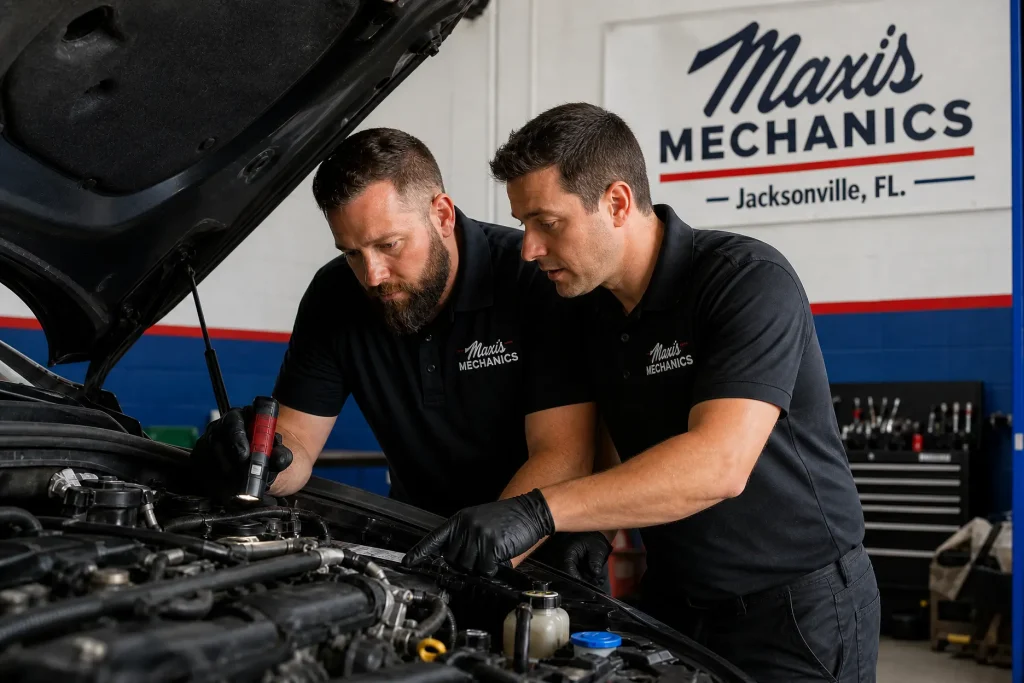
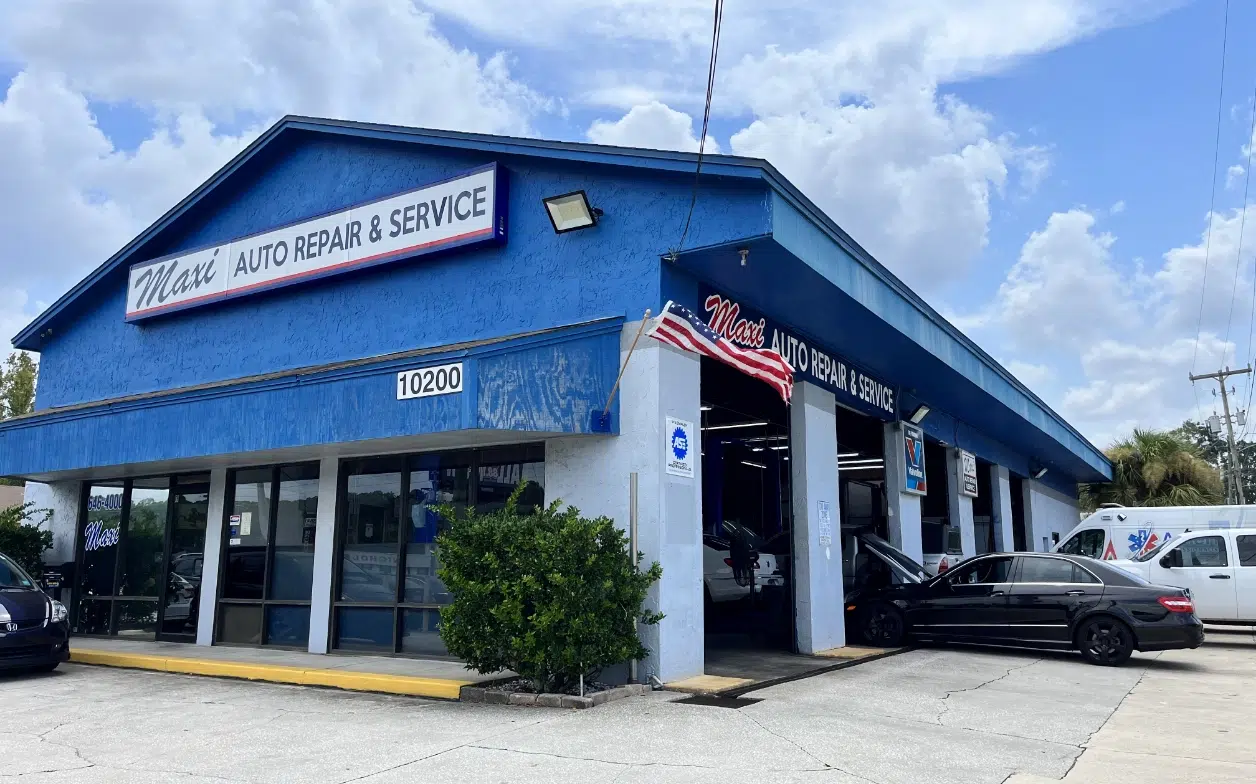
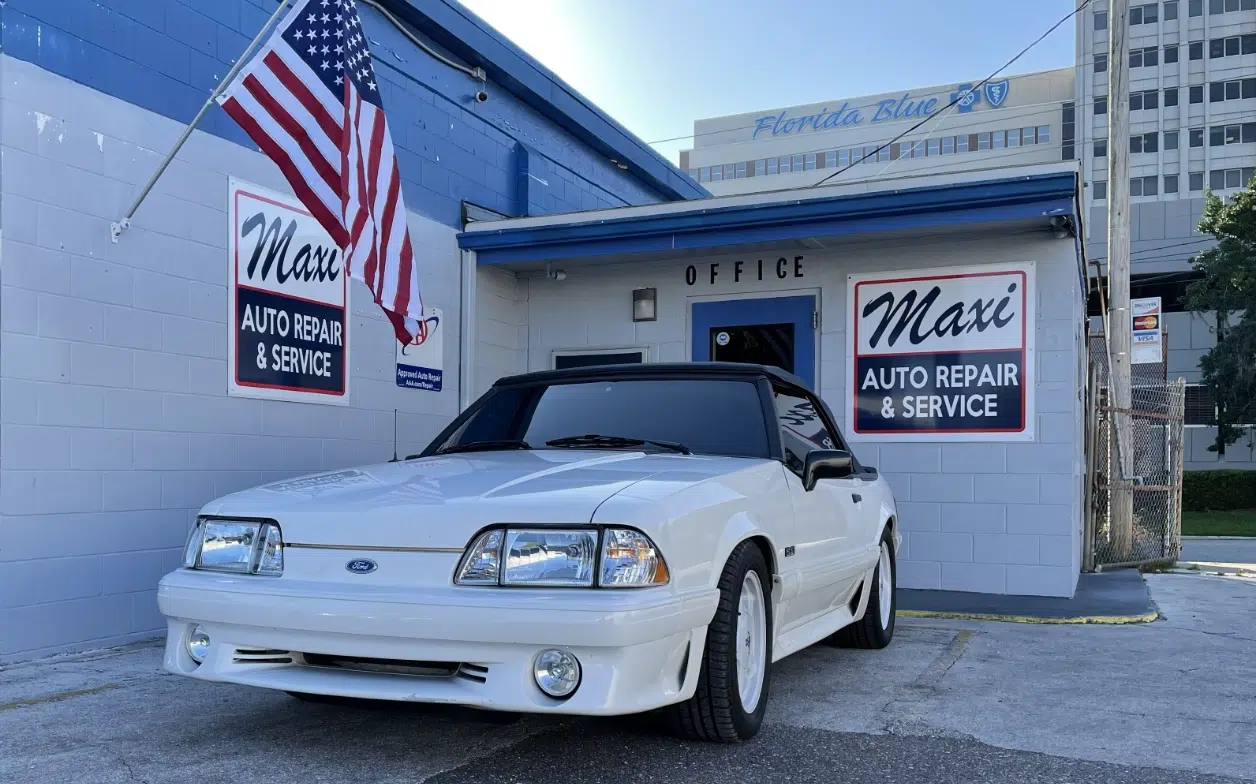
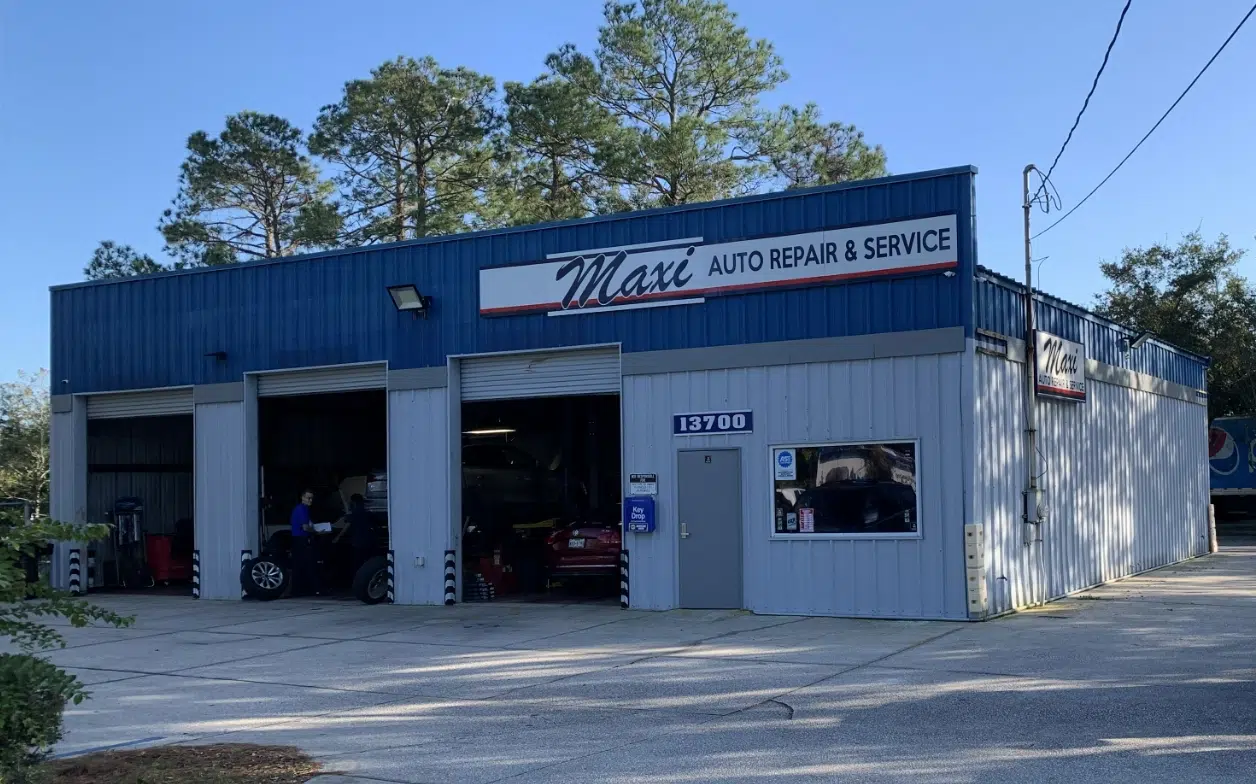
Maxi’s Mechanics provides specialized Ford Mustang service in Jacksonville, FL, with ASE-certified technicians trained in performance vehicle maintenance across four convenient locations. Proper Mustang care requires understanding both routine service intervals and performance-specific needs that differ from standard passenger vehicles.
Ford Mustangs demand maintenance schedules that account for performance driving conditions, high-output engines, and specialized components. Oil change intervals, transmission service, brake system inspections, and cooling system maintenance follow different timelines than economy vehicles. Jacksonville’s humid subtropical climate adds corrosion risks and cooling system stress that affect long-term reliability.[1]
At Maxi’s Mechanics in Jacksonville, our ASE-certified technicians service Mustangs from classic models through current GT and EcoBoost variants across Beach Blvd, Riverside, Hodges, and San Marco locations. We follow Ford factory specifications while adapting service recommendations to Florida’s demanding climate and real-world driving conditions.
Written by The Team at Maxi’s Mechanics — Maxi’s Mechanics is a veteran-owned, ASE-certified auto repair shop serving Jacksonville, FL since 2003, with four locations: Beach Blvd, Riverside, Hodges, and San Marco.
What Are the Essential Mustang Maintenance Intervals?
Ford recommends oil changes every 7,500 miles for Mustang GT models and 10,000 miles for EcoBoost variants under normal driving, but severe service conditions cut these intervals to 5,000 and 7,500 miles respectively. Jacksonville drivers frequently encounter severe service conditions including short trips under 10 miles, stop-and-go traffic on I-95 and Beach Boulevard, and high ambient temperatures exceeding 90°F for six months annually.[2]
Transmission fluid service intervals separate manual and automatic Mustangs. The MT-82 six-speed manual transmission requires fluid replacement every 50,000 miles, while the 10-speed automatic benefits from service at 60,000-mile intervals despite Ford’s “lifetime fill” designation.[3] Florida heat accelerates transmission fluid breakdown, making these services critical for Jacksonville Mustang owners.
Brake fluid absorbs moisture in humid climates, reducing boiling point and causing internal corrosion. Mustangs with performance packages require brake fluid replacement every two years regardless of mileage. Coolant replacement follows a 10-year/150,000-mile schedule for the initial fill, then five-year/100,000-mile intervals thereafter.[4]
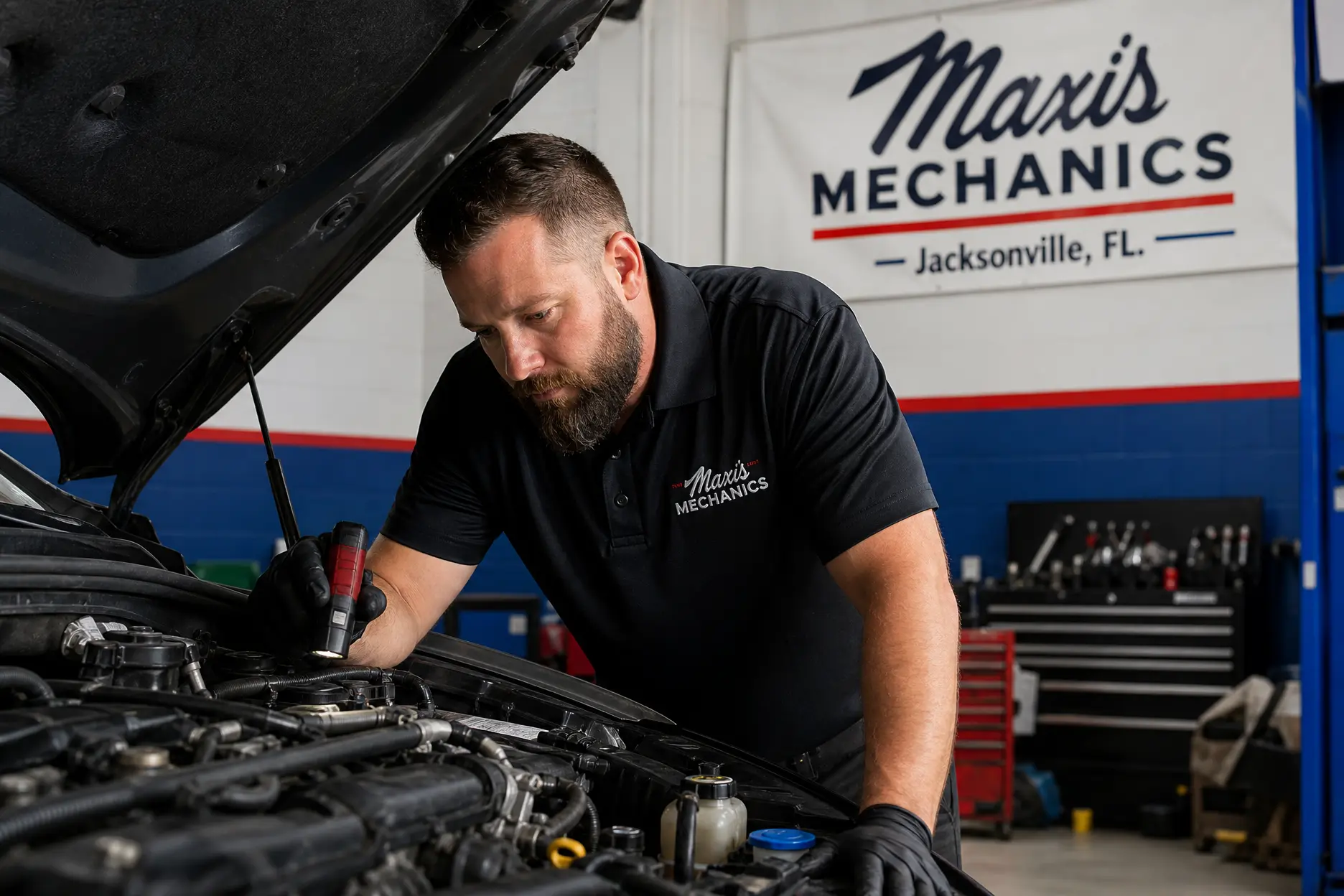
How Does Performance Driving Change Mustang Service Needs?
Track days, spirited driving, and repeated hard acceleration classify as severe service, requiring oil changes at 3,000-mile intervals and brake inspections after every performance event. The Mustang GT’s 5.0L Coyote engine generates substantial heat under load, breaking down oil additives faster than street driving. EcoBoost turbocharged engines experience even greater thermal stress, with exhaust gas temperatures exceeding 1,400°F during boost.[5]
Performance brake pads wear exponentially faster than standard pads during aggressive driving. A single track day can consume 20-30% of performance pad material. Brake fluid boiling — evidenced by a spongy pedal feel — requires immediate attention and complete system bleeding. Differential fluid service moves from the factory 100,000-mile interval to every 30,000 miles for Mustangs seeing regular performance use.
What Mustang-Specific Components Require Regular Inspection?
The MT-82 manual transmission requires shifter assembly inspection every 30,000 miles due to known shift fork and synchronizer wear patterns. Third and fourth gear engagement issues signal the need for internal inspection. We monitor clutch pedal free play and hydraulic system function during routine service visits.[3]
Independent rear suspension components on 2015-newer Mustangs demand more frequent alignment checks than solid axle predecessors. Aggressive cornering accelerates bushing wear in control arms and toe links. We inspect suspension bushings every 20,000 miles and recommend alignment verification annually or after any curb impact.
Jacksonville’s road salt exposure during occasional winter treatments and coastal humidity accelerate exhaust system corrosion. Catalytic converters, oxygen sensors, and exhaust manifold studs require visual inspection during oil services. Early detection prevents roadside failures and expensive emergency repairs.
| Service Item | Normal Interval | Performance/Severe | Jacksonville Factor |
|---|---|---|---|
| Engine Oil (GT) | 7,500 miles | 3,000-5,000 miles | High heat, short trips |
| Transmission Fluid | 50,000-60,000 miles | 30,000 miles | Heat accelerates breakdown |
| Brake Fluid | 24 months | 12 months | Humidity absorption |
| Tire Rotation | 7,500 miles | 5,000 miles | Staggered sizes affect wear |
| Differential Service | 100,000 miles | 30,000 miles | Performance driving stress |
| Spark Plugs | 100,000 miles | 60,000 miles | Forced induction wear |
When Should You Choose a Mustang-Specialized Mechanic?
Complex diagnostics involving Ford’s SYNC system, performance computer calibrations, and powertrain control module issues require scan tools and software access beyond generic OBD-II readers. Maxi’s Mechanics maintains Ford-specific diagnostic equipment and subscription software access for accurate troubleshooting. Generic shops often misdiagnose drive-by-wire throttle faults, variable cam timing issues, and transmission adaptive learning problems.[6]
Warranty considerations matter for newer Mustangs. While federal Magnuson-Moss Warranty Act provisions allow independent shop service without voiding warranties, proper documentation and OEM-specification parts become critical. We provide detailed service records and use Motorcraft components for powertrain work to maintain warranty compliance.[7]
Performance modifications require baseline dyno testing and proper tuning. Installing cold air intakes, exhaust systems, or superchargers without recalibrating air-fuel ratios risks engine damage. We coordinate with reputable tuning shops and perform post-modification inspections to verify safe operation.
Schedule service at your nearest Maxi’s Mechanics location in Jacksonville — call (904) 646-4000 or book online at maxiautorepair.com.
How Does Jacksonville’s Climate Affect Mustang Longevity?
Average high temperatures exceeding 90°F from May through September stress cooling systems, accelerate rubber component deterioration, and increase air conditioning system demands. Radiator hoses, serpentine belts, and coolant reservoir tanks degrade faster in constant heat. We inspect these components during every service and recommend replacement at first signs of cracking or swelling.[1]
Coastal proximity in Jacksonville Beach and Atlantic Beach areas introduces salt air exposure even for Mustangs not driven on beach roads. Undercarriage corrosion affects brake lines, fuel lines, and chassis components. Annual undercarriage inspections catch early rust formation before structural compromise occurs.
Sudden afternoon thunderstorms and standing water on poorly drained roads create hydrolock risks. We inspect air intake systems for water intrusion evidence after severe weather events. Cold air intake systems mounted low in the front bumper area show particular vulnerability during heavy rain driving.
What Are the Most Common Mustang Reliability Issues?
MT-82 manual transmissions in 2011-2014 models exhibit documented shift quality problems including gear grinding and lockout conditions. Ford issued Technical Service Bulletins addressing these concerns through revised shifter components and fluid specifications.[8] Many affected Mustangs benefit from aftermarket shifter assemblies that improve engagement feel and reduce missed shifts.
Spark plug ejection affected early 5.4L three-valve engines in 2005-2010 Mustang GTs due to insufficient thread engagement in aluminum cylinder heads. Proper torque specifications and time-sert thread repair kits prevent catastrophic failure. The 5.0L Coyote engine introduced in 2011 eliminated this design flaw through improved head castings.
Blend door actuator failures cause temperature control problems in climate systems. These plastic gear assemblies break under repeated cycling, requiring dashboard disassembly for replacement. Jacksonville’s year-round air conditioning use accelerates wear compared to moderate climates.
Frequently Asked Questions
How often should I change oil in a Mustang GT driven daily in Jacksonville?
Daily driving in Jacksonville qualifies as severe service due to heat and short trips. Change oil every 5,000 miles using synthetic oil meeting Ford WSS-M2C946-A specification. Track the engine for oil consumption between changes, as high-output engines may require top-offs.
Do Mustang EcoBoost engines require different maintenance than GT models?
EcoBoost turbocharged engines demand more frequent oil changes (7,500 miles severe service), spark plug replacement at 60,000 miles versus 100,000 for naturally aspirated GTs, and intercooler inspection for debris buildup. Turbocharger bearing wear increases dramatically with neglected oil service.
Can I use aftermarket parts without voiding my Mustang warranty?
The Magnuson-Moss Warranty Act prevents manufacturers from voiding warranties solely due to aftermarket parts unless they directly cause the failure. Document all modifications and use quality components. Performance modifications affecting emissions may impact powertrain warranty coverage.
What tire rotation pattern works for staggered Mustang wheel setups?
Staggered fitments with wider rear tires than front require side-to-side rotation only — front left to front right, rear left to rear right. Directional tread patterns need dismounting and remounting for proper rotation. Non-staggered setups allow standard cross-pattern rotation.
Should I service my Mustang at the dealer or an independent shop in Jacksonville?
Independent ASE-certified shops like Maxi’s Mechanics provide equivalent service quality at lower cost while maintaining warranty compliance through proper documentation. Dealers offer convenience for warranty claims but charge premium labor rates. Choose based on warranty status and service complexity.
Proper Mustang maintenance preserves performance, prevents costly repairs, and extends vehicle lifespan in Jacksonville’s demanding climate. Following manufacturer intervals adapted to severe service conditions keeps your Ford running strong. Schedule service at your nearest Maxi’s Mechanics location in Jacksonville — call (904) 646-4000 or book online at maxiautorepair.com.
Written by The Team at Maxi’s Mechanics — Maxi’s Mechanics is a veteran-owned, ASE-certified auto repair shop serving Jacksonville, FL since 2003, with four locations: Beach Blvd, Riverside, Hodges, and San Marco. Updated January 2026.
References
- National Weather Service. Climate Data for Jacksonville, Florida. https://www.weather.gov/jax/climate_data
- Ford Motor Company. 2024 Mustang Owner’s Manual – Scheduled Maintenance. https://www.ford.com
- Society of Automotive Engineers. Transmission Fluid Service Intervals for Performance Vehicles. https://www.sae.org
- Motorcraft Service. Coolant and Brake Fluid Specifications. https://www.motorcraft.com
- SAE International. Thermal Management in Turbocharged Engines. https://www.sae.org/publications
- National Institute for Automotive Service Excellence. Advanced Diagnostics Certification Standards. https://www.ase.com
- Federal Trade Commission. Magnuson-Moss Warranty Act Consumer Guide. https://www.ftc.gov/enforcement/statutes/magnuson-moss-warranty-federal-trade-commission-improvement-act
- Ford Motor Company. Technical Service Bulletin 14-0076 – Manual Transmission Shift Quality. https://www.ford.com