Ford Dealership vs Independent Shop: Which Provides Better Service?
Independent Ford repair shops in Jacksonville typically charge 30-40% less than dealerships while using OEM-equivalent parts and factory-trained technicians.[1] Both options maintain Ford warranties when following manufacturer service intervals, but independent shops often provide more personalized service and faster turnaround times for routine maintenance and complex diagnostics.
Independent Ford repair shops cost significantly less than dealerships without sacrificing quality or warranty protection. The average Ford dealership charges $150-$180 per hour for labor in the Jacksonville area, while certified independent shops charge $95-$120 per hour — a difference that adds up quickly on major repairs.[2] Both must follow the same Ford service specifications to maintain your warranty under the Magnuson-Moss Warranty Act, which protects vehicle owners’ right to choose their repair facility.[3]
Written by The Team at Maxi’s Mechanics — Maxi’s Mechanics is a veteran-owned, ASE-certified auto repair shop serving Jacksonville, FL since 2003, with four locations: Beach Blvd, Riverside, Hodges, and San Marco.
What Are the Real Cost Differences Between Ford Dealerships and Independent Shops?
Ford dealerships charge 30-50% more for identical services compared to independent repair shops in Jacksonville. A typical 60,000-mile service on a Ford F-150 costs $650-$850 at a dealership versus $420-$550 at an independent shop using OEM or equivalent parts.[1] The markup extends beyond labor rates to parts pricing, where dealerships add 40-60% margins on components that independent shops source at competitive rates.[4]
Dealership overhead drives these price differences. Franchise fees, manufacturer facility requirements, and larger administrative staffs create fixed costs that get passed to customers. Independent shops operate with lower overhead while maintaining the same technical certifications — ASE Master Technicians work at both types of facilities, and many independent technicians previously worked at dealerships before opening their own shops.
The cost advantage grows on major repairs. Transmission service at a Ford dealership runs $300-$450, while independent shops charge $180-$275 for the same fluid replacement and filter change.[2] Engine diagnostics follow similar patterns: dealerships charge diagnostic fees of $150-$200 that often don’t apply toward repair costs, whereas independent shops typically waive or credit diagnostic charges when you proceed with recommended repairs.
Will Using an Independent Shop Void My Ford Warranty?
No — federal law prohibits manufacturers from voiding warranties simply because you used an independent repair shop. The Magnuson-Moss Warranty Act of 1975 protects consumers’ right to choose where they service their vehicles, and Ford must honor warranty claims regardless of where you performed maintenance, provided you followed the manufacturer’s service schedule and used parts meeting Ford specifications.[3]
Independent shops maintain Ford warranties by using OEM (Original Equipment Manufacturer) parts or components that meet or exceed Ford specifications. Quality aftermarket parts from suppliers like Motorcraft, ACDelco, and Bosch carry their own warranties and satisfy Ford’s requirements. The critical factor is documentation — keep all service records showing that recommended intervals were followed and appropriate parts were installed.
Warranty coverage differs from recall work and TSBs (Technical Service Bulletins). Ford must perform recall repairs at no charge, and dealerships remain the only option for these safety-related fixes. However, routine maintenance, wear items, and repairs outside warranty coverage can be completed anywhere without affecting your remaining warranty protection. Florida’s Motor Vehicle Warranty Enforcement Act provides additional consumer protections beyond federal law.[5]
Do Independent Shops Have the Same Diagnostic Equipment as Ford Dealerships?
Modern independent shops use professional-grade diagnostic equipment that accesses the same Ford vehicle systems as dealership scanners. Tools like Snap-on ZEUS, Bosch ADS, and Autel MaxiSys Ultra read manufacturer-specific codes, perform bi-directional controls, and execute module programming on Ford vehicles.[6] These systems cost $10,000-$25,000 and provide capabilities that match or exceed dealership IDS (Integrated Diagnostic System) functionality for most repairs.
| Diagnostic Capability | Ford Dealership | Certified Independent Shop |
|---|---|---|
| Read/Clear Diagnostic Codes | Yes | Yes |
| Live Data Streaming | Yes | Yes |
| Bi-Directional Controls | Yes | Yes (Professional Tools) |
| Module Programming | Yes | Limited (Some Modules) |
| Factory TSB Access | Direct | Third-Party Subscriptions |
The gap narrows to specialized programming for new security modules or PCM (Powertrain Control Module) reflashes. Dealerships maintain direct access to Ford’s secure programming network, while independent shops must use J2534 pass-through programming or send modules out for flashing. For 95% of diagnostic and repair work — including complex drivability issues, transmission problems, and electrical faults — independent shops have equivalent diagnostic capabilities.
Experience matters more than equipment. A technician who has diagnosed hundreds of Ford EcoBoost turbocharger failures or 10R80 transmission issues brings pattern recognition that no scanner provides. Many independent Ford specialists focus exclusively on Ford, Lincoln, and Mercury vehicles, developing expertise that generalist dealership technicians may lack.
What Services Should You Take to a Dealership vs Independent Shop?
Take recall repairs and warranty-covered failures to Ford dealerships; use independent shops for maintenance, diagnostics, and out-of-warranty repairs. Dealerships must perform recall work at no charge, and warranty repairs cost nothing out-of-pocket when covered. For everything else — oil changes, brake service, suspension work, engine repairs — independent shops deliver equivalent quality at substantially lower cost.
Routine maintenance represents the clearest advantage for independent shops. Oil changes, tire rotations, brake pad replacements, and fluid services follow straightforward Ford specifications that any certified technician can execute. Paying dealership prices for these services wastes money without gaining additional value or protection.
Complex diagnostics often get better results at independent shops despite dealerships’ technical access. Independent technicians typically spend more time on difficult problems because their business model depends on solving issues correctly the first time. Dealership service advisors juggle higher customer volumes and face pressure to move vehicles through the shop quickly, sometimes leading to parts-replacement guessing rather than thorough diagnosis.
Consider dealerships for vehicles under 3 years/36,000 miles when warranty coverage applies broadly. Once your Ford passes the basic warranty period, independent shops provide better value for nearly all service needs. The exceptions are complex programming requirements — adding factory remote start, enabling trailer backup assist, or updating transmission adaptive tables — where dealership network access proves necessary.
Schedule service at your nearest Maxi’s Mechanics location in Jacksonville — call (904) 646-4000 or book online at maxiautorepair.com.
How Do Customer Service and Wait Times Compare?
Independent shops typically provide faster service and more personalized attention than high-volume Ford dealerships. The average independent repair facility serves 20-40 customers daily versus 60-100+ at Jacksonville-area Ford dealerships, allowing technicians and service advisors to spend more time on each vehicle and communicate directly with customers about findings and recommendations.[7]
Appointment availability differs significantly. Dealerships often book 1-2 weeks out for general service, while independent shops can frequently accommodate same-day or next-day appointments for urgent repairs. This flexibility matters when your Ford develops a check engine light, brake noise, or other issues requiring prompt attention. Many independent shops also offer loaner vehicles or shuttle service, matching amenities that customers assume only dealerships provide.
The service advisor relationship changes the experience. Independent shops typically assign one advisor who handles your vehicle from drop-off through completion, building familiarity with your Ford’s history and your service preferences. Dealership service departments rotate advisors across appointments, requiring you to re-explain concerns and preferences each visit. Long-term relationships help independent shops anticipate needs — tracking when your Ford will need timing belt service, transmission fluid changes, or coolant system maintenance based on your actual driving patterns rather than generic intervals.
What Should Jacksonville Ford Owners Consider When Choosing a Shop?
Prioritize ASE certification, Ford-specific experience, and warranty-compliant service documentation when selecting an independent repair shop in Jacksonville. ASE (Automotive Service Excellence) certification indicates technicians passed standardized competency exams, while shops specializing in Ford vehicles accumulate model-specific knowledge that benefits your repair outcomes.[8] Request service records formatted to satisfy Ford warranty requirements — detailed receipts showing service dates, mileage, parts used, and specification compliance.
Verify the shop’s diagnostic capabilities before committing to complex repairs. Ask what scan tools they use and whether they can perform bi-directional tests on your specific Ford model. Professional-grade equipment from Snap-on, Bosch, or Autel demonstrates serious investment in diagnostic capability. Shops using basic code readers from auto parts stores lack the tools for thorough troubleshooting.
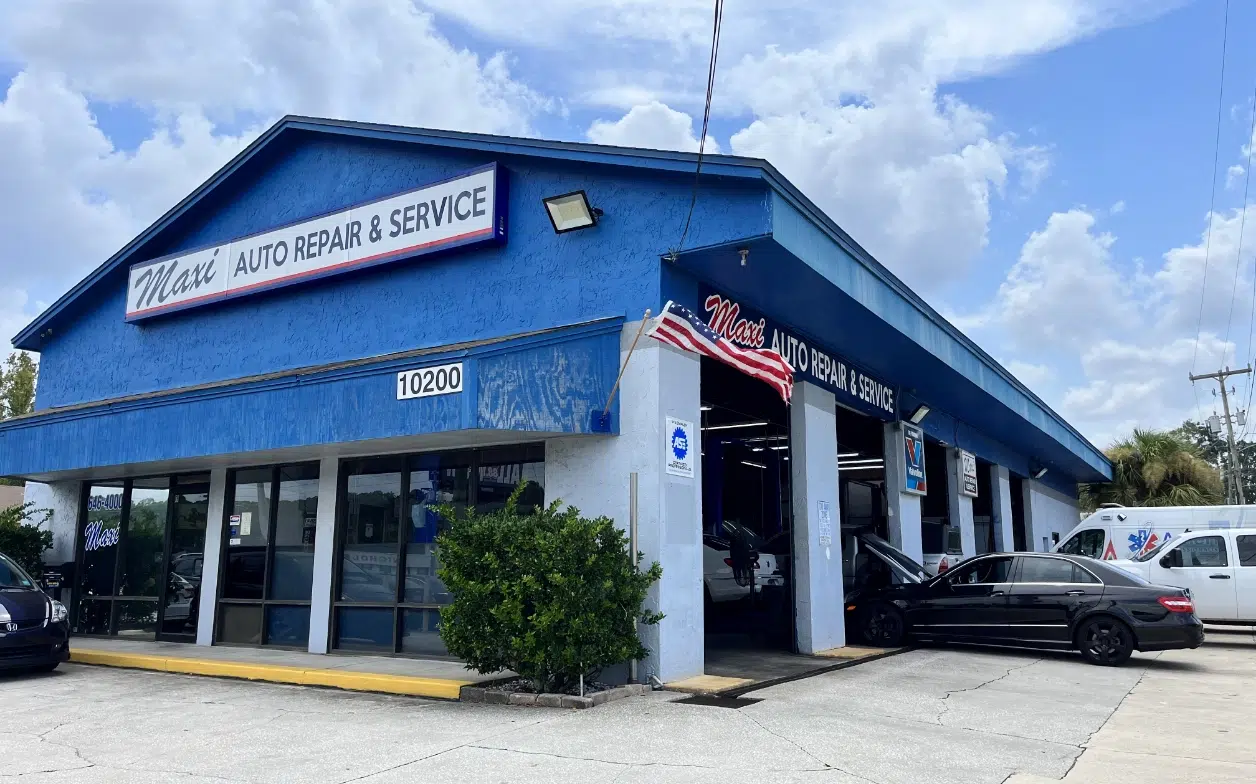
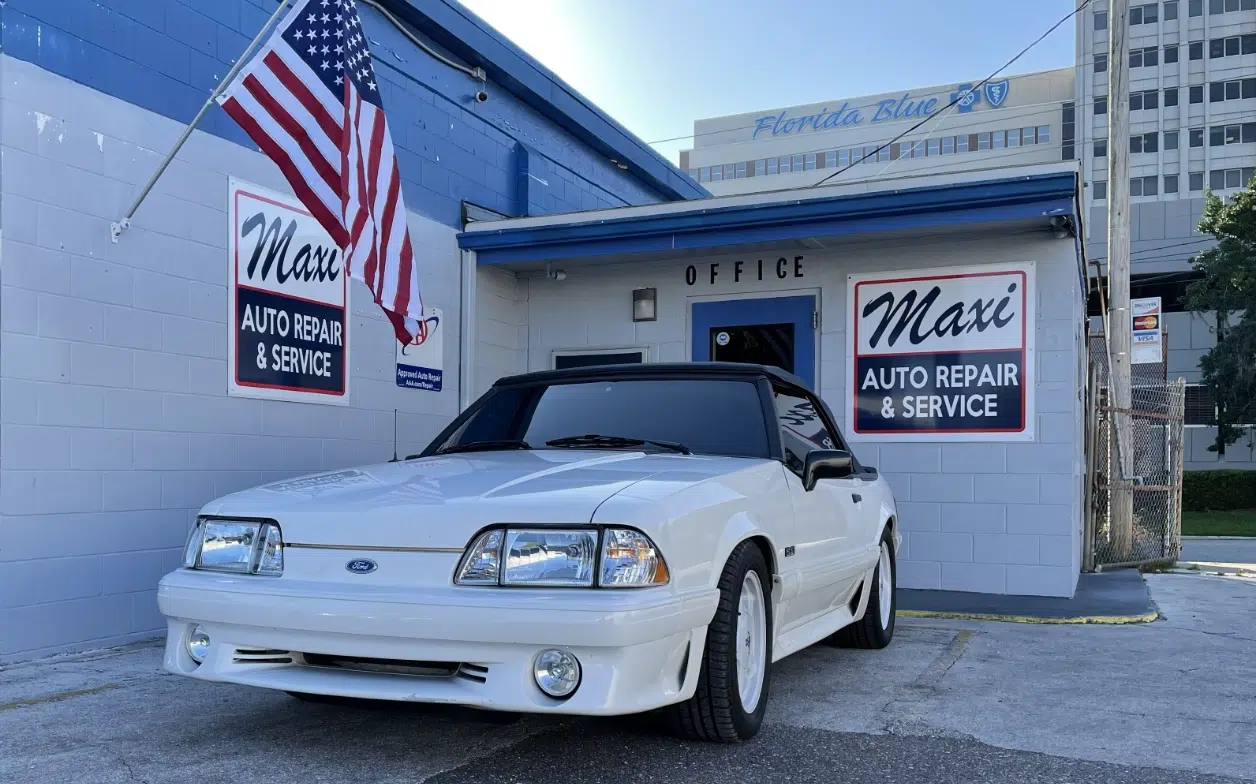
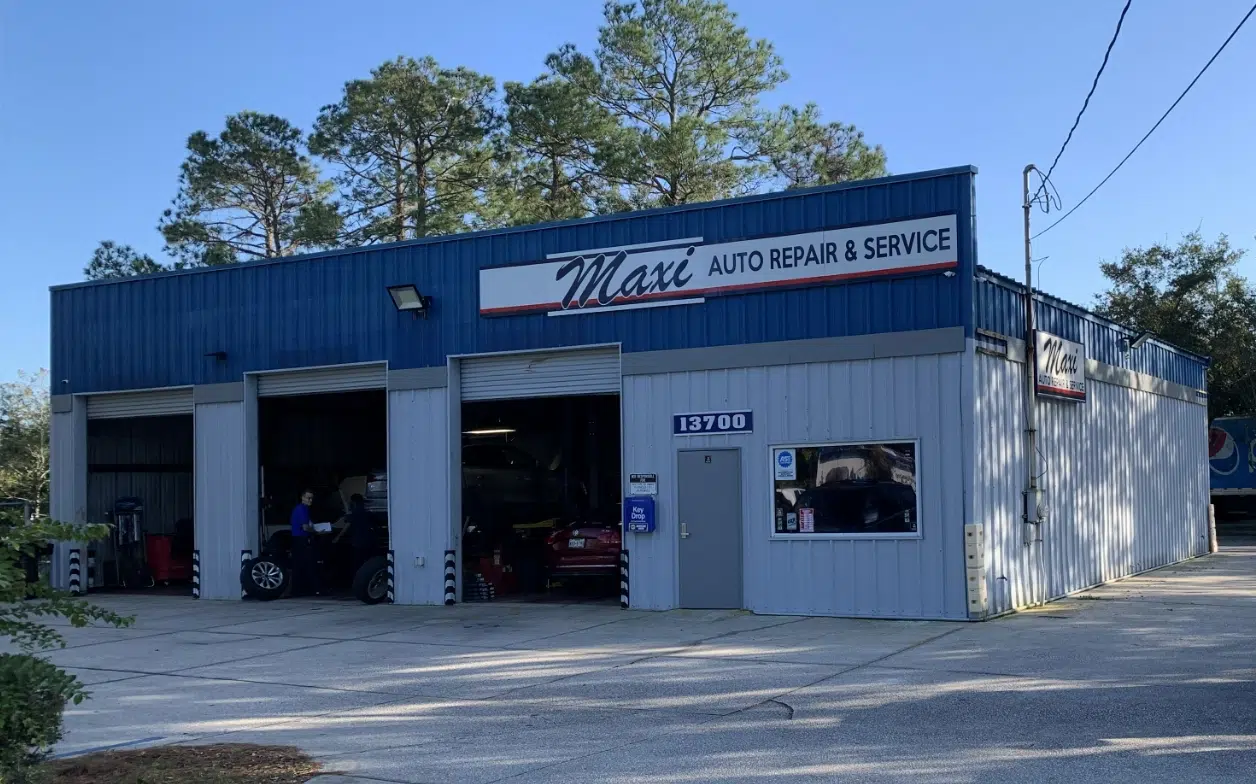
Consider location and convenience factors specific to Jacksonville. Four Maxi’s Mechanics locations across Beach Blvd, Riverside, Hodges, and San Marco provide options near work or home, reducing the inconvenience of service appointments. Local independent shops understand Florida-specific issues — accelerated AC system wear from heat and humidity, undercarriage corrosion from coastal salt exposure, and cooling system stress from extended AC operation — that affect Jacksonville Ford owners differently than customers in other climates.
Schedule service at your nearest Maxi’s Mechanics location in Jacksonville — call (904) 646-4000 or book online at maxiautorepair.com.
Frequently Asked Questions
Can independent shops access Ford’s technical service bulletins?
Yes, independent repair shops subscribe to services like ALLDATA, Mitchell1, or Identifix that provide access to Ford TSBs, wiring diagrams, and repair procedures. These third-party platforms aggregate manufacturer technical information and make it available to qualified repair facilities outside the dealership network.
Do independent shops use genuine Ford parts?
Independent shops offer both OEM Ford/Motorcraft parts and high-quality aftermarket alternatives that meet or exceed Ford specifications. Many customers choose OEM parts for critical components like sensors or modules while using quality aftermarket parts for wear items like brake pads or filters, balancing cost and performance based on their priorities.
How do I know if my Ford repair shop is properly certified?
Look for ASE Blue Seal certification displayed at the shop, indicating certified technicians on staff. Ask about Ford-specific training and experience — technicians who worked at Ford dealerships or specialize in Ford vehicles bring valuable expertise. Florida requires repair shops to register with the Department of Agriculture and Consumer Services and maintain proper business licenses.
Will my Ford’s computer system recognize repairs done at independent shops?
Yes, properly performed repairs using correct parts and procedures function identically whether completed at dealerships or independent shops. Ford vehicle computers don’t distinguish between repair locations — they only verify that components meet specifications and systems operate within parameters. Service records matter for warranty claims, not where the work was performed.
What documentation should I keep from independent shop repairs?
Retain detailed invoices showing service date, mileage, specific services performed, parts installed with part numbers, and labor operations completed. This documentation proves you followed Ford’s maintenance schedule if warranty claims arise later. Digital or paper records work equally well — the key is showing that recommended services occurred at proper intervals using appropriate parts.
Written by The Team at Maxi’s Mechanics — Maxi’s Mechanics is a veteran-owned, ASE-certified auto repair shop serving Jacksonville, FL since 2003, with four locations: Beach Blvd, Riverside, Hodges, and San Marco. Updated January 2026.
References
- American Automobile Association (AAA). Your Driving Costs 2023. https://newsroom.aaa.com/auto/your-driving-costs/
- Automotive Service Association. 2023 Industry Benchmarking Study: Labor Rates and Pricing. https://www.asashop.org/
- Federal Trade Commission. Auto Warranties and Routine Maintenance. https://www.consumer.ftc.gov/articles/0138-auto-warranties-routine-maintenance
- Automotive Aftermarket Suppliers Association. 2023 Aftermarket Factbook. https://www.aftermarketsuppliers.org/
- Florida Department of Agriculture and Consumer Services. Motor Vehicle Warranty Enforcement. https://www.fdacs.gov/Consumer-Resources/Consumer-Rights-and-Responsibilities/Motor-Vehicle-Warranty-Enforcement
- National Institute for Automotive Service Excellence. ASE Certification Standards for Master Technicians. https://www.ase.com/
- Automotive Management Institute. Customer Satisfaction Metrics in Independent Repair Facilities. https://www.amionline.org/
- National Institute for Automotive Service Excellence. About ASE Certification. https://www.ase.com/About-ASE.aspx