A transmission fluid change at an independent shop like Maxi’s Mechanics typically costs $175–$300 and takes approximately 30–60 minutes. It’s one of the most cost-effective maintenance services you can do — because the alternative is a $3,000–$5,000 transmission rebuild.
Your transmission is the second most expensive component in your vehicle after the engine. Regular fluid maintenance prevents the vast majority of transmission failures we see at our Jacksonville shops.
Transmission Fluid Change vs. Transmission Flush: What’s the Difference?
Fluid change (drain and fill): Drains the fluid from the transmission pan, replaces the filter (if applicable), and refills with fresh fluid. This replaces approximately 40–50% of the total fluid volume. It’s the standard maintenance approach and what most manufacturers recommend [1].
Transmission flush: Uses a machine to push all old fluid out while simultaneously pumping new fluid in. Replaces nearly 100% of the fluid. More thorough but controversial — some technicians advise against flushing transmissions with very old, neglected fluid because the pressure can dislodge debris and cause blockages in the valve body.
[HYPOTHETICAL — replace with your actual recommendation before publishing] At Maxi’s Mechanics, we generally recommend a standard fluid change (drain, drop the pan, replace the filter, refill) over a full flush for most vehicles — especially higher-mileage ones where the fluid hasn’t been serviced regularly. For vehicles with well-maintained fluid history, a flush can be appropriate and provides more complete fluid replacement. We’ll inspect the fluid condition and your service history to make the right recommendation for your specific situation.
When Does Your Transmission Need Service?
By mileage: Most manufacturers recommend transmission fluid service every 30,000–60,000 miles [1]. Check your owner’s manual — some modern vehicles claim “lifetime” fluid, but experienced technicians know better. We’ve seen transmissions in “lifetime fluid” vehicles fail at 100,000–120,000 miles. There’s no such thing as truly lifetime fluid in Florida’s heat.
By symptoms — signs your transmission fluid needs attention:
Rough or delayed shifting
The transmission hesitates before engaging, or shifts feel harder than they used to. Degraded fluid loses its friction properties, making the clutch packs inside the transmission slip or grab inconsistently.
Slipping
The engine revs up but the vehicle doesn’t accelerate proportionally. This feels like the transmission momentarily loses its grip. Can indicate low fluid level (possible leak) or degraded fluid that no longer provides adequate friction.
Shudder or vibration
A vibration during acceleration, especially between 30–50 mph, often indicates contaminated or degraded fluid. This is particularly common in Ford and GM vehicles with torque converter clutch issues — and it’s often fixable with a fluid service before it requires a torque converter replacement.
Burning smell
Overheated transmission fluid has a distinct burnt odor — acrid and sharp, different from engine oil. If you smell it, service is overdue. Overheated fluid loses its lubricating and cooling properties, which accelerates internal wear.
Dark or dirty fluid
Fresh transmission fluid is typically red or pink and translucent. As it degrades, it turns brown, then dark brown or black. If it’s dark and smells burnt, it’s past due for replacement. Milky or foamy fluid indicates water contamination — a more serious concern.
Can You Drive with a Bad Transmission?
If your transmission is slipping, shuddering, or showing warning lights, you can usually drive to a shop — but don’t delay. Every mile on degraded transmission fluid or worn components accelerates damage. What might be a $200 fluid service today becomes a $3,000–$5,000 rebuild if you drive on it for months.
If the transmission won’t engage at all, is making grinding noises, or the vehicle won’t move, have it towed. Driving a transmission that’s actively failing causes exponentially more damage with each mile.
Why Jacksonville’s Climate Is Hard on Transmissions
Heat is the number one enemy of transmission fluid [2]. Normal transmission operating temperature is around 175°F. For every 20°F above that, fluid life is cut in half. Jacksonville’s sustained high ambient temperatures push transmission temps higher as a baseline, and several driving conditions common here make it worse:
Stop-and-go traffic: I-95 through downtown, JTB during rush hour, and Beach Boulevard’s signal-heavy corridor all generate repeated transmission heat cycles without adequate cooling time between stops.
Towing: Pulling a boat to the ramp, hauling a trailer on the weekend, or loading up for a camping trip at Hanna Park — towing dramatically increases transmission temperature. If you tow regularly, shorten your fluid service interval to 30,000 miles or less.
Idling in heat: Sitting in drive-through lanes, school pickup lines, or traffic with the AC running keeps the transmission in gear and generating heat while airflow through the transmission cooler is minimal.
How Much Does Transmission Service Cost?
Transmission fluid change (drain and fill): $150–$300 depending on vehicle and fluid type. Vehicles requiring synthetic ATF or manufacturer-specific fluids (Mercon LV, ATF+4, WS, etc.) cost more than vehicles using standard Dexron/Mercon.
Transmission flush: $200–$400 for a complete fluid exchange including new filter.
Transmission rebuild: $3,000–$5,000+. This is what you’re trying to prevent with regular fluid maintenance.
CVT fluid service: $200–$350. Continuously variable transmissions (common in Nissan, Subaru, Honda) require specific CVT fluid and are particularly sensitive to fluid condition.
Transmission Service at Maxi’s Mechanics
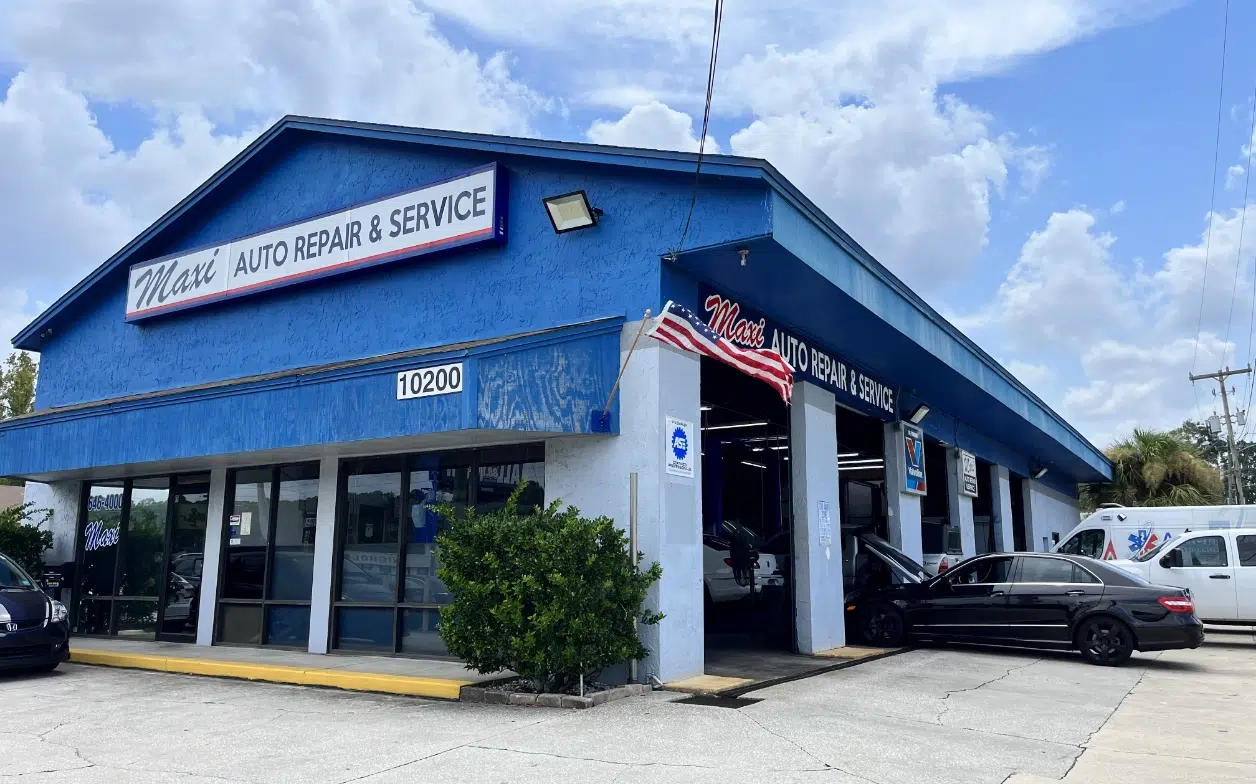
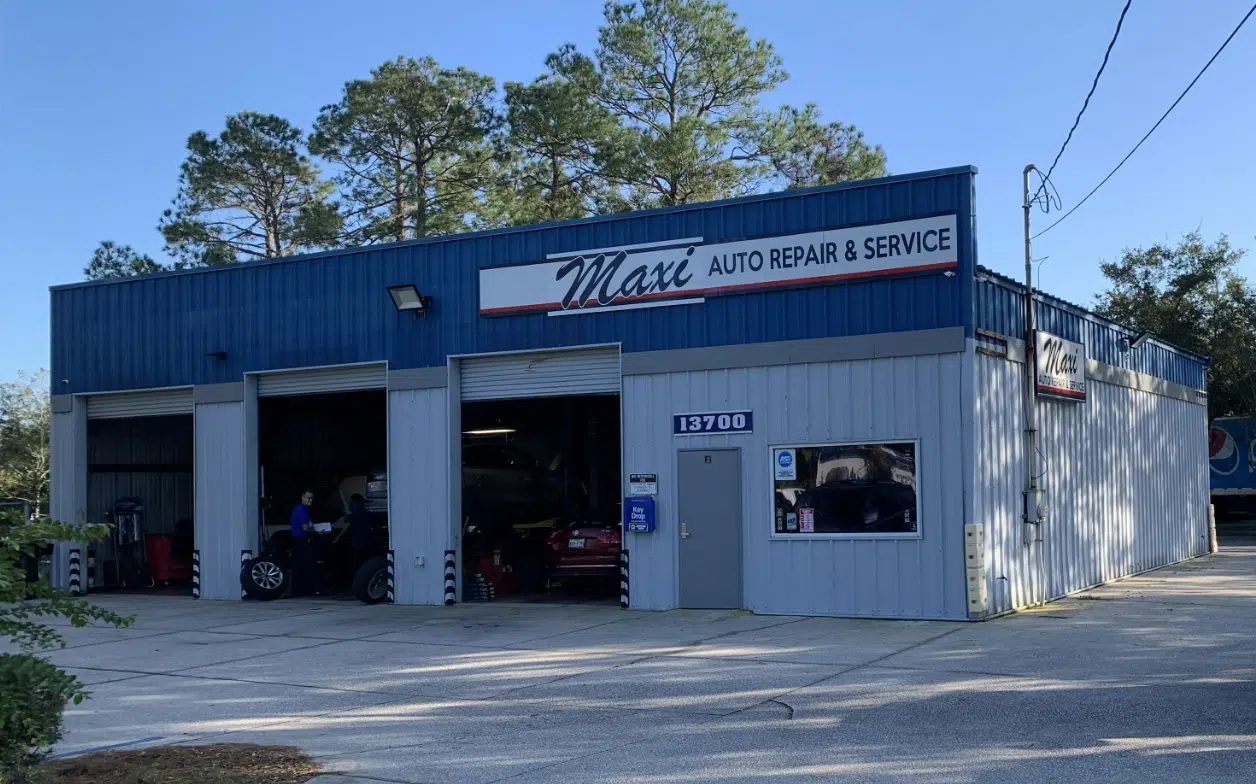
Our ASE-certified technicians service transmissions on all makes and models. We use manufacturer-recommended fluids — not generic substitutes — and can diagnose transmission concerns using our Snap-On Zeus diagnostic scanners to read transmission-specific codes and monitor real-time shift data.
[HYPOTHETICAL — replace with your actual transmission service data before publishing] At Maxi’s Mechanics, a transmission fluid change runs approximately $175–$300 depending on the vehicle and fluid type. We generally recommend a fluid change over a full flush for most vehicles, especially higher-mileage ones. Jacksonville’s heat is particularly hard on transmission fluid — sustained temperatures above 90°F accelerate fluid breakdown, and stop-and-go traffic on I-95 or Beach Boulevard keeps transmission temperatures elevated. We see a lot of customers come in at 80,000–100,000 miles with dark, burnt-smelling fluid who’ve never had a transmission service — don’t be one of them.
Beach Boulevard — (904) 646-4000 | Riverside — (904) 358-9800 | Hodges — (904) 992-6868 | San Marco — (904) 931-4388
Monday–Friday, 7:30 AM – 5:30 PM. All work backed by our 3-Year / 36,000-Mile Nationwide Warranty.
Frequently Asked Questions
Is a transmission flush worth it?
It depends on your vehicle’s fluid history. If the fluid has been regularly maintained, a flush provides more complete fluid replacement. If the fluid has been neglected for 100,000+ miles, a standard drain and fill is generally safer because it’s less likely to dislodge accumulated debris. Your technician can inspect the fluid condition and recommend the appropriate service.
How often should I change transmission fluid in Florida?
Every 30,000–60,000 miles, with shorter intervals if you tow, drive in heavy stop-and-go traffic, or frequently drive in Jacksonville’s summer heat. Despite some manufacturers claiming “lifetime” fluid, experienced technicians recommend regular service to prevent premature transmission failure in hot climates.
What happens if you never change transmission fluid?
Degraded transmission fluid loses its ability to lubricate, cool, and provide proper friction for the clutch packs. Over time, this causes rough shifting, slipping, overheating, and eventually internal component failure requiring a $3,000–$5,000+ rebuild or replacement.
References
[1] Edmunds. “Transmission Fluid Service.” edmunds.com
[2] ATRA. “Transmission Fluid and Temperature.” Automatic Transmission Rebuilders Association. atra.com