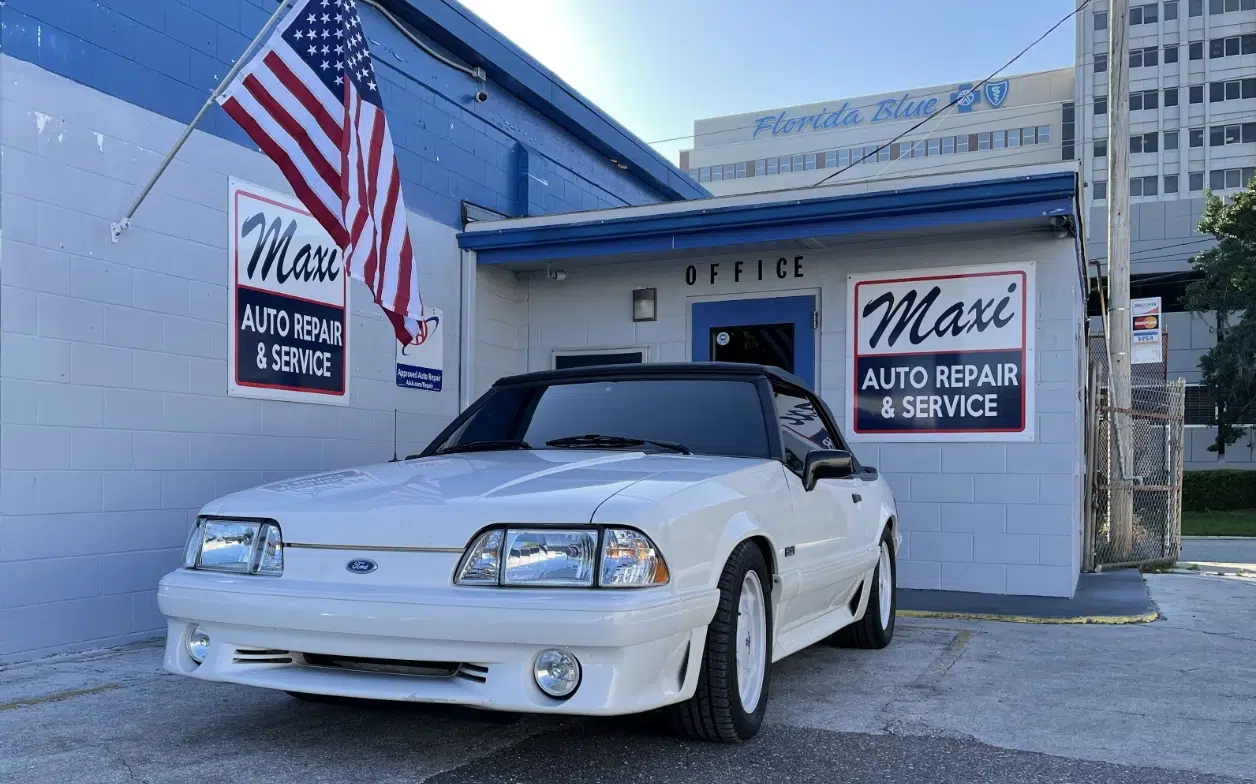
Ford is the most popular vehicle brand on Jacksonville’s roads, and Ford owners don’t need to pay dealership prices for quality repair and maintenance. At Maxi’s Mechanics, our ASE-certified technicians work on Fords every day — from F-150s and Explorers to Escapes, Transits, and Mustangs — using the same professional-grade diagnostic tools as the dealership, typically at 20–40% lower labor rates.
Here are the most common Ford problems we see at our Jacksonville shops, organized by model, and what you should know about each one.
Ford F-150: Most Common Problems
Cam phaser tick/rattle (2011–2020, 5.0L Coyote and 3.5L EcoBoost): A ticking or rattling noise on cold startup that may persist as the engine warms up. Caused by worn cam phaser actuators and variable valve timing (VVT) solenoids. This is one of the most common F-150 complaints and Ford issued Technical Service Bulletin TSB 19-2346 addressing the issue [1]. Dealership repair: $2,000–$4,000. Independent shop: typically 20–30% less.
EcoBoost coolant leak/condensation (3.5L EcoBoost): White smoke on startup or coolant loss without visible leak. Often traced to condensation in the charge air cooler (intercooler) or intake manifold. Ranges from a simple drain procedure to component replacement depending on the source.
Transmission shudder (10-speed, 2017+): A vibration or shudder during light acceleration, particularly between 2nd and 5th gear. Ford issued TSB 19-2221 for this — the fix typically involves a transmission fluid flush with the updated Motorcraft fluid and an adaptive learning reset. This is a service any qualified shop can perform — you don’t need the dealership.
Ford Explorer: Most Common Problems
Transmission issues (2020+ 10-speed): Harsh shifting, delayed engagement, and shudder complaints similar to the F-150’s 10-speed. Often resolved with fluid service and transmission control module reprogramming.
Rear window trim water leak (2020+): Water intrusion through the rear window trim seal, potentially damaging the liftgate wiring and rear electronics. In Jacksonville’s climate with heavy afternoon rain and high humidity, this issue can escalate quickly to mold and electrical problems if not addressed.
Rear toe link recall/failure (2020+): Fractured rear suspension components that affect steering control. Ford issued a safety recall for this — if your Explorer hasn’t had it addressed, schedule it immediately. We can check your VIN to confirm recall status.
Ford Escape: Most Common Problems
Coolant intrusion (1.6L EcoBoost, 2013–2016): Coolant can enter the combustion chamber due to a cracked cylinder head — a known defect on these engines. Symptoms include white exhaust smoke, coolant loss without visible leak, and overheating. Don’t ignore coolant loss on these engines — if the head cracks further, it can cause catastrophic engine failure. Typical repair: $1,500–$3,000 for head replacement.
HVAC blend door actuator (multiple years): Clicking noise from the dashboard and inability to control air temperature. The blend door actuator controls airflow routing and is a common failure point across many Ford models. Typically $200–$500 to repair.
Transmission control module issues (2014–2016): Harsh or erratic shifting in the 6-speed automatic. Often diagnosed as a transmission problem when the root cause is the control module. Proper diagnosis prevents unnecessary transmission work.
Ford Transit: Why You Don’t Need the Dealership
Ford Transit owners — particularly fleet operators and businesses — frequently search for alternatives to dealership service. The key considerations:
Warranty work: If your Transit is under factory warranty, the dealership handles covered repairs at no cost. For out-of-warranty maintenance and repair, an independent shop saves 20–40% on labor with no difference in parts quality [2].
Turbo and injector issues (EcoBoost): Transit vans with the 3.5L EcoBoost can develop turbo wastegate and fuel injector problems. These require manufacturer-level diagnostic capabilities — our Snap-On Zeus scanners read all Ford-specific modules and access the same data as the dealership’s IDS system.
Brake and suspension: Transit vans carry heavy loads, which accelerates brake and suspension wear. These are standard mechanical repairs that don’t require Ford-specific expertise — dealership pricing is not justified for brake pads and struts.
Upfitter electrical: Many Transits have aftermarket upfits (shelving, ladder racks, electrical packages). Dealerships sometimes struggle with upfitter-modified vehicles because their technicians are trained on stock configurations. Independent shops with broad experience often handle these better.
Why Choose an Independent Shop for Ford Repair?
Same diagnostic tools. Maxi’s uses professional-grade Snap-On Zeus scanners that read Ford-specific codes, access module data, and perform the same bi-directional tests as dealership equipment.
ASE-certified technicians. Our techs hold the same industry certifications — often with more diverse experience across multiple brands, which actually improves diagnostic accuracy because they see patterns across manufacturers.
Lower labor rates. Dealership labor rates in Jacksonville typically run $150–$200/hour. Independent shops are typically $100–$140/hour for the same quality work. On a cam phaser repair that takes 8+ hours, that difference is $400–$500 in labor alone.
No upselling pressure. Dealerships have manufacturer service quotas and upsell metrics. We don’t. Our philosophy is “We diagnose. You decide.”
Ford Repair at Maxi’s Mechanics Jacksonville
[HYPOTHETICAL — replace with your actual Ford repair data before publishing] Ford trucks and SUVs make up a significant portion of the vehicles we service — Jacksonville is truck country, and the F-150 is consistently our most-serviced model. The cam phaser rattle on the 5.0L V8 is something our techs diagnose multiple times a month, and we’ve developed a streamlined process for the repair that typically saves customers 15–20% compared to the Ford dealership. For Ford Transit owners, we’ve seen enough of the turbo coolant line failures that we keep the parts in stock — no waiting on dealer-only backordered parts. Our diagnostic equipment reads all Ford-specific modules, not just the generic OBD-II codes that chain shops are limited to.
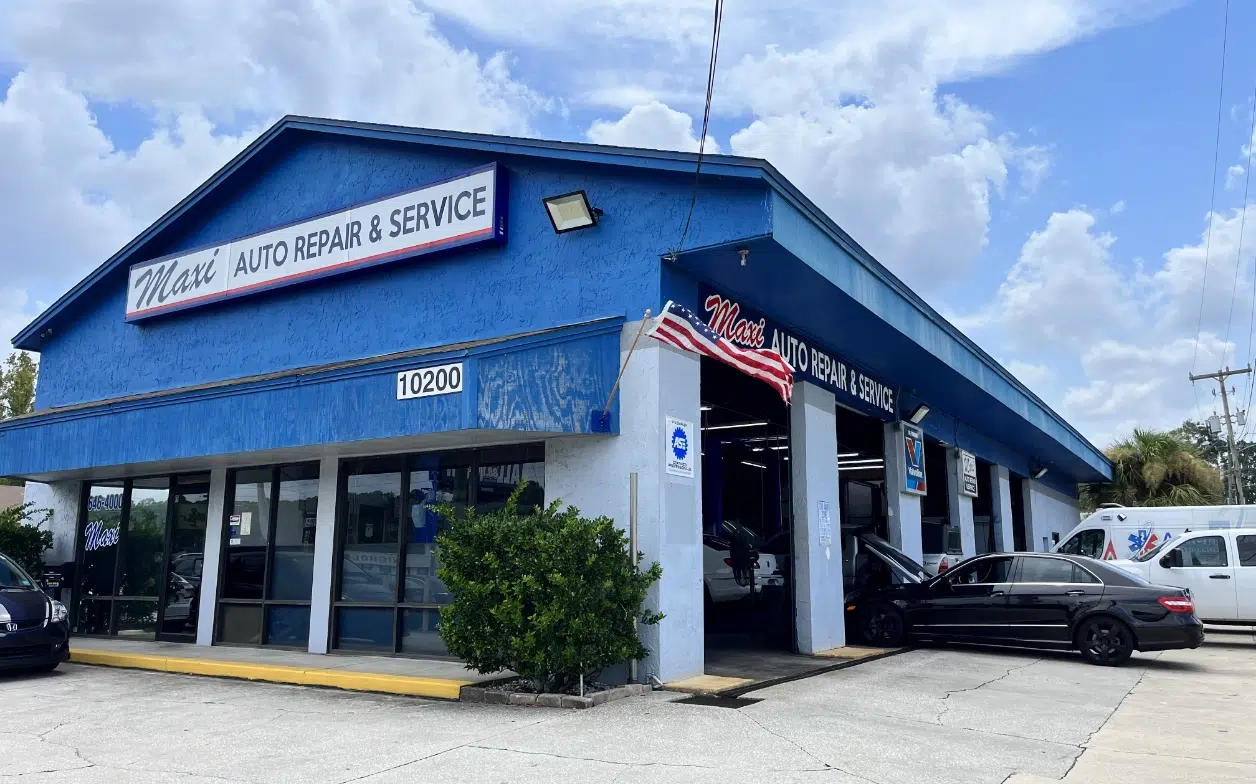
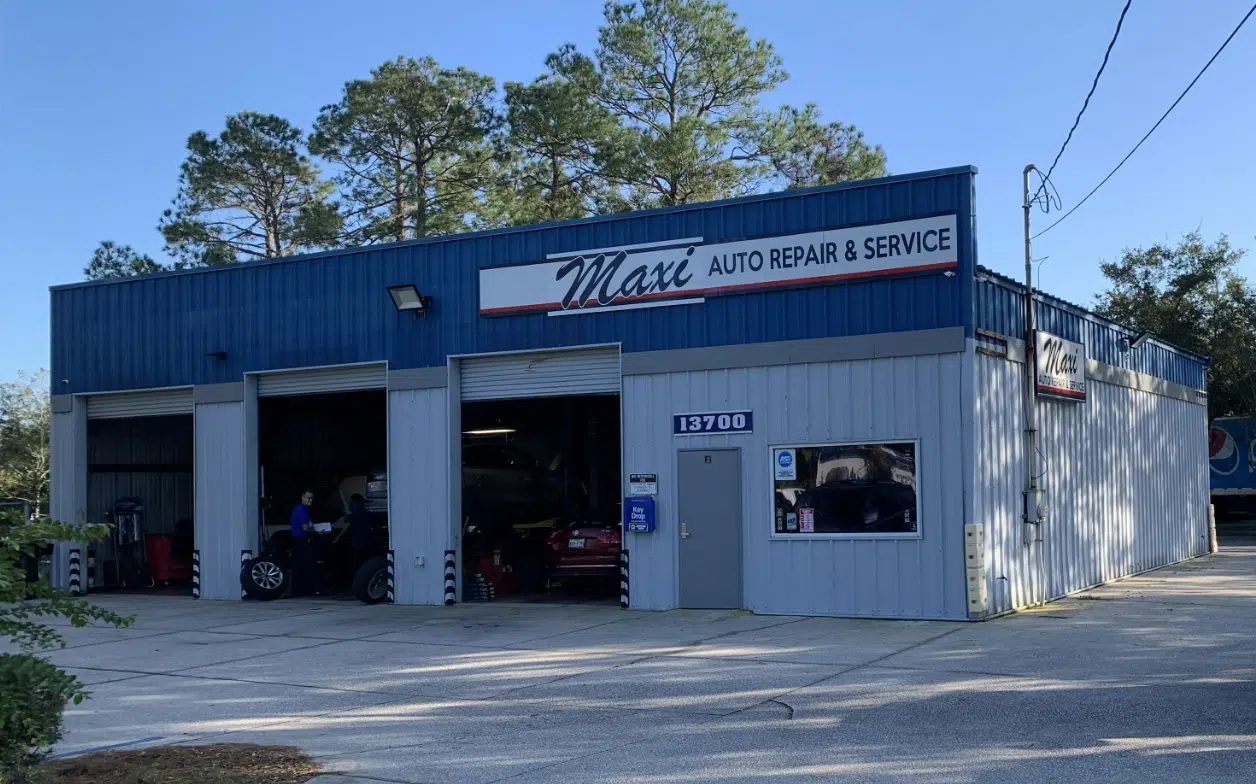
Four locations, all staffed by ASE-certified technicians with Ford experience:
Beach Boulevard — (904) 646-4000 | Riverside — (904) 358-9800 | Hodges — (904) 992-6868 | San Marco — (904) 931-4388
Monday–Friday, 7:30 AM – 5:30 PM. All work backed by our 3-Year / 36,000-Mile Nationwide Warranty.
Frequently Asked Questions
Can an independent mechanic work on my Ford without voiding the warranty?
Yes. The Magnuson-Moss Warranty Act protects your right to have maintenance and non-warranty repairs performed at any qualified shop without voiding your manufacturer warranty. You are not required to use a Ford dealership for oil changes, brake service, or other routine maintenance.
Does an independent shop have Ford diagnostic tools?
Professional independent shops like Maxi’s Mechanics use Snap-On, Autel, or other professional-grade scan tools that read Ford-specific codes, access module data, and perform bi-directional testing. These tools access the same diagnostic information as Ford’s IDS system for the vast majority of repairs.
How much cheaper is an independent shop vs Ford dealership?
Labor rates at independent shops in Jacksonville typically run $100–$140/hour compared to $150–$200/hour at Ford dealerships. On a major repair like cam phaser replacement (8+ hours), that labor rate difference alone saves $400–$500. Parts pricing is typically comparable when using OEM-equivalent quality components.
References
[1] NHTSA. “Vehicle Safety Recalls and Technical Service Bulletins.” National Highway Traffic Safety Administration. nhtsa.gov
[2] ASE. “About ASE Certification.” National Institute for Automotive Service Excellence. ase.com