Professional Suspension Repair Services in Hodges, Jacksonville
Maxi’s Mechanics provides comprehensive suspension repair and diagnostic services for Jacksonville drivers in the Hodges area, addressing shocks, struts, control arms, and alignment issues with ASE-certified technicians at four convenient locations across Jacksonville, FL.
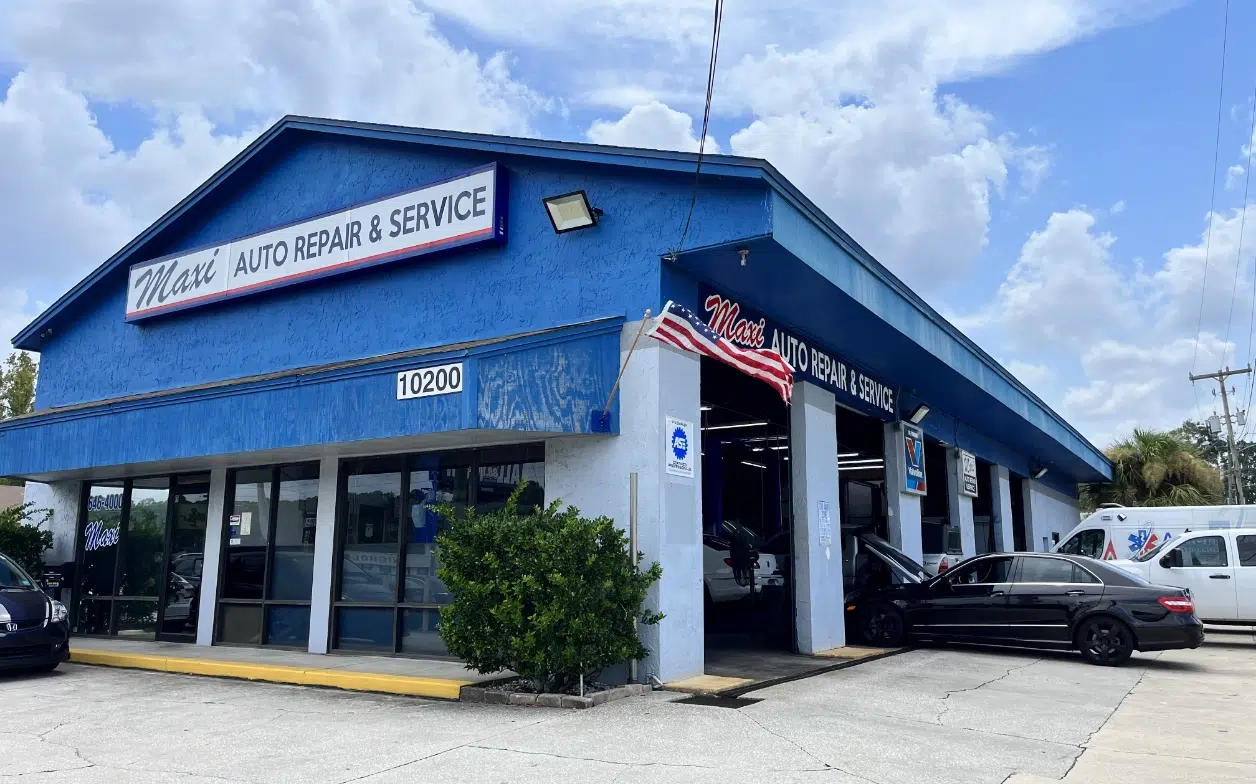
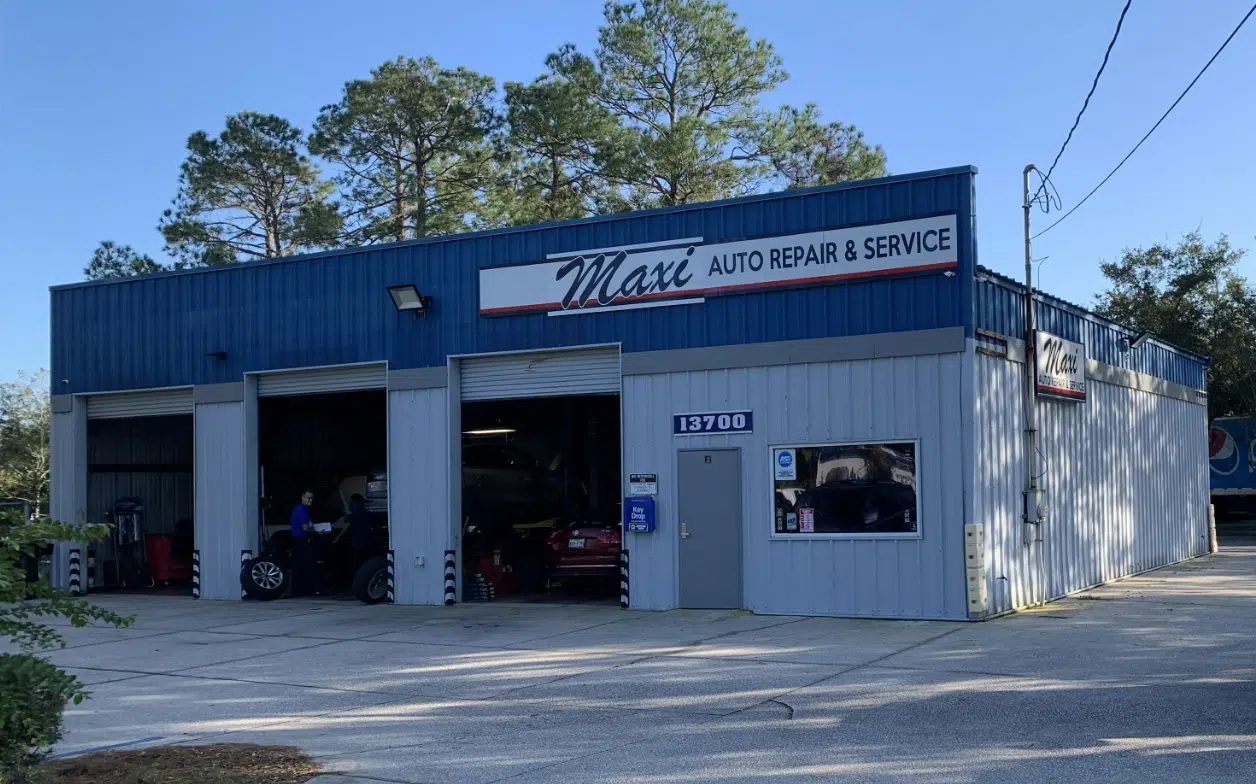
Maxi’s Mechanics provides professional suspension repair and maintenance services for drivers in the Hodges Boulevard area and throughout Jacksonville — delivering expert diagnostics, quality parts, and transparent pricing at our four Jacksonville locations since 2003.
Written by The Maxi’s Mechanics Team — Maxi’s Mechanics is a full-service auto repair shop serving Jacksonville, FL since 2003, with locations on Hodges Blvd, in San Marco, Riverside, and on Beach Blvd.
What Are the Signs Your Suspension Needs Repair in Jacksonville?
The most common signs of suspension problems include excessive bouncing after hitting bumps, uneven tire wear, the vehicle pulling to one side, and a noticeable decrease in ride comfort. Jacksonville’s road conditions — including potholes on Beach Boulevard, uneven pavement on I-295, and frequent stop-and-go traffic on Hodges Boulevard — accelerate suspension component wear compared to highway-only driving.[1]
Drivers should also watch for clunking or rattling noises when turning or going over speed bumps, steering wheel vibration at highway speeds, and the vehicle sitting lower on one corner. These symptoms indicate worn shock absorbers, damaged struts, failing ball joints, or compromised control arm bushings. The National Highway Traffic Safety Administration reports that suspension failures contribute to loss of vehicle control, making prompt diagnosis essential for safety.[2]
If your vehicle exhibits a nose-dive during braking or excessive body roll during cornering, the shock absorbers or struts have likely exceeded their service life. Most manufacturers recommend suspension inspection every 50,000 miles, but Jacksonville’s climate and road conditions often require more frequent evaluation.[3]
How Does Suspension Repair Work at Our Hodges Location?
Our suspension repair process begins with a comprehensive visual inspection and test drive to identify worn components, followed by precision measurement of ride height, wheel alignment, and component play. We use diagnostic equipment calibrated to manufacturer specifications to measure suspension geometry and identify deviations that affect handling and tire wear.
The repair process typically involves raising the vehicle on a lift, removing the wheel assemblies, and inspecting shock absorbers, struts, springs, control arms, ball joints, tie rod ends, and sway bar links. We check rubber bushings for cracking and deterioration, test shock absorbers for fluid leaks, and measure ball joint play with dial indicators. Each component is evaluated against the vehicle manufacturer’s wear limits documented in service manuals.[4]
After replacing worn components with quality parts, we perform a four-wheel alignment to restore the vehicle to factory specifications. The alignment process adjusts camber, caster, and toe angles to ensure even tire contact with the road surface. We provide before-and-after alignment printouts showing the corrections made, giving you documentation of the precision work performed on your vehicle.
What Suspension Components Fail Most Often in Jacksonville Vehicles?
Shock absorbers and struts are the most frequently replaced suspension components, typically requiring replacement between 50,000 and 100,000 miles depending on driving conditions. These hydraulic dampers control spring oscillation and maintain tire contact with the road surface. Florida’s heat accelerates seal deterioration, causing fluid leaks that reduce damping effectiveness.[5]
| Component | Typical Service Life | Common Failure Mode | Symptoms |
|---|---|---|---|
| Shock Absorbers | 50,000-100,000 miles | Seal leaks, internal wear | Excessive bouncing, poor handling |
| Struts | 50,000-100,000 miles | Seal failure, mount wear | Clunking noise, uneven tire wear |
| Ball Joints | 70,000-150,000 miles | Boot tears, bearing wear | Clunking when turning, loose steering |
| Control Arm Bushings | 60,000-100,000 miles | Rubber deterioration | Steering wander, vibration |
| Sway Bar Links | 50,000-80,000 miles | Bushing wear, stud loosening | Rattling over bumps |
Control arm bushings and ball joints deteriorate more slowly but require replacement when rubber tears or metal-to-metal contact develops. Jacksonville’s humidity and temperature fluctuations cause rubber suspension components to harden and crack faster than in moderate climates. We inspect these components during every service to catch wear before it affects vehicle safety.
Why Is Wheel Alignment Critical After Suspension Repair?
Any suspension component replacement that disconnects steering or suspension linkage requires a wheel alignment to restore proper tire contact angles and prevent premature tire wear. Modern vehicles use precise suspension geometry to balance handling, tire life, and fuel efficiency. When mechanics replace struts, control arms, tie rod ends, or adjust ride height, they alter the relationship between the wheels and the road surface.[6]
A four-wheel alignment measures and adjusts three primary angles: camber (wheel tilt in/out when viewed from front), caster (steering axis angle when viewed from side), and toe (wheel direction when viewed from above). Incorrect alignment causes tires to scrub sideways as they roll, generating heat and accelerating tread wear. The Tire Industry Association reports that misalignment can reduce tire life by 25% or more.[7]
We perform alignment after every suspension repair that affects wheel position. Our computerized alignment system measures angles to one-tenth of a degree and compares readings to the vehicle manufacturer’s specifications. The alignment printout documents initial measurements, final settings, and confirms all angles fall within the acceptable range. This precision protects your tire investment and ensures predictable handling characteristics.
What Brands and Parts Do We Use for Suspension Repairs?
We install OE-equivalent and premium aftermarket suspension components from manufacturers including Monroe, KYB, Moog, and TRW that meet or exceed original equipment specifications. Part selection depends on your vehicle’s requirements, driving habits, and budget. We explain the differences between economy, OE-equivalent, and performance options so you can make an informed decision.
For shock absorbers and struts, we stock gas-charged monotube and twin-tube designs. Gas-charged shocks resist fade during sustained use and perform better in Florida’s heat. Premium struts include new coil spring isolators and mounting hardware, eliminating the need to reuse worn components. We warranty parts and labor, giving you confidence in the repair quality.
For steering and suspension bushings, we prefer polyurethane components for vehicles with higher mileage or performance applications. Polyurethane resists deterioration better than rubber in hot climates and maintains tighter tolerances over its service life. Ball joints and tie rod ends receive greaseable designs when available, allowing periodic lubrication that extends component life.
Need suspension repair near Hodges Boulevard? Schedule service at Maxi’s Mechanics — Hodges Blvd, San Marco, Riverside, or Beach Blvd. Call (904) 555-0199 or book online today.
How Much Does Suspension Repair Cost in Jacksonville?
Suspension repair costs range from $200 to $1,500 depending on which components require replacement and your vehicle’s design complexity. Replacing a single sway bar link costs $150-$250 including parts and labor, while a complete four-corner shock and strut replacement with alignment can exceed $1,200 for luxury vehicles with electronic suspension systems.[8]
Strut replacement costs more than shock replacement because struts serve as structural suspension members. The repair requires compressing the coil spring, which demands specialized tools and safety procedures. Most shops charge $300-$600 per axle for strut replacement including alignment. Shock absorbers are simpler to replace, typically costing $200-$400 per axle.
We provide written estimates before beginning work and explain which repairs address immediate safety concerns versus preventive maintenance. Some suspension repairs qualify for phased completion — replacing the most worn components first and scheduling remaining work based on your budget and the parts’ remaining service life. Our transparent pricing includes parts, labor, shop supplies, and alignment when required.
Frequently Asked Questions
How long does suspension repair take at the Hodges location?
Most suspension repairs require 2-4 hours depending on component accessibility and whether alignment is needed. Replacing front struts with alignment typically takes 3-4 hours, while shock absorber replacement may be completed in 2-3 hours.
Can I drive with worn suspension components?
Driving with severely worn suspension reduces vehicle control and increases stopping distances, particularly on wet roads. Failed ball joints or tie rod ends can separate completely, causing loss of steering control. We recommend addressing suspension problems promptly.
Do you replace suspension components in pairs?
Yes, we replace shocks, struts, and control arms in pairs (both fronts or both rears) to maintain balanced handling characteristics. Mixing new and worn components causes the vehicle to handle unpredictably and accelerates wear on the new part.
Will suspension repair fix my uneven tire wear?
Suspension repair combined with wheel alignment will stop the cause of uneven tire wear, but it cannot reverse existing damage. Tires with severe wear patterns should be replaced after suspension repair to ensure safe, predictable handling.
Do you offer warranty on suspension repairs?
Yes, we warranty suspension repairs for 12 months or 12,000 miles on parts and labor. Premium components may include longer manufacturer warranties. We stand behind our work and will address any issues that arise during the warranty period.
Don’t let suspension problems compromise your safety or comfort on Jacksonville roads. Schedule your suspension inspection at Maxi’s Mechanics — serving Hodges, San Marco, Riverside, and Beach Boulevard with expert diagnostics and quality repairs. Call (904) 555-0199 or book your appointment online today.
Written by The Maxi’s Mechanics Team — Maxi’s Mechanics is a full-service auto repair shop serving Jacksonville, FL since 2003, with locations on Hodges Blvd, in San Marco, Riverside, and on Beach Blvd. Updated January 2026.
References
- Florida Department of Transportation. Road Condition Reports and Pavement Management. https://www.fdot.gov/
- National Highway Traffic Safety Administration. Vehicle Suspension Systems and Safety. https://www.nhtsa.gov/
- Car Care Council. Suspension System Maintenance Guidelines. https://www.carcare.org/
- Automotive Service Association. Suspension Inspection and Repair Standards. https://www.asashop.org/
- Monroe Shocks & Struts. Shock Absorber Service Life and Replacement Intervals. https://www.monroe.com/
- Hunter Engineering Company. Wheel Alignment Specifications and Procedures. https://www.hunter.com/
- Tire Industry Association. Effects of Misalignment on Tire Wear. https://www.tireindustry.org/
- Automotive Aftermarket Suppliers Association. Suspension Component Pricing and Labor Guide. https://www.aftermarketsuppliers.org/