Car AC Repair Cost: Jacksonville, FL Price Guide
Car AC repair costs in Jacksonville range from $150 for a simple refrigerant recharge to over $1,500 for compressor replacement, with most diagnostic fees starting at $89-$129. Maxi’s Mechanics provides transparent pricing across all four Jacksonville locations, backed by ASE-certified technicians and 20+ years of Florida climate expertise.
Car AC repair typically costs between $150 and $1,500, depending on whether you need a simple refrigerant recharge, leak repair, or major component replacement like a compressor or condenser. The wide range reflects the complexity of automotive air conditioning systems — a system with multiple failure points from electrical components to pressurized lines. Jacksonville’s heat and humidity accelerate AC wear, making understanding these costs essential for Florida drivers.
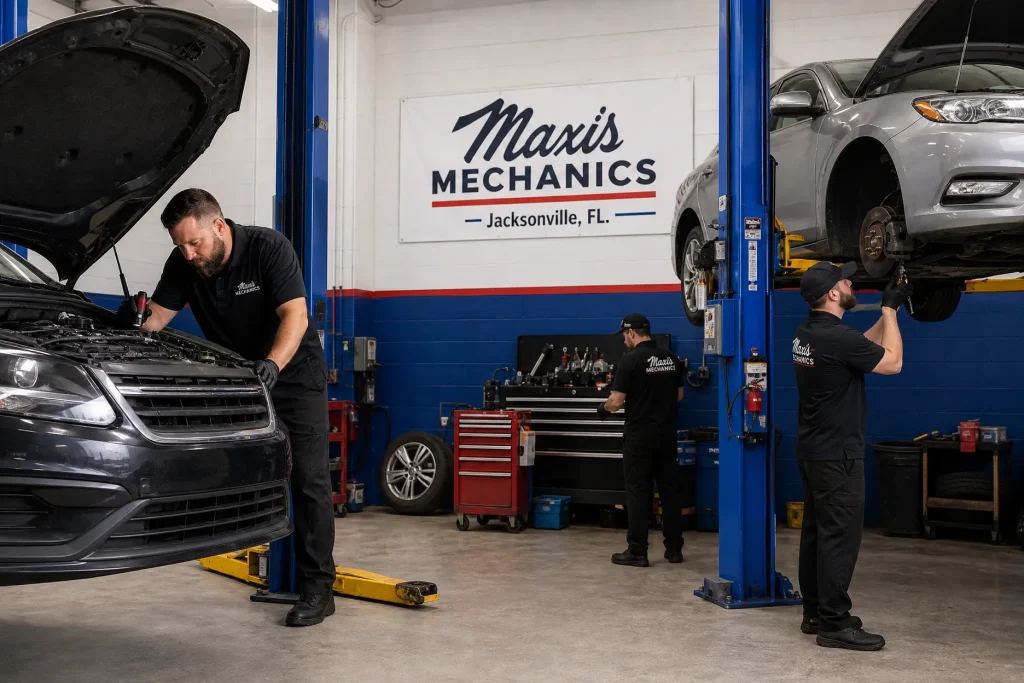
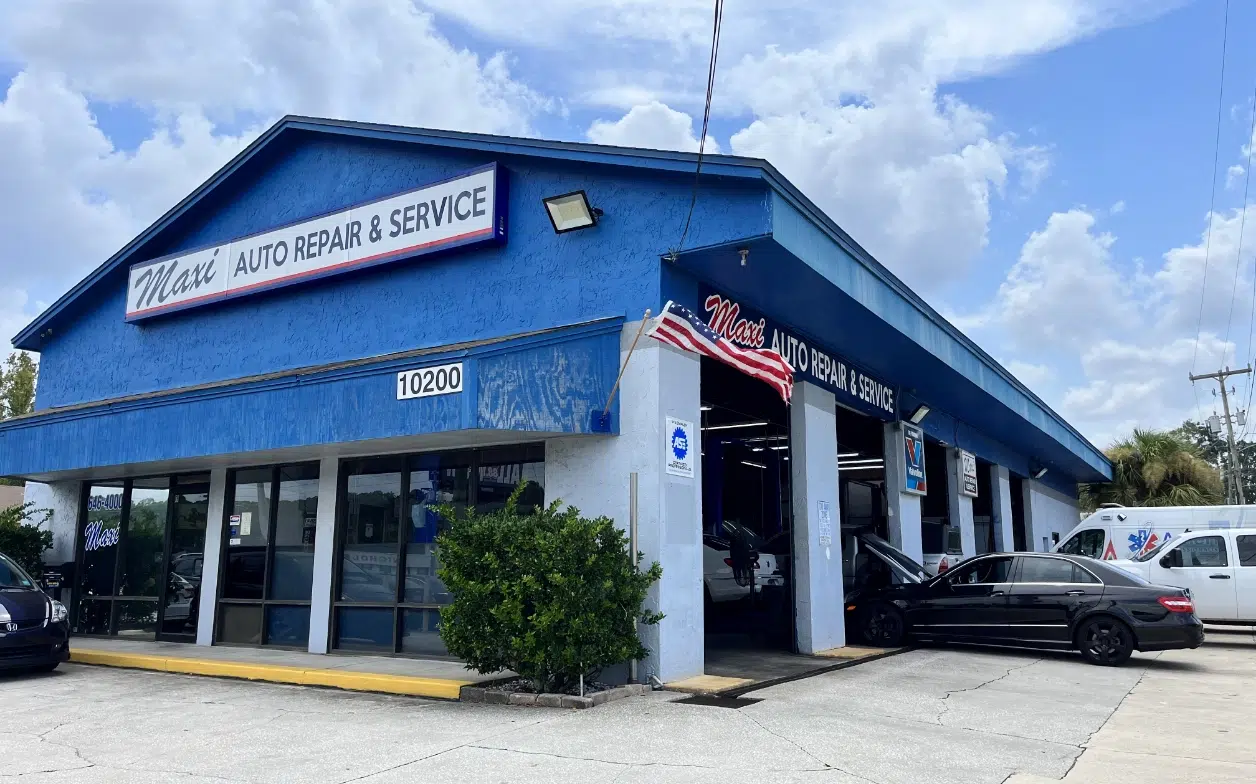
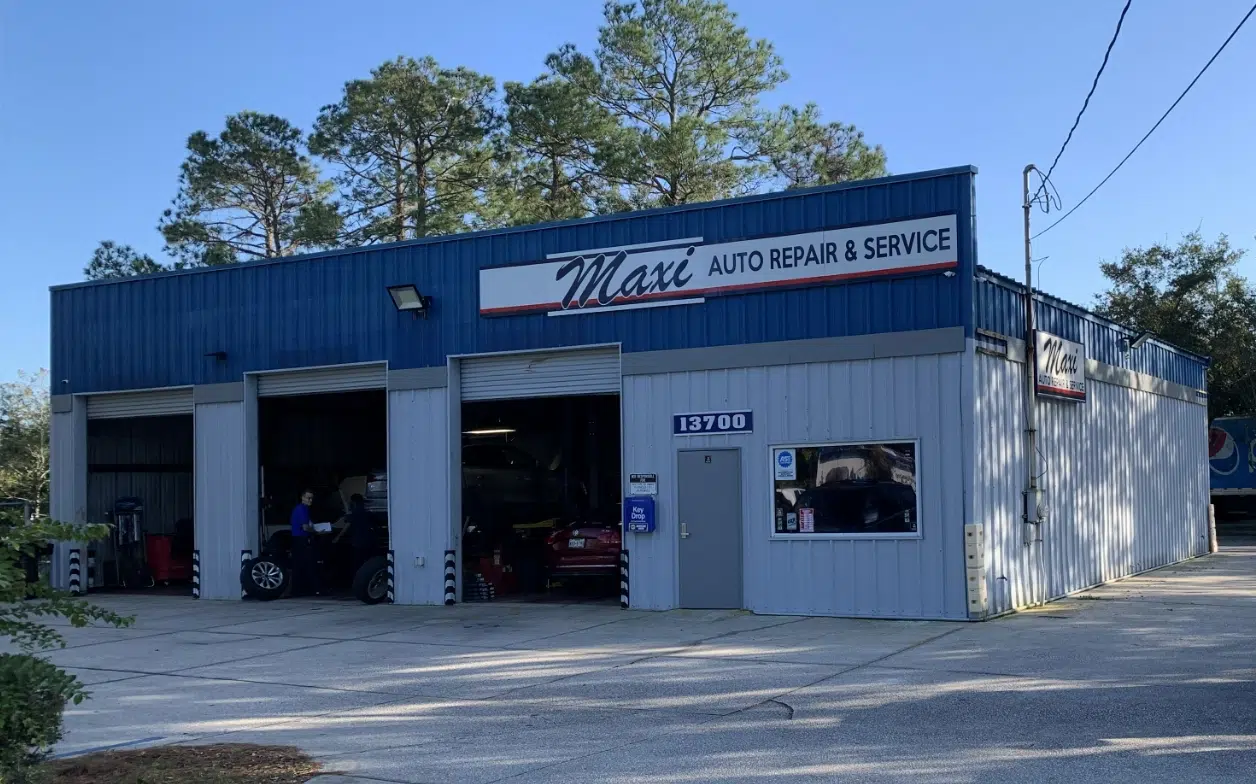
Written by The Team at Maxi’s Mechanics — Maxi’s Mechanics is a veteran-owned, ASE-certified auto repair shop serving Jacksonville, FL since 2003, with four locations: Beach Blvd, Riverside, Hodges, and San Marco.
What Is the Average Cost to Recharge a Car AC?
A standard AC recharge costs $150-$250 at most Jacksonville repair shops. This service includes evacuating old refrigerant, checking for gross leaks, and refilling the system to manufacturer specifications with R-134a or the newer R-1234yf refrigerant.[1] The price difference typically reflects refrigerant type — R-1234yf runs $70-$100 more due to its advanced formulation required in vehicles manufactured after 2017.
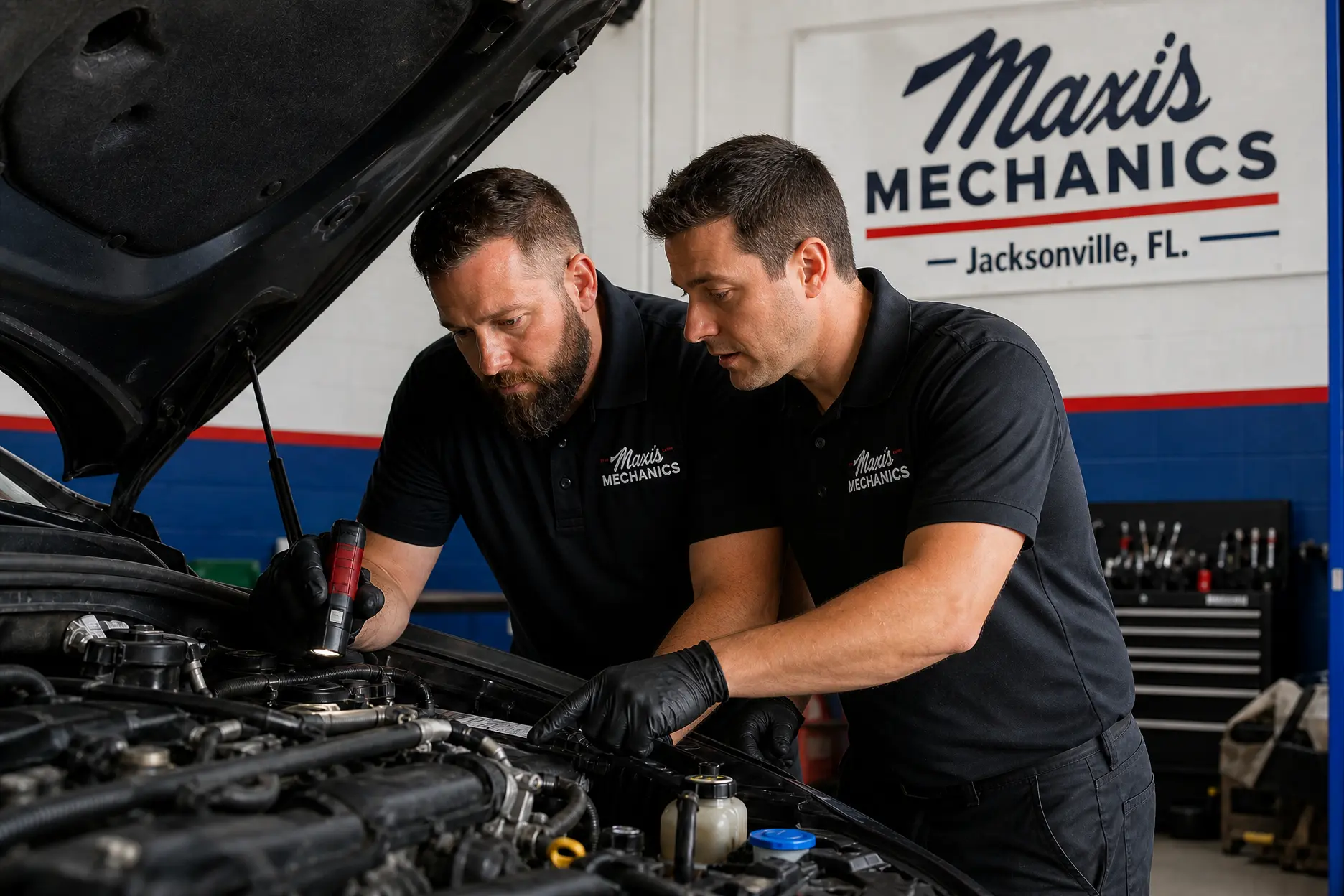
A recharge addresses low refrigerant levels but does not fix leaks. If your system loses pressure within weeks, you have a leak that requires repair, not just topping off. Most ASE-certified shops include a basic pressure test with recharges to identify immediate leak issues.[2] At Maxi’s Mechanics, our diagnostic process combines visual inspection with electronic leak detection to find even pinhole leaks in hoses and seals before recharging the system.
How Much Does AC Leak Repair Cost?
AC leak repairs range from $200 for a simple hose replacement to $800+ for evaporator core leaks. The cost depends entirely on leak location and labor accessibility. Hose and O-ring leaks at connection points represent the easiest fixes — parts cost $20-$60, with labor adding $150-$250.[3] Condenser leaks (front of vehicle, behind the grille) run $400-$800 due to part costs and the need to remove bumper covers and crash bars.
Evaporator core leaks present the costliest scenario because the evaporator sits deep inside the dashboard. Repair requires 6-8 hours of labor to disassemble the dash, plus the evaporator core itself ($200-$400). Total bills reach $1,000-$1,400 for this repair.[4] Many shops recommend replacing the expansion valve and receiver-drier simultaneously during evaporator work, since the system is already open and these components often fail together in Florida’s humidity.
Can You Drive With an AC Leak?
You can drive safely with an AC leak, but continued operation without refrigerant damages the compressor. Once refrigerant levels drop below minimum pressure, the compressor runs dry and overheats, leading to internal seal failure and metal-on-metal wear. A $200 leak repair becomes a $1,200 compressor job if ignored for months.
What Does AC Compressor Replacement Cost?
Compressor replacement costs $800-$1,500 including parts, labor, and system flush. The compressor is the heart of your AC system, circulating refrigerant under high pressure. When compressors fail, they often shed metal debris throughout the system, requiring a complete flush of lines, condenser, and evaporator to prevent contaminating the new compressor.[5]
OEM compressors cost $400-$700 depending on vehicle make, while quality aftermarket units run $250-$450. Labor adds 2-4 hours at $100-$150/hour. The flush procedure, mandatory to protect warranty coverage on the new compressor, adds $150-$250. Jacksonville shops must also replace the receiver-drier ($50-$100) whenever opening the system, as this component absorbs moisture and saturates quickly in Florida’s 70-80% humidity environment.
| Repair Type | Parts Cost | Labor Cost | Total Range |
|---|---|---|---|
| AC Recharge (R-134a) | $50-$75 | $100-$150 | $150-$225 |
| AC Recharge (R-1234yf) | $120-$175 | $100-$150 | $220-$325 |
| Hose/O-Ring Leak Repair | $20-$60 | $150-$250 | $170-$310 |
| Condenser Replacement | $200-$450 | $200-$400 | $400-$850 |
| Evaporator Core Replacement | $250-$450 | $700-$1,000 | $950-$1,450 |
| Compressor Replacement + Flush | $400-$800 | $400-$700 | $800-$1,500 |
How Much Does AC Diagnostic Testing Cost?
AC diagnostic fees run $89-$129 at most Jacksonville shops and typically apply toward repair costs. A proper diagnostic includes pressure testing, electronic leak detection, compressor clutch engagement testing, and refrigerant purity analysis. These tests identify whether you face a simple recharge, a leak, electrical failure, or compressor damage.[6]
Some quick-lube chains offer free AC checks, but these usually consist of only a pressure gauge reading — insufficient to diagnose leaks or failing components. ASE-certified technicians use manifold gauge sets to measure both high and low side pressures, compare readings against manufacturer specifications, and pinpoint failure modes. At Maxi’s four Jacksonville locations, our diagnostic process includes UV dye injection for leak detection, ensuring we find slow leaks that pressure tests miss.
What Factors Affect Car AC Repair Costs?
Vehicle make, refrigerant type, and component accessibility are the three biggest cost drivers. Luxury and European vehicles often use proprietary parts and require specialized tools, increasing both parts and labor costs by 30-50%. A BMW 5-Series condenser costs $600 versus $250 for a Honda Civic condenser, even though both perform identical functions.[7]
Refrigerant type significantly impacts recharge costs. R-1234yf costs more than R-134a but is mandatory in 2018+ model-year vehicles due to EPA regulations. Labor accessibility varies wildly — front-wheel-drive vehicles with transverse engines often require removing the entire front clip to access the condenser, while rear-wheel-drive trucks offer open engine bay access. Florida’s environment adds another variable: salt air corrosion near Jacksonville Beach accelerates condenser deterioration, while inland vehicles face less corrosion but higher compressor wear from extended high-temperature operation eight months per year.
Schedule service at your nearest Maxi’s Mechanics location in Jacksonville — call (904) 646-4000 or book online at maxiautorepair.com.
Can You Prevent Expensive AC Repairs?
Running your AC year-round and addressing weak airflow immediately are the two most effective prevention strategies. Monthly AC operation, even in winter, keeps seals lubricated and prevents refrigerant from settling in one area of the system. Stagnant refrigerant leads to seal drying and cracking, creating leaks that cost $400-$800 to repair.[8]
Weak airflow often signals a clogged cabin air filter ($25-$45 replacement) or failing blower motor ($250-$400 repair). Ignoring weak airflow forces the system to run longer cycles, overworking the compressor and reducing its lifespan by years. Jacksonville drivers should replace cabin filters every 12,000 miles due to pollen, humidity, and coastal air particulates. Annual AC performance checks before summer catch small issues — a $30 O-ring replacement versus a $1,200 compressor failure six months later.
Frequently Asked Questions
Is AC repair covered under car warranty?
Factory powertrain warranties typically exclude AC systems unless you purchased an extended warranty with climate control coverage. Most manufacturer bumper-to-bumper warranties cover AC for 3 years/36,000 miles, after which repairs are owner responsibility.
How long does car AC repair take?
Simple recharges take 45-60 minutes, while leak repairs require 2-3 hours depending on location. Compressor or evaporator replacement jobs take 4-8 hours due to system flushing and dashboard disassembly requirements.
Should I use a mobile AC recharge kit?
DIY recharge kits risk overcharging the system, which damages the compressor and voids warranties. Professional equipment accurately measures refrigerant by weight, while canned kits rely on imprecise pressure gauges that often lead to 20-30% overfilling.
Why does my AC blow cold then warm?
Intermittent cooling indicates either low refrigerant (system pressure drops during operation) or a failing compressor clutch that disengages under load. Both require professional diagnosis — adding refrigerant to a failing compressor accelerates damage.
Does AC refrigerant need to be replaced periodically?
No, AC systems are sealed and do not consume refrigerant through normal operation. If you need recharges more than once every 3-5 years, you have a leak that requires repair, not repeated top-offs.
Understanding AC repair costs helps you budget for Jacksonville’s demanding climate and avoid surprise bills. Whether you need a simple recharge or major component replacement, transparent pricing and proper diagnostics ensure you pay for the repair you need, not unnecessary services.
Written by The Team at Maxi’s Mechanics — Maxi’s Mechanics is a veteran-owned, ASE-certified auto repair shop serving Jacksonville, FL since 2003, with four locations: Beach Blvd, Riverside, Hodges, and San Marco. Updated January 2026.
References
- U.S. Environmental Protection Agency. Refrigerant Transition – Automotive Air Conditioning. https://www.epa.gov/mvac
- Automotive Service Association. ASE Certification Standards for HVAC Systems. https://www.asashop.org
- Mobile Air Conditioning Society Worldwide. Common AC System Leaks. https://www.macsw.org
- National Institute for Automotive Service Excellence. Climate Control System Repair Guide. https://www.ase.com
- Society of Automotive Engineers. AC Compressor Failure Analysis. https://www.sae.org
- Automotive Maintenance and Repair Association. Diagnostic Procedures Best Practices. https://www.amra.org
- Mitchell 1. Automotive Labor Time Guide. https://www.mitchell1.com
- Car Care Council. Preventive Maintenance for Climate Control Systems. https://www.carcare.org