Why Is My Car AC Blowing Warm Air Instead of Cold?
A car AC blowing warm air typically results from refrigerant leaks, a failing compressor, clogged condenser fins, or electrical faults in the climate control system. Maxi’s Mechanics in Jacksonville, FL diagnoses and repairs all AC system failures using ASE-certified technicians and specialized refrigerant recovery equipment at four convenient locations.
A car AC blowing warm air instead of cold is usually caused by low refrigerant levels, compressor failure, condenser blockages, or electrical issues. Refrigerant is the chemical that absorbs cabin heat and releases it outside the vehicle—when it leaks or runs low, the system cannot cool effectively. The compressor circulates refrigerant under pressure; if it fails, no cooling occurs. Condenser coils transfer heat to outside air, but road debris, bugs, and dirt block airflow and reduce efficiency. Electrical faults—blown fuses, bad relays, faulty pressure switches—prevent the compressor clutch from engaging. Each of these failures presents with specific symptoms that ASE-certified technicians can diagnose using pressure gauges, leak detection dyes, and scan tools.
Written by The Team at Maxi’s Mechanics — Maxi’s Mechanics is a veteran-owned, ASE-certified auto repair shop serving Jacksonville, FL since 2003, with four locations: Beach Blvd, Riverside, Hodges, and San Marco.
What Causes a Car AC to Blow Warm Air?
Low refrigerant is the most common cause of warm AC air—leaks in hoses, seals, the evaporator, or condenser allow refrigerant to escape, and the system cannot absorb enough heat to cool the cabin. Modern vehicles use R-134a or R-1234yf refrigerant, both of which operate under high pressure (200-250 psi on the low side, 300-400 psi on the high side).[1] Even a small leak can drop pressure below the threshold needed for cooling. Common leak points include rubber O-rings at hose connections, the evaporator core (located behind the dashboard), and stone-damaged condenser fins. Florida’s heat and humidity accelerate rubber deterioration, making Jacksonville vehicles especially vulnerable to refrigerant loss.[2]
Compressor failure is the second leading cause. The compressor is a belt-driven pump that pressurizes refrigerant and moves it through the system. Internal wear, seized bearings, or a failed clutch assembly prevent circulation. You may hear grinding noises or see the compressor pulley spinning without the clutch engaging. Condenser blockages reduce heat exchange—the condenser sits in front of the radiator and relies on airflow to dissipate heat. A clogged condenser cannot cool refrigerant before it returns to the evaporator, resulting in warm air output. Electrical faults—bad fuses, relays, or pressure switches—interrupt power to the compressor clutch, preventing system operation even when refrigerant levels are correct.
How Do You Diagnose Why Your Car AC Is Not Cold?
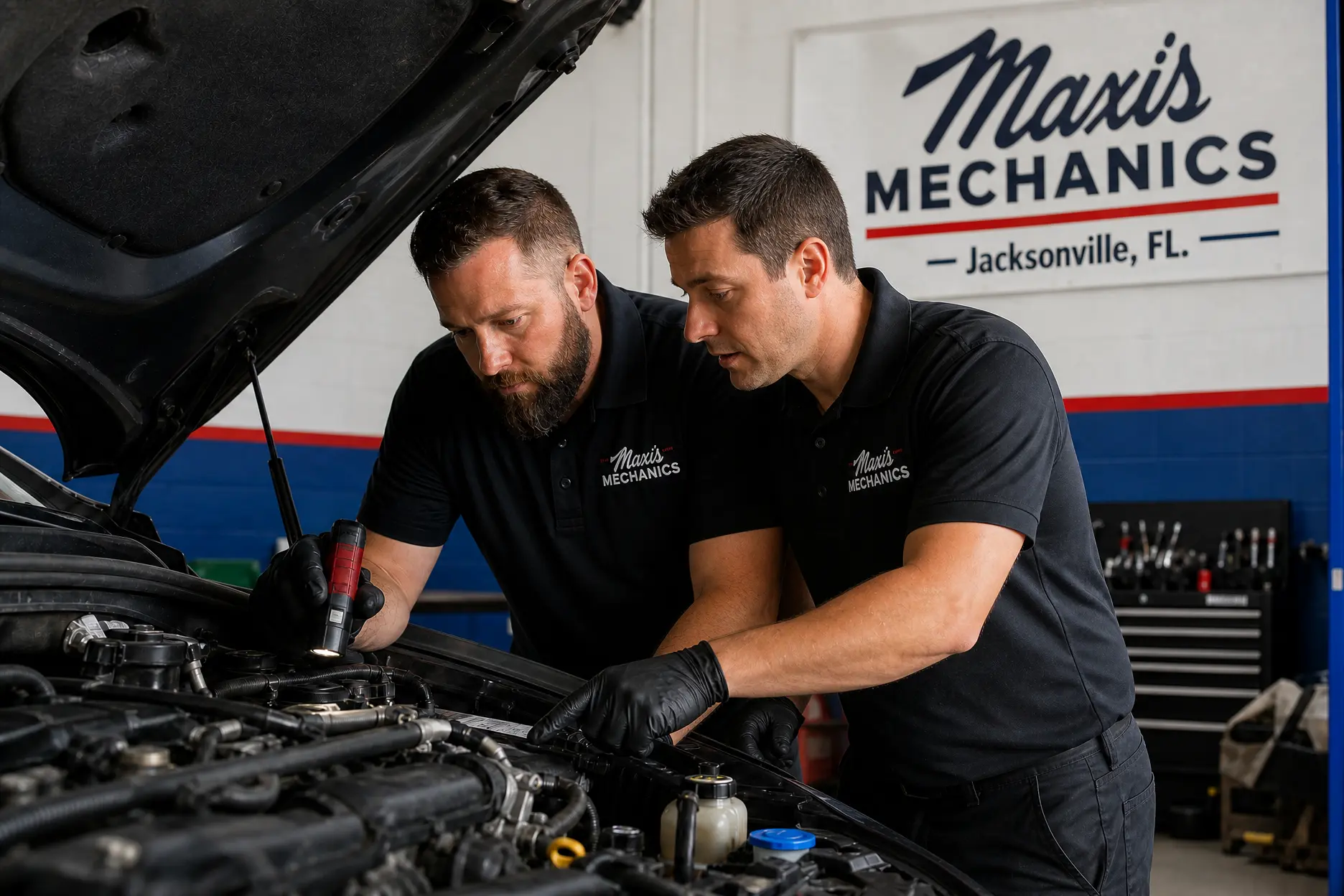
ASE-certified technicians diagnose AC failures using manifold gauge sets, UV leak detection dye, and scan tools to measure system pressures, locate refrigerant leaks, and check for electrical fault codes. A manifold gauge connects to the low- and high-pressure service ports and displays real-time system pressures. Normal readings for R-134a at 80°F ambient are approximately 40-50 psi low side and 200-250 psi high side.[3] Low pressure on both sides indicates insufficient refrigerant; high pressure on both sides suggests a clogged condenser or cooling fan failure. Uneven pressures point to compressor or expansion valve issues.
UV dye injected into the system fluoresces under a black light, revealing leak locations invisible to the naked eye. Evaporator leaks show up inside the HVAC case; condenser leaks appear on the coil face or seams. Scan tools retrieve diagnostic trouble codes (DTCs) related to AC pressure sensors, compressor clutch circuits, and ambient temperature sensors. Florida’s EPA regulations require certified recovery equipment during refrigerant service—technicians cannot legally vent refrigerant to atmosphere and must reclaim, recycle, and recharge using approved machines.[4] At Maxi’s Mechanics, we use Robinair AC service stations that recover old refrigerant, vacuum the system to remove moisture and air, and recharge to factory specifications.
What Are the Most Common Car AC Repairs in Jacksonville?
Refrigerant recharge, compressor replacement, condenser replacement, and evaporator core replacement are the most frequent AC repairs in Jacksonville, with costs ranging from $150 for a simple recharge to $1,200+ for evaporator service. A basic recharge involves recovering remaining refrigerant, pulling vacuum for 30-45 minutes to remove moisture, and adding the manufacturer-specified amount of new refrigerant and PAG oil. This repair addresses small, slow leaks or systems that have lost charge over time. If pressure testing reveals a significant leak, component replacement is necessary.
| Repair | Typical Cost | Labor Time | Common Symptoms |
|---|---|---|---|
| Refrigerant Recharge | $150-$250 | 1 hour | Gradually warming air, low pressure readings |
| Compressor Replacement | $600-$1,000 | 3-4 hours | No cold air, grinding noise, clutch won’t engage |
| Condenser Replacement | $400-$700 | 2-3 hours | Intermittent cooling, high-side pressure spike |
| Evaporator Replacement | $900-$1,400 | 6-8 hours | Sweet smell in cabin, oily residue on floor, zero cooling |
| Expansion Valve/Orifice Tube | $200-$400 | 1-2 hours | Icing on lines, fluctuating vent temperature |
Compressor replacement requires flushing the entire system to remove metal shavings and contaminated oil, replacing the receiver-drier or accumulator, and installing a new compressor with a fresh clutch assembly. Condenser replacement is common in Jacksonville due to road debris damage from I-95 and Beach Boulevard traffic. Evaporator replacement is the most labor-intensive repair because it requires removing the entire dashboard to access the HVAC case—symptoms include a sweet antifreeze smell (from leaking refrigerant mixing with evaporator moisture) and oily residue on the passenger floor.[5]
Schedule service at your nearest Maxi’s Mechanics location in Jacksonville—call (904) 646-4000 or book online at maxiautorepair.com.
Can You Drive a Car When the AC Is Blowing Warm Air?
You can drive a car with a malfunctioning AC system, but prolonged exposure to Florida heat increases the risk of heat exhaustion, reduced alertness, and vehicle overheating if the cooling fan shares circuits with the AC system. The National Highway Traffic Safety Administration warns that cabin temperatures in parked vehicles can exceed 130°F in Jacksonville summers, and even with windows cracked, interior temps climb 20-30 degrees above ambient within 15 minutes.[6] While the AC system itself does not affect engine operation, some vehicles use the AC condenser fan to assist radiator cooling. If a failed AC pressure switch prevents fan activation, engine temperatures can rise in stop-and-go traffic.
Driving without AC also risks compressor seizure. If refrigerant has leaked completely, running the AC engages a compressor with no lubrication, causing internal damage. The compressor clutch should disengage automatically when pressure drops too low, but faulty pressure switches can allow dry operation. Additionally, moisture enters the system through leaks, and without refrigerant circulation, water corrodes aluminum components and forms ice blockages at the expansion valve.[7] Addressing AC issues promptly prevents secondary damage and preserves system longevity.
How Can You Prevent Your Car AC from Blowing Warm Air?
Running the AC at least once a week year-round, replacing the cabin air filter every 12,000 miles, and scheduling annual AC performance checks prevent most warm air problems. Monthly AC operation circulates refrigerant and oil throughout the system, keeping seals lubricated and preventing dry rot. Florida’s humidity accelerates mold and mildew growth in the evaporator core—switching to fresh air mode and running the fan on high for two minutes before shutting off the vehicle helps dry the evaporator and reduce odors.
Cabin air filters trap pollen, dust, and debris before they reach the evaporator. A clogged filter restricts airflow, reducing cooling efficiency and forcing the blower motor to work harder. Most filters are located behind the glove box or under the hood near the windshield cowl and take 10 minutes to replace. Condenser fin cleaning is critical in Jacksonville—wash the condenser face with a garden hose (low pressure to avoid bending fins) during regular car washes to remove bugs, leaves, and road salt. Annual performance checks measure system pressures, inspect hoses and connections for leaks, and verify proper compressor clutch engagement before peak cooling season.[8] At Maxi’s Mechanics, we offer AC performance inspections as part of our seasonal maintenance packages at all four Jacksonville locations.
When Should You Get Professional AC Repair in Jacksonville?
Seek professional AC repair immediately if you notice no cold air, unusual noises from the compressor, refrigerant odors, or visible oil stains under the vehicle—delaying service leads to compressor failure and costly system contamination. A hissing sound when you turn off the engine indicates a significant refrigerant leak. Grinding or squealing from the compressor suggests bearing failure. A sweet, chemical smell inside the cabin signals evaporator core leakage, and oily residue on the passenger floor confirms it. Black or dark brown stains under the front of the vehicle indicate compressor oil loss, which means refrigerant is escaping as well.
Florida law requires EPA Section 609 certification for automotive AC service, and DIY recharge kits sold at auto parts stores often lead to overcharging, moisture contamination, and incorrect refrigerant blends.[4] Overcharged systems show high pressure on both gauges and can rupture hoses or blow compressor seals. Moisture in the system freezes at the expansion valve, blocking refrigerant flow. Using R-134a in an R-1234yf system or mixing refrigerant types damages the compressor and voids warranties. ASE-certified technicians at Maxi’s Mechanics use manufacturer-specific service information, OEM refrigerant, and calibrated equipment to restore AC performance safely and legally across all four Jacksonville locations.
Schedule service at your nearest Maxi’s Mechanics location in Jacksonville—call (904) 646-4000 or book online at maxiautorepair.com.
Frequently Asked Questions
Why is my car AC blowing warm air after a recharge?
Warm air after a recharge usually indicates an unrepaired leak, overcharging, or a faulty compressor clutch. The system may also have air or moisture contamination that prevents proper refrigerant circulation. A professional diagnosis with pressure testing and leak detection is necessary.
How much does it cost to fix a car AC blowing warm air in Jacksonville?
Costs range from $150 for a simple recharge to $1,400 for evaporator replacement. Most repairs—compressor or condenser replacement—fall between $400 and $1,000. Maxi’s Mechanics provides free AC performance checks and upfront estimates at all four Jacksonville locations.
Can low refrigerant damage my car’s AC compressor?
Yes, low refrigerant reduces lubrication and causes the compressor to run hot, leading to internal seal and bearing failure. Modern systems have low-pressure cutoff switches to prevent compressor operation when refrigerant is critically low, but faulty switches can allow damaging dry operation.
How long does a car AC recharge last?
A recharge on a sealed system with no leaks lasts 2-3 years. If the system has a slow leak, refrigerant may escape within 6-12 months. Annual performance checks help identify leaks early before complete refrigerant loss occurs.
What’s the difference between R-134a and R-1234yf refrigerant?
R-1234yf is a newer, environmentally friendly refrigerant required in most vehicles built after 2017. It has a lower global warming potential than R-134a but requires different service equipment and is not interchangeable. Using the wrong refrigerant damages the AC system and violates EPA regulations.
Written by The Team at Maxi’s Mechanics — Maxi’s Mechanics is a veteran-owned, ASE-certified auto repair shop serving Jacksonville, FL since 2003, with four locations: Beach Blvd, Riverside, Hodges, and San Marco. Updated January 2026.
References
- U.S. Environmental Protection Agency. Mobile Air Conditioning (MAC) Refrigerants. https://www.epa.gov/mvac
- Society of Automotive Engineers. J2765: Procedure for Flushing Mobile A/C Systems. https://www.sae.org/standards/content/j2765_201805/
- ASE Practice Test G1: Auto Maintenance and Light Repair. https://www.ase.com
- U.S. Environmental Protection Agency. Section 609 Technician Certification. https://www.epa.gov/mvac/section-609-technician-certification
- Mobile Air Conditioning Society Worldwide. MACS Service Reports – Evaporator Core Replacement. https://www.macsw.org
- National Highway Traffic Safety Administration. Heatstroke Prevention – Vehicle Temperatures. https://www.nhtsa.gov/pedestrian-safety/heatstroke
- SAE International. J2099: Standard of Purity for Recycled R-134a and R-1234yf. https://www.sae.org/standards/content/j2099_201706/
- Car Care Council. Be Car Care Aware: A/C System Service. https://www.carcare.org