A standard brake pad replacement at an independent shop like Maxi’s Mechanics takes 1–2 hours and costs $150–$350 per axle (front or rear). If rotors need to be resurfaced or replaced, add another $150–$300 per axle and 30–60 minutes. Most brake jobs are completed same-day.
At Maxi’s Mechanics in Jacksonville, we see brake repair as one of the most important safety services we provide — especially given Jacksonville’s frequent afternoon thunderstorms, which dramatically increase stopping distances on worn brakes.
How Much Does Brake Repair Cost in Jacksonville?
Brake pad replacement only: $150–$350 per axle. Pads are a wear item that need replacement every 25,000–65,000 miles depending on driving habits and pad material [1].
Pads + rotor resurfacing: $250–$500 per axle. If your rotors have minor grooves or uneven wear, resurfacing restores a smooth surface. Not all rotors can be resurfaced — if they’re below minimum thickness, they must be replaced.
Pads + new rotors: $350–$650 per axle. Required when rotors are warped, deeply grooved, or below minimum thickness.
Full brake system (all four wheels): $700–$1,200 depending on what’s needed at each wheel. We inspect all four wheels but only recommend replacement where it’s actually needed.
[HYPOTHETICAL — replace with your actual brake pricing before publishing] At Maxi’s Mechanics, a standard front brake pad replacement typically runs $175–$275, and rear pads are usually $150–$250. If the rotors need to be resurfaced, add $50–$100 per axle; full rotor replacement adds $150–$300 per axle depending on the vehicle. A complete four-wheel brake job — pads and rotors on all four corners — usually falls in the $500–$900 range for most cars and SUVs. We’ve found that Jacksonville’s combination of humidity, salt air, and frequent rain means rotors corrode and develop pitting faster than in drier climates, so resurfacing or replacement comes up more often here than the national average.
How Long Does a Brake Job Take?
Brake pad replacement (one axle): 45 minutes to 1.5 hours. This is the most common brake service — remove the caliper, swap the pads, check rotor condition, reassemble, and test.
Pads and rotors (one axle): 1.5–2.5 hours. Rotors need to be removed from the hub, which adds time. Some vehicles with seized or corroded rotors — very common in Jacksonville’s coastal climate — take longer.
Full four-wheel brake job: 3–4 hours. Typically completed same-day at Maxi’s Mechanics. Drop it off in the morning, pick it up in the afternoon.
Brake line or caliper replacement: 2–4 hours per wheel. These are less common but more involved repairs that require bleeding the brake hydraulic system after installation.
Warning Signs Your Brakes Need Attention
Squealing or squeaking
Most brake pads have a built-in wear indicator — a small metal tab that contacts the rotor when pads are thin [2]. The resulting squeal is designed to get your attention before the pads are completely worn. You still have a small amount of pad life left, but schedule service soon.
Grinding or metal-on-metal
If you hear grinding, the pads are completely worn and the metal backing plate is contacting the rotor directly. This damages rotors quickly and increases repair costs significantly. Do not delay — grinding brakes are a safety hazard, especially in rain.
Pulsation or vibration when braking
Warped rotors cause the brake pedal to pulse or the steering wheel to vibrate during braking. Common after heavy braking (towing, highway driving) or if wheels were overtorqued during tire service.
Soft or spongy brake pedal
The pedal goes further to the floor than usual. This may indicate air in the brake lines, a brake fluid leak, or a failing master cylinder. This requires immediate attention — it affects your ability to stop the vehicle.
Vehicle pulls to one side when braking
Uneven pad wear, a stuck caliper, or a brake hose restriction can cause pulling. Can also be an alignment issue — but if it only happens during braking, start with the brakes.
Is It Safe to Drive with Grinding Brakes?
No. Grinding brakes are a safety hazard and you should drive directly to a repair shop. Grinding means metal is contacting metal — your brake pad friction material is completely worn through. Your stopping distance is dramatically increased, rotor damage is accumulating with every stop (increasing repair costs), and in rain — which Jacksonville gets approximately 50 inches of annually — your braking performance is dangerously compromised.
The cost difference is significant: catching brakes at the squealing stage means a $150–$350 pad replacement. Waiting until they grind typically means new rotors too ($350–$650 per axle), and if a caliper overheats from the added friction, you’re looking at $400+ additional per caliper.
How Jacksonville’s Climate Affects Your Brakes
Rain and humidity: Moisture causes surface rust on rotors overnight — you’ll often hear a brief scraping sound on the first few brake applications each morning. This is normal and clears quickly. But sustained humidity accelerates corrosion on calipers, brake lines, and hardware — especially on vehicles parked near the coast.
Salt air: Vehicles driven near Jacksonville Beach, Atlantic Beach, Neptune Beach, and Ponte Vedra experience faster brake component corrosion. We see caliper slide pin seizure and brake line corrosion more frequently on coastal vehicles. Annual brake inspections are especially important for these drivers.
Stop-and-go traffic: Jacksonville’s growing traffic, particularly on JTB, I-95, and Beach Boulevard, generates heat from frequent braking that accelerates pad wear. Drivers commuting on these corridors typically need brake service sooner than those with primarily highway driving.
Afternoon thunderstorms: Florida’s sudden downpours create standing water on roads. Driving through water temporarily reduces brake effectiveness as moisture gets between the pad and rotor — another reason adequate pad thickness matters more here than in drier climates.
Brake Service at Maxi’s Mechanics
We inspect your brake system as part of every major service using our Digital Vehicle Inspection (DVI) system — you’ll receive photos and measurements of your brake pads and rotors sent directly to your phone, so you can see exactly what condition they’re in before you approve any work.
Our ASE-certified technicians use quality brake components and follow manufacturer torque specifications. We don’t use the cheapest parts available — we use parts that perform correctly in Jacksonville’s climate and driving conditions.
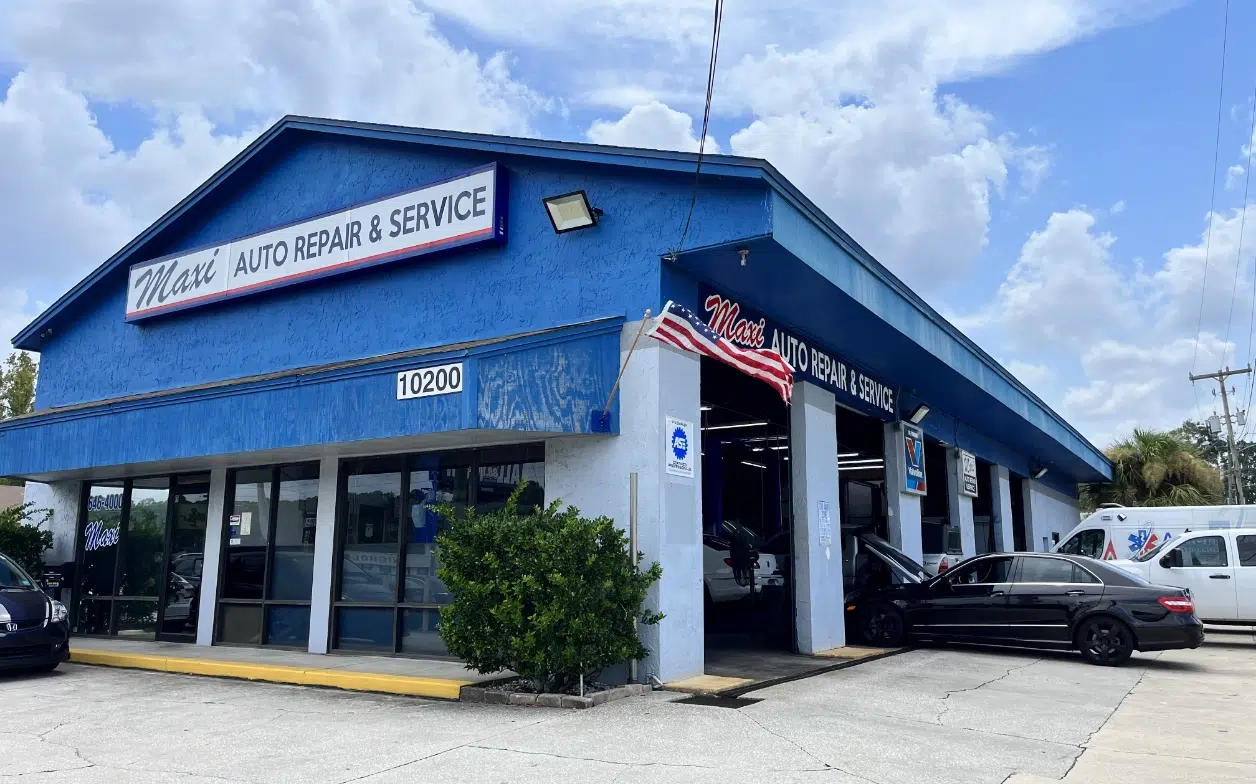
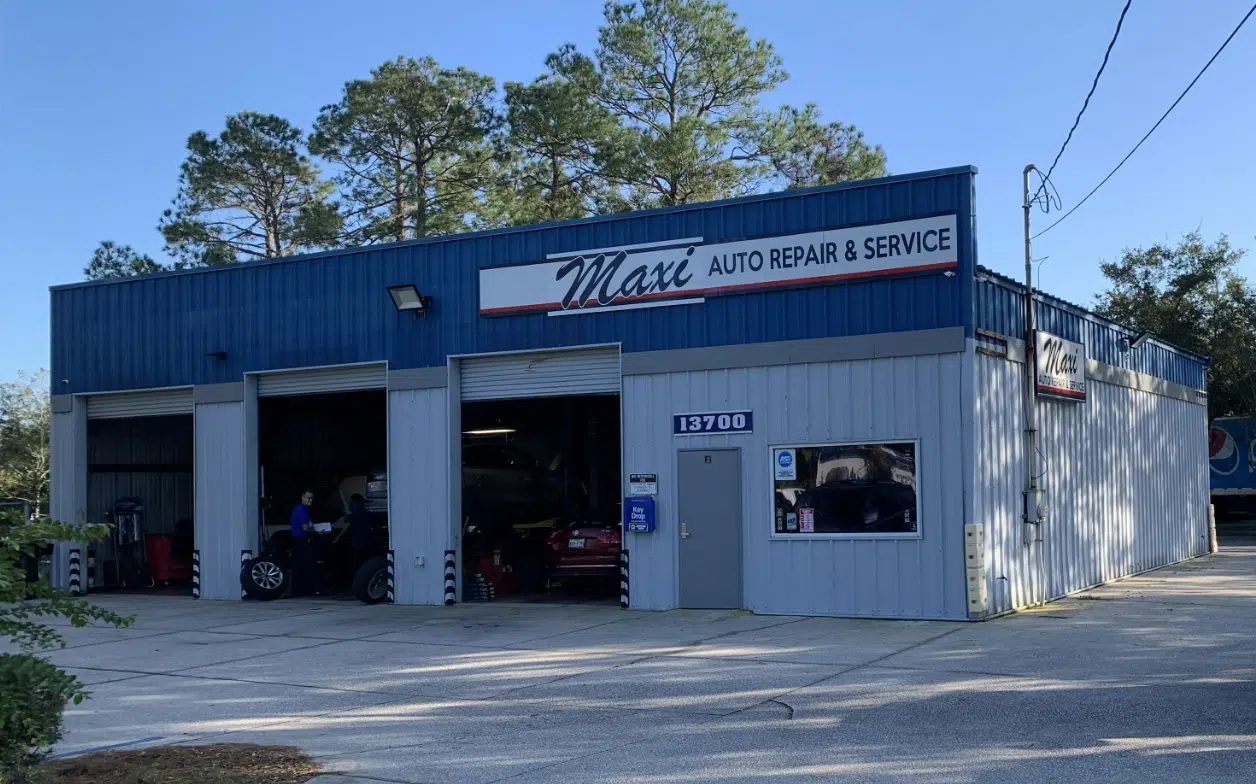
Four Jacksonville locations, all with same-day brake service available:
Beach Boulevard — (904) 646-4000 | Riverside — (904) 358-9800 | Hodges — (904) 992-6868 | San Marco — (904) 931-4388
Monday–Friday, 7:30 AM – 5:30 PM. All work backed by our 3-Year / 36,000-Mile Nationwide Warranty.
Frequently Asked Questions
How long do brakes last in Florida?
Brake pads typically last 25,000–65,000 miles depending on driving habits, pad material, and vehicle weight. In Jacksonville, the combination of stop-and-go traffic, frequent rain braking, and coastal corrosion means many drivers fall on the lower end of that range. Heavy vehicles like trucks and SUVs wear pads faster.
How do I know if I need new rotors or just pads?
If your brake pedal pulsates during braking, your rotors are likely warped. If there are visible grooves or scoring on the rotor surface, they may need resurfacing or replacement. Our technicians measure rotor thickness and runout during every brake inspection and will show you exactly what’s needed.
Can I just replace front brakes?
Yes. Front brakes do approximately 70% of the braking work and wear faster than rears. It’s common to replace front pads 2–3 times for every one rear brake service. We inspect all four wheels but only recommend replacing what’s actually worn.
References
[1] RepairPal. “Brake Pad Replacement Cost Estimate.” repairpal.com
[2] NHTSA. “Brakes.” National Highway Traffic Safety Administration. nhtsa.gov