Radiator replacement in Jacksonville typically costs between $300 and $900 depending on your vehicle make and model, with most jobs completed in 2 to 4 hours. Florida’s extreme heat and humidity put extra stress on cooling systems, making radiator failure more common here than in cooler climates. If you’re experiencing overheating, visible coolant leaks, or steam from under the hood, your radiator may need replacement rather than a simple repair.[1]
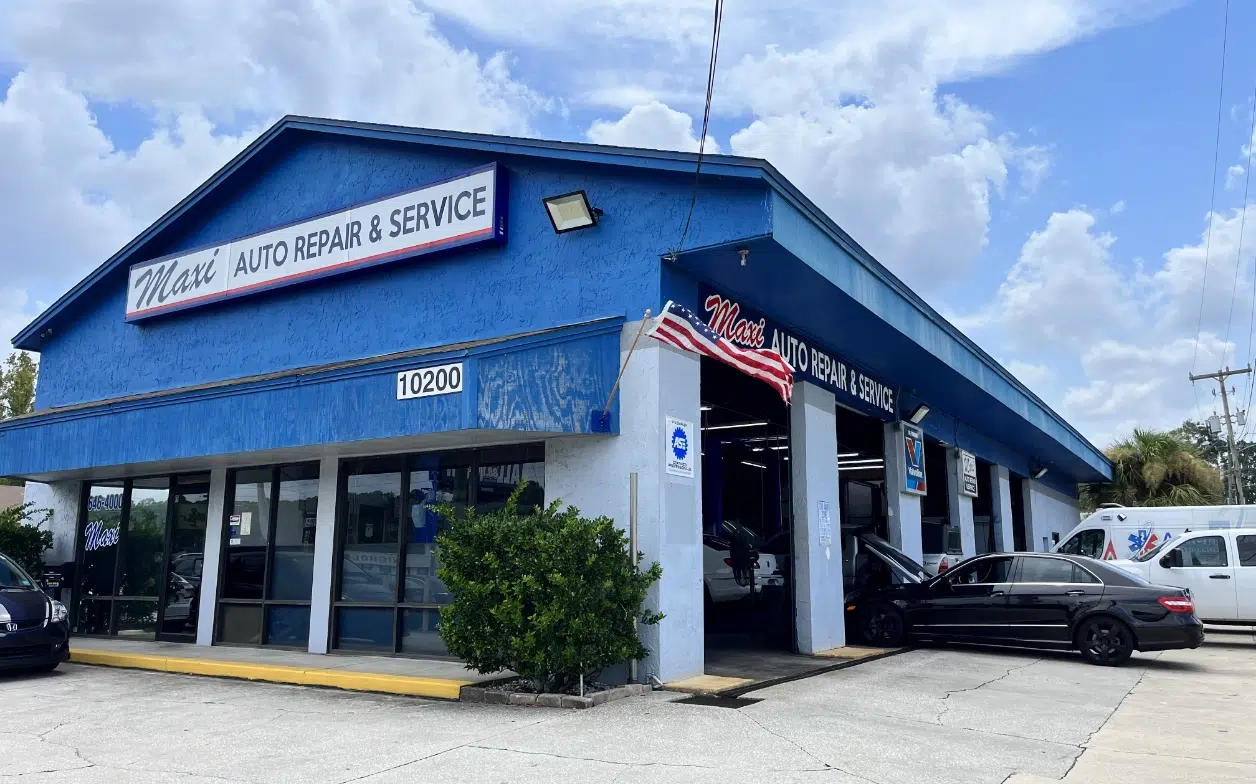
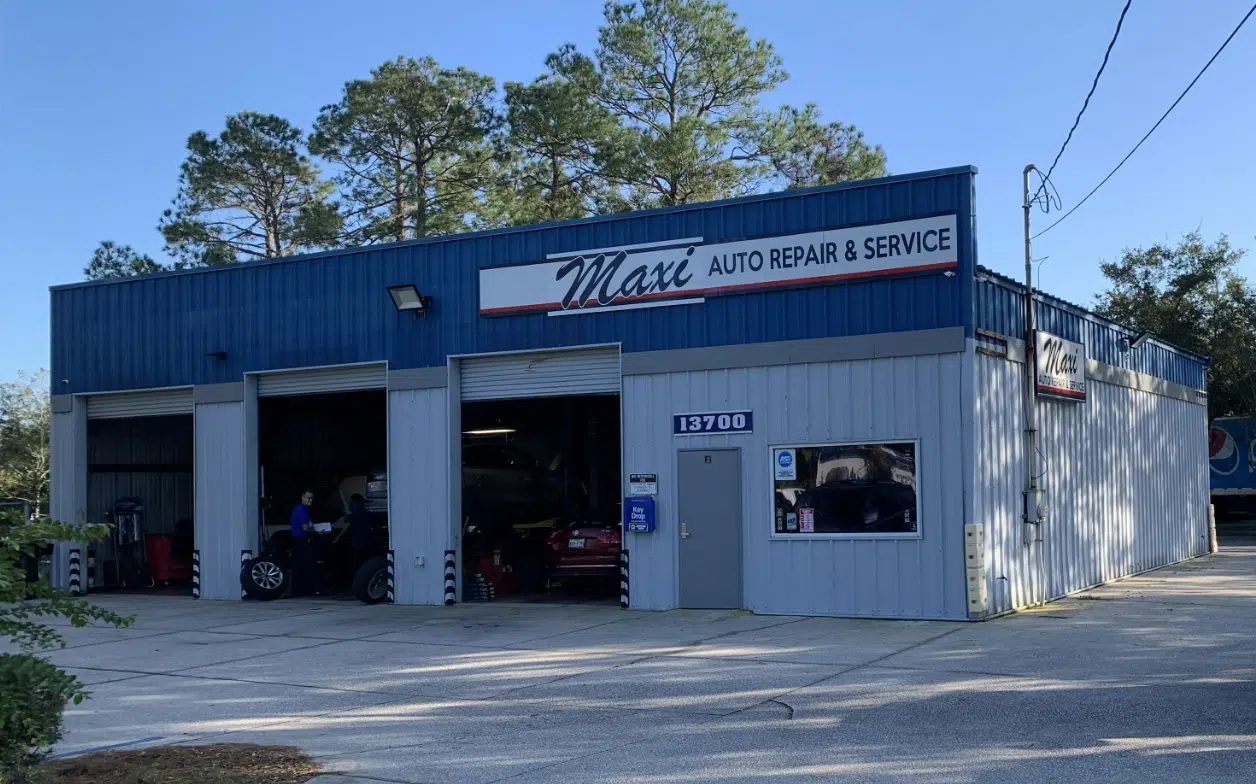
At Maxi’s Mechanics, we’ve replaced thousands of radiators across our four Jacksonville locations since 2003. Our ASE-certified technicians understand how the Florida climate accelerates cooling system wear, and we’ll give you an honest assessment of whether your radiator needs replacement or if a repair will solve the problem. This guide walks you through costs, timelines, warning signs, and what makes radiator service different in Northeast Florida.
How Much Does Radiator Replacement Cost in Jacksonville?
The average radiator replacement cost in Jacksonville ranges from $300 to $900, with the typical job falling around $500 to $650 for most domestic and Asian vehicles. This price includes the new radiator, coolant, labor, and system pressure testing. European luxury vehicles and trucks with larger cooling systems often run $700 to $1,200 due to higher parts costs and additional labor.[2]
The price breakdown typically includes $150 to $500 for the radiator itself, $100 to $300 for labor (2 to 4 hours at $50 to $75 per hour in Jacksonville), and $30 to $50 for coolant and fluids. Aluminum radiators common in newer vehicles cost less than copper-brass units, but aftermarket options can save you 30% to 50% compared to OEM parts without sacrificing quality. At our Jacksonville locations, we offer both OEM and high-quality aftermarket options so you can choose what fits your budget.
Additional costs may apply if your radiator failure caused secondary damage. If the engine overheated severely, you may need thermostat replacement (add $100 to $200), water pump service (add $200 to $400), or hose replacement (add $50 to $150). Waiting too long on a failing radiator can turn a $500 repair into a $2,000+ engine rebuild, which is why we always recommend addressing cooling system issues immediately.[3]
What Are the Signs Your Radiator Needs Replacement?
The most common signs of radiator failure include visible coolant leaks under your vehicle (often bright green, orange, or pink fluid), engine overheating within 15 minutes of driving, and steam coming from under the hood. You might also notice a sweet smell from your vents, low coolant warning lights, or discolored coolant that looks rusty or muddy instead of bright and translucent.[4]
Physical damage to the radiator is easy to spot during an inspection. Look for bent fins, cracked plastic end tanks, or corrosion along seams and joints. In Jacksonville’s climate, we see accelerated corrosion from salt air near the beaches and chemical breakdown from prolonged exposure to 95°F+ temperatures. What might take 10 years to fail in Minnesota can happen in 6 to 7 years here in Northeast Florida.
One often-overlooked symptom is transmission overheating in vehicles with automatic transmissions. Most radiators have an integrated transmission cooler, and when the radiator fails internally, transmission fluid and coolant can mix — creating a strawberry milkshake appearance in your coolant reservoir. This requires immediate attention to prevent transmission damage. Our diagnostic services can quickly identify whether you’re dealing with radiator failure, a blown head gasket, or another cooling system issue.
How Long Does Radiator Replacement Take?
Most radiator replacements take 2 to 4 hours from start to finish, including draining the old coolant, removing and installing the radiator, refilling with fresh coolant, and pressure testing the system. Simple jobs on vehicles with easy engine bay access (like Honda Civics or Toyota Camrys) can be completed in under 2 hours, while trucks, SUVs, and vehicles requiring significant disassembly may take 4 to 6 hours.[2]
The timeline depends heavily on your vehicle’s design. Front-wheel-drive cars often require removing the cooling fans, upper radiator support, and sometimes even the front bumper cover to access the radiator. Rear-wheel-drive trucks typically offer easier access. Vehicles with turbochargers, aftermarket modifications, or additional coolers (like tow packages) add complexity and time.
After installation, we always perform a complete pressure test and run the vehicle through a full heat cycle to verify proper operation and check for leaks. We also inspect hoses, clamps, the thermostat, and water pump while the system is open, since addressing these wear items during radiator replacement saves you from another repair visit six months later. At Maxi’s Mechanics, we can often complete straightforward radiator replacements same-day if you arrive early, though we recommend calling ahead to check availability at your preferred location.
| Vehicle Type | Typical Labor Time | Average Total Cost | Common Complications |
|---|---|---|---|
| Compact/Midsize Sedan | 2-3 hours | $400-$650 | Minimal; straightforward access |
| Full-Size Truck/SUV | 3-4 hours | $550-$850 | Larger radiator, more coolant |
| European Luxury | 3-5 hours | $700-$1,200 | OEM parts cost, tight engine bay |
| Heavy-Duty Diesel | 4-6 hours | $800-$1,500 | Larger capacity, intercooler lines |
Why Does Florida Heat Cause More Radiator Failures?
Jacksonville’s combination of high ambient temperatures (averaging 81°F year-round with summer highs above 95°F), extreme humidity, and salt air near coastal areas accelerates radiator deterioration by 30% to 40% compared to moderate climates. Your cooling system works harder here because the temperature differential between coolant and outside air is smaller, meaning less efficient heat dissipation.[5]
When outside temps hit 95°F and your engine runs at 195°F to 220°F, your radiator has only a 100°F to 125°F temperature differential to work with. In cooler climates with 60°F ambient temps, that differential jumps to 135°F to 160°F, making cooling dramatically more efficient. This constant stress causes faster breakdown of plastic end tanks, accelerated corrosion of aluminum cores, and earlier failure of radiator seals and gaskets.
Salt air corrosion is particularly problematic near Jacksonville Beach, Atlantic Beach, and Neptune Beach. Salt accelerates oxidation of aluminum radiator cores and attacks brass/copper components in older radiators. Combined with Florida’s high humidity, this creates the perfect environment for radiator failure. We recommend coolant flushes every 30,000 miles (instead of the typical 50,000-mile interval) for Jacksonville drivers to combat this accelerated wear.[6]
Need radiator diagnostics or replacement? Call (844) 297-8529 or visit https://maxiautorepair.com/contact/ to schedule at one of our 4 Jacksonville locations. Backed by our 3-Year/36,000-Mile Nationwide Warranty.
Can You Repair a Radiator Instead of Replacing It?
Minor radiator leaks from small punctures or damaged fins can sometimes be repaired, but modern aluminum radiators with plastic end tanks rarely respond well to repair attempts — replacement is typically more cost-effective and reliable. If your radiator has a small leak from road debris impact in a non-critical area and the rest of the unit is in good condition, a repair might make sense. However, if the leak is from corrosion, age-related failure, or cracked plastic tanks, replacement is the only reliable solution.[3]
Radiator stop-leak products sold at auto parts stores are temporary band-aids at best and can cause more harm than good. These products work by circulating particles through your cooling system that supposedly seal leaks from the inside, but they also clog radiator tubes, heater cores, and thermostat passages. We’ve seen stop-leak products turn a $500 radiator replacement into a $1,200 job that also requires heater core replacement.
The honest assessment from our technicians: if your radiator is over 7 years old and showing any signs of failure, replacement beats repair. The labor cost to remove and reinstall the radiator is the same whether you’re repairing or replacing, so spending $100 on a repair that might last another year doesn’t make financial sense when a $350 new radiator will last another 7 to 10 years. Our auto repair philosophy has always been to recommend the most cost-effective long-term solution, not the cheapest short-term fix.
What Happens If You Keep Driving With a Bad Radiator?
Driving with a failing radiator will cause engine overheating that can warp cylinder heads, blow head gaskets, or cause complete engine seizure — repairs that cost $1,500 to $5,000 compared to the $500 radiator replacement you’re avoiding. Even a single severe overheating event can cause permanent engine damage that’s not immediately apparent but leads to oil consumption, compression loss, and premature engine failure.[7]
Modern engines run tighter tolerances than older designs, making them more susceptible to heat damage. Aluminum cylinder heads can warp with as little as 0.003 inches of distortion, which is enough to cause head gasket failure and coolant mixing with engine oil. Once coolant enters your oil system, bearing damage follows quickly. What started as a $500 radiator job becomes a $3,500 engine rebuild because you tried to nurse it along for another month.
We see this scenario several times a month at our Jacksonville shops, especially during summer. A customer ignores a small coolant leak or temperature gauge creeping higher, then suffers a catastrophic failure on I-95 or the Arlington Expressway. If you notice any warning signs — temperature gauge in the red zone, steam from the hood, or the sweet smell of coolant — pull over immediately, shut off the engine, and call for a tow. The $100 tow bill is far cheaper than the alternative. Our check engine light diagnostics can identify cooling system issues before they become expensive catastrophes.
Don’t wait until you’re stranded with an overheated engine. Call (844) 297-8529 or visit https://maxiautorepair.com/contact/ to schedule radiator service at our Beach Boulevard, Riverside, or Hodges locations. Backed by our 3-Year/36,000-Mile Nationwide Warranty.
Frequently Asked Questions
How long should a radiator last in Jacksonville’s climate?
Most radiators last 7 to 10 years in Jacksonville, compared to 10 to 15 years in cooler climates, due to Florida’s extreme heat and humidity accelerating corrosion and material breakdown. Regular coolant flushes every 30,000 miles can extend radiator life.
Is it better to use OEM or aftermarket radiators?
High-quality aftermarket radiators perform identically to OEM parts for most applications and cost 30% to 50% less. We use premium aftermarket brands with proven track records and warranty them for 3 years/36,000 miles, same as OEM.
Can I drive my car to the shop if the radiator is leaking?
Only if the leak is very small and you can maintain normal operating temperature for short distances (under 5 miles). If the temperature gauge rises above normal or you see steam, do not drive — call for a tow to prevent engine damage.
Does radiator replacement include a coolant flush?
Yes, radiator replacement always includes draining old coolant, installing new coolant, burping the system to remove air pockets, and pressure testing for leaks. We use the coolant type specified by your vehicle manufacturer.
Will a new radiator fix my car overheating problem?
A new radiator will fix overheating if the radiator is the root cause, but overheating can also result from thermostat failure, water pump failure, blown head gasket, or clogged coolant passages. Proper diagnosis is essential before replacement.
Written by Maxi’s Mechanics Service Team — ASE-Certified Master Technicians | Veteran-Owned Auto Repair | Serving Jacksonville FL Since 2003. Updated March 2026.
References
- U.S. Department of Energy. Vehicle Cooling Systems and Climate Impact. https://www.energy.gov/eere/vehicles/cooling-systems
- AAA Automotive. Average Cost of Common Car Repairs in 2025. https://www.aaa.com/autorepair/articles/average-car-repair-costs
- Society of Automotive Engineers (SAE). Engine Cooling System Maintenance and Failure Modes. https://www.sae.org/standards/content/j1117/
- National Highway Traffic Safety Administration. Recognizing Vehicle Overheating Warning Signs. https://www.nhtsa.gov/vehicle-safety
- National Oceanic and Atmospheric Administration. Jacksonville FL Climate Normals 2023. https://www.ncdc.noaa.gov/cdo-web/
- Automotive Maintenance and Repair Association. Climate Effects on Vehicle Maintenance Intervals. https://www.amra.org/
- National Institute for Automotive Service Excellence. Engine Overheating and Heat Damage. https://www.ase.com/