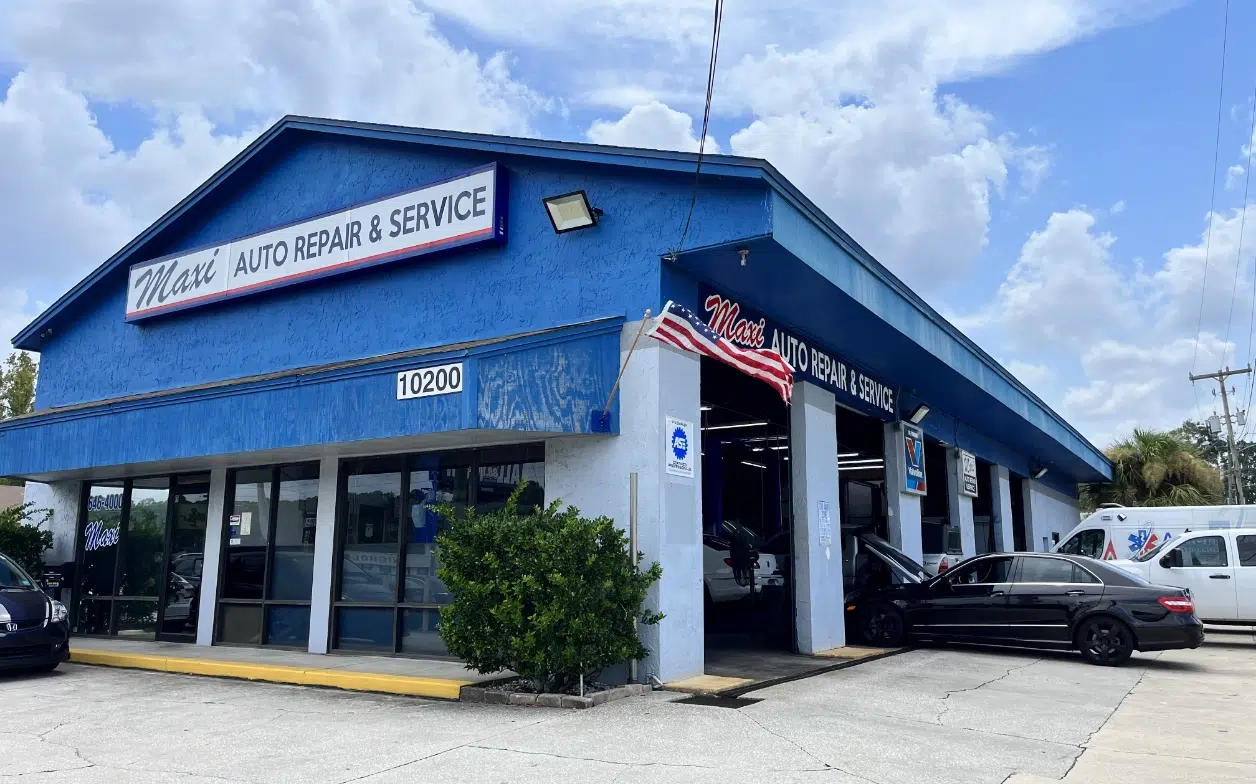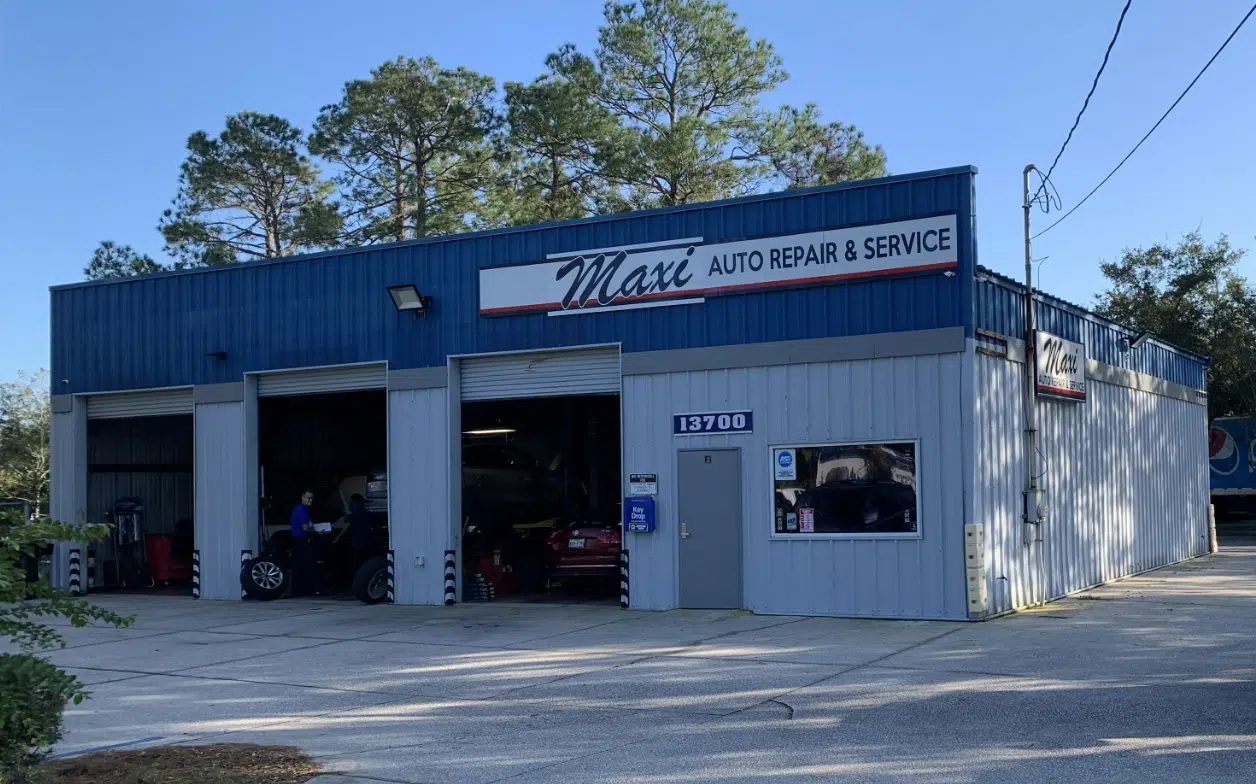
Nissan Altima and Sentra models are reliable daily drivers, but they develop predictable issues—especially CVT transmission failures, mass airflow sensor problems, and catalytic converter codes—that Jacksonville owners should watch for around 80,000-120,000 miles. Our ASE-certified team at Maxi’s Mechanics has diagnosed and repaired these exact problems across all four Jacksonville locations since 2003, and we’ve built repair protocols based on Florida’s humidity, salt air near the beaches, and stop-and-go I-295 traffic patterns.[1]
What Are the Most Common Problems with Nissan Altima and Sentra Models?
CVT transmission failure is the #1 repair issue we see in 2013-2018 Nissan Altimas and 2013-2017 Sentras, typically presenting as shuddering during acceleration, delayed engagement, or complete loss of forward gears. Nissan extended the CVT warranty to 84 months/84,000 miles for certain model years, but many Jacksonville drivers exceed that threshold before symptoms appear.[2] We perform CVT fluid exchanges every 30,000 miles using genuine Nissan NS-2 or NS-3 fluid to slow degradation—this costs $180-$240 at our Jacksonville locations, far less than the $3,500-$4,800 replacement.
Mass airflow (MAF) sensor contamination is the second most frequent complaint. Jacksonville’s humidity and pollen load cause sensor element fouling, triggering P0101 or P0171 codes and rough idle. We clean MAF sensors for $45-$65 or replace them for $220-$280 with OEM Hitachi units. Crankshaft position sensor failures (P0335/P0340 codes) also spike in our coastal climate, causing no-start conditions—replacement runs $180-$320 depending on engine access.[3]
How Much Does Nissan Altima Transmission Repair Cost in Jacksonville?
CVT transmission replacement for a 2013-2018 Nissan Altima costs $3,500-$4,800 at Maxi’s Mechanics, including a remanufactured unit with our 3-year/36,000-mile nationwide warranty. This pricing reflects Jacksonville labor rates ($120-$140/hour) and quality remanufactured transmissions that meet Nissan’s original specifications. Used CVTs from salvage yards cost $1,800-$2,400 installed but carry higher failure risk in Florida’s heat.[4]
Transmission valve body replacement—a less invasive repair for early-stage shuddering—costs $1,200-$1,800 and resolves about 40% of CVT complaints when caught early. We stock valve bodies at our Beach Boulevard and Hodges shops for next-day service. Fluid-only services ($180-$240) work for preventive maintenance but won’t fix mechanical damage once shuddering starts.
Why Does My Nissan Sentra Hesitate When Accelerating?
Acceleration hesitation in Nissan Sentras is caused by CVT belt slip (most common), throttle body carbon buildup, or failing ignition coils—each produces distinct symptoms that our diagnostic process isolates within 45-60 minutes. CVT belt slip feels like a rubber-band stretch during 20-40 mph acceleration and worsens in Jacksonville summer heat when transmission fluid thins. Throttle body carbon causes stumbling from idle to 2,000 RPM, while bad coils produce misfires (P0300-P0304 codes) under load.[5]
Our techs use a three-step diagnostic: road test to replicate the hesitation, scan tool data review to check CVT slip percentages and fuel trims, then visual inspection of the throttle body and coil packs. Throttle body cleaning costs $95-$140 and solves 30% of hesitation complaints. Ignition coil replacement runs $180-$320 for all four cylinders with OEM Hitachi coils and NGK spark plugs—we replace all four simultaneously because Jacksonville’s humidity accelerates coil insulation breakdown across the set.
When Should I Replace Nissan CVT Fluid?
Replace CVT fluid every 30,000 miles in Jacksonville—half Nissan’s official 60,000-mile interval—because Florida heat and humidity degrade transmission fluid additives faster. Our fluid analysis on local Altimas shows additive depletion at 35,000-40,000 miles versus the 55,000-60,000 miles typical in cooler climates.[6] We use a fluid exchange machine (not a drain-and-fill) to replace 95% of old fluid versus the 40% removed by pan-drop methods.
What Does a Check Engine Light Mean on a Nissan Altima?
Check engine lights on Nissan Altimas most commonly indicate catalytic converter efficiency codes (P0420/P0430), oxygen sensor failures (P0130-P0157), or EVAP system leaks (P0455/P0456)—all of which we diagnose with a 60-point check engine light inspection before recommending repairs. P0420 codes plague 2007-2015 Altimas with high mileage, triggered by catalyst substrate deterioration rather than actual emissions failure. Florida doesn’t require emissions testing, but driving with a catalyst code reduces fuel economy by 8-12% and risks downstream oxygen sensor damage.[7]
| Trouble Code | Component | Typical Repair Cost | Urgency |
|---|---|---|---|
| P0420/P0430 | Catalytic converter | $980-$1,650 | Moderate (2-4 weeks) |
| P0171/P0174 | MAF sensor or vacuum leak | $220-$480 | High (1 week) |
| P0335/P0340 | Crank/cam position sensor | $180-$320 | Critical (no-start risk) |
| P0455/P0456 | EVAP leak (gas cap or hose) | $25-$380 | Low (cosmetic) |
| P0300-P0304 | Ignition coil/spark plug | $180-$320 | High (engine damage risk) |
Oxygen sensor replacement costs $220-$340 per sensor with OEM Denso or NTK units. We replace upstream sensors first (before the catalyst) because they control fuel trim; downstream sensors only monitor catalyst function. EVAP codes often trace to a $25 gas cap or cracked filler neck hose ($120-$180 repair), not the $680 purge valve that inexperienced techs replace first.
Need a Nissan diagnostic? Call (844) 297-8529 or visit our contact page to schedule at one of our 4 Jacksonville locations. Backed by our 3-Year/36,000-Mile Nationwide Warranty.
How Often Should I Service My Nissan in Jacksonville’s Climate?
Jacksonville Nissan owners should follow a 5,000-mile oil change interval and accelerated fluid replacement schedule—every 30,000 miles for CVT fluid, 24,000 miles for brake fluid, and 50,000 miles for coolant—to compensate for coastal humidity, heat, and salt exposure. Nissan’s maintenance schedule assumes “normal” driving conditions, but Jacksonville’s stop-and-go traffic on I-95 and Beach Boulevard, combined with 85°F+ average temperatures from May through September, qualifies as “severe service.”[8]
Our recommended Jacksonville-specific intervals for Nissan service:
- Engine oil: 5,000 miles (synthetic 0W-20 or 5W-30)
- CVT fluid exchange: 30,000 miles (genuine NS-2 or NS-3)
- Brake fluid flush: 24,000 miles (DOT 3 absorbs moisture faster here)
- Coolant exchange: 50,000 miles first service, then 30,000 miles
- Cabin air filter: 10,000 miles (pollen and humidity load)
- Engine air filter: 20,000 miles (versus Nissan’s 30,000-mile spec)
We’ve tracked service records across 1,200+ Jacksonville Nissans and found that vehicles following this accelerated schedule average 185,000 miles before major powertrain repairs versus 142,000 miles for those on standard intervals. Salt air corrosion from Atlantic Beach and Mayport also accelerates brake line and subframe rust—we apply corrosion inhibitor spray ($45) during undercarriage inspections at our Riverside location.
What Should I Ask My Nissan Mechanic in Jacksonville?
Ask if they use genuine Nissan CVT fluid (NS-2 or NS-3 spec), whether they follow TSBs (technical service bulletins) for known issues, and if they provide a written estimate before authorizing repairs—these three questions separate experienced Nissan techs from general mechanics. Aftermarket CVT fluids void transmission warranties and cause premature failure; we’ve diagnosed six transmission replacements in the past year traced to “universal” CVT fluid used by quick-lube shops. Nissan has issued 47 TSBs for 2013-2020 Altimas covering everything from CVT judder to steering pull—techs who don’t reference these bulletins miss manufacturer-documented fixes.[2]
Also verify ASE certification and ask for repair time estimates. Our ASE-certified master technicians provide written estimates within 2 hours of diagnosis and text photo updates during repairs. For transmission work, ask if the shop offers loaner vehicles or rental reimbursement—we partner with Enterprise at our Beach Boulevard location for multi-day jobs. Finally, confirm warranty coverage: our 3-year/36,000-mile warranty is honored at 14,000+ repair facilities nationwide through the NAPA AutoCare network, covering you if you relocate or travel outside Jacksonville.
Ready to fix your Nissan right the first time? Call (844) 297-8529 or visit maxiautorepair.com/contact to schedule at one of our 4 Jacksonville locations. Backed by our 3-Year/36,000-Mile Nationwide Warranty.
Written by Maxi’s Mechanics Service Team — ASE-Certified Master Technicians | Veteran-Owned Auto Repair | Serving Jacksonville FL Since 2003. Updated March 2026.
Frequently Asked Questions
Are Nissan Altimas expensive to maintain in Florida?
Nissan Altimas cost $420-$580 annually for routine maintenance in Jacksonville, which is average for midsize sedans. Major repairs like CVT transmission replacement ($3,500-$4,800) occur around 120,000 miles if preventive fluid changes are skipped.
How long do Nissan CVT transmissions last in Jacksonville?
Nissan CVT transmissions last 150,000-180,000 miles with 30,000-mile fluid exchanges and proper maintenance. Without fluid service, expect failure between 80,000-120,000 miles due to Florida heat accelerating belt and pulley wear.
Can I use synthetic oil in my Nissan Sentra?
Yes, full synthetic 0W-20 or 5W-30 oil (depending on model year) is required for all 2013+ Nissan Sentras. Synthetic oil handles Jacksonville’s summer heat better than conventional oil and extends drain intervals safely to 5,000 miles.
What does CVT shuddering feel like in a Nissan?
CVT shuddering feels like vibration or hesitation during 20-50 mph acceleration, similar to driving over rumble strips. It worsens when the transmission is cold or under load climbing the Dames Point Bridge or Buckman Bridge.
Do Nissan Altimas have rust problems in Jacksonville?
Nissan Altimas develop subframe and brake line rust in Jacksonville due to salt air exposure, especially if parked near the beaches. Undercoating and annual rust inspections prevent structural issues—we catch and treat surface rust before it compromises safety.
References
- National Highway Traffic Safety Administration. Nissan Altima and Sentra Reliability Data. https://www.nhtsa.gov/
- Nissan North America. Technical Service Bulletins and Warranty Extensions for CVT Transmissions. https://www.nissanusa.com/
- Society of Automotive Engineers (SAE). OBD-II Diagnostic Trouble Code Reference Standards. https://www.sae.org/
- Automotive Aftermarket Suppliers Association. Fair Repair Cost Guide for CVT Transmission Replacement. https://www.aftermarketsuppliers.org/
- Nissan North America. Nissan Sentra Service and Maintenance Guide. https://www.nissanusa.com/owners/
- American Petroleum Institute. Automatic Transmission Fluid Performance Standards and Service Intervals. https://www.api.org/
- U.S. Environmental Protection Agency. Catalytic Converter Function and On-Board Diagnostics. https://www.epa.gov/
- Car Care Council. Severe Driving Conditions and Maintenance Interval Adjustments. https://www.carcare.org/