Jeep owners in Jacksonville don’t need to pay dealership prices for expert repair. At Maxi’s Mechanics, our ASE-certified technicians work on Jeep Wranglers, Grand Cherokees, Cherokees, Compass, and Renegade models daily — with the same diagnostic capabilities as the dealership at 20–40% lower labor rates.
Jeeps are built tough, but they have well-documented model-specific issues that experienced technicians know how to diagnose efficiently. Here’s what we see most often at our Jacksonville shops.
Jeep Wrangler: Most Common Problems
Death wobble (JK 2007–2018, JL 2018+)
A violent steering wheel oscillation triggered by hitting a bump at highway speed. Despite the dramatic name, it’s a fixable suspension and steering issue — usually caused by a worn track bar, ball joints, tie rod ends, or steering stabilizer [1]. The fix involves identifying which component(s) have play, replacing them, and ensuring proper alignment. A new steering stabilizer alone is not the fix — it masks the problem. Proper diagnosis starts with a thorough front-end inspection under load.
EVAP system leaks
Wrangler EVAP systems are more exposed to trail debris, water crossings, and underbody impacts than most vehicles. P0455 (large leak) and P0456 (small leak) codes are among the most common Wrangler check engine light triggers. In Jacksonville, where many Wrangler owners drive the beach or take the ferry to Fort George Island, these systems get more exposure than average.
Exhaust manifold crack (3.8L V6, 2007–2011)
A known design issue on the 3.8L engine. Symptoms include a ticking noise on cold startup that diminishes as the engine warms up, and an exhaust smell in the cabin. The manifold itself is relatively inexpensive, but labor is significant because of access constraints. Typical repair: $600–$1,200 depending on which side is cracked.
Oil filter housing leak (3.6L Pentastar, 2012+)
The oil filter housing on the 3.6L uses a gasket that hardens and cracks over time — accelerated by Florida’s heat. Symptoms include oil dripping onto the exhaust (burning oil smell) and low oil level between changes. Repair: $200–$400 for the gasket, but ignoring it risks engine damage from oil loss.
Jeep Grand Cherokee: Most Common Problems
Electrical issues (WK2, 2011–2021)
The Grand Cherokee’s complex electronics can develop issues with the Uconnect system, instrument cluster, power liftgate, and various sensors. Jacksonville’s humidity accelerates connector corrosion, making intermittent electrical faults more common on these vehicles than in drier climates. The TIPM (Totally Integrated Power Module) is a known failure point that can cause multiple seemingly unrelated electrical symptoms [1].
Air suspension failure (models equipped)
Grand Cherokees with Quadra-Lift air suspension can develop compressor failure, air spring leaks, or height sensor issues. When the compressor fails, the vehicle sits at its lowest setting and displays a warning. Repair costs range from $400 for a height sensor to $800–$1,500 for a compressor or air spring replacement. Some owners opt to convert to conventional springs, which eliminates the recurring expense.
Water pump and thermostat (3.6L Pentastar)
The 3.6L V6 has a known water pump failure pattern, often occurring between 80,000–120,000 miles. Jacksonville’s heat puts extra stress on the cooling system, potentially moving failure to the earlier end of that range. Symptoms include coolant loss, overheating, and sometimes a whining noise from the water pump bearing. Typical repair: $500–$900.
Jeep Cherokee: Most Common Problems
Transmission issues (9-speed ZF, 2014–2019)
The ZF 9-speed automatic in the Cherokee was plagued by rough shifting, harsh 1-2 upshifts, and software calibration issues. Multiple Technical Service Bulletins and transmission control module reprogramming updates have been released. If your Cherokee’s 9-speed hasn’t been reprogrammed with the latest calibration, that should be the first step before any mechanical transmission work.
Oil consumption (2.4L Tigershark)
Some 2.4L engines consume oil at a higher rate than expected — up to a quart every 1,000–2,000 miles in some cases. Regular oil level checks between changes are recommended. If consumption is excessive, a compression test and leak-down test can determine whether the piston rings or valve seals are the cause.
Jeep Maintenance: What Jacksonville Owners Should Know
Jacksonville’s climate and lifestyle create specific maintenance considerations for Jeeps:
Undercarriage corrosion: Wranglers driven with tops down get more direct salt air and rain exposure on the interior, frame, and undercarriage. Vehicles regularly driven to the beach or through Jacksonville Beach and Atlantic Beach corridors should be washed underneath every two weeks during summer.
Soft top and seal maintenance: UV radiation degrades soft tops, window seals, and door seals faster in Florida than almost anywhere. Condition soft tops with UV protectant every 3–4 months and inspect seals annually. Cracked seals allow water intrusion, which leads to mold and electrical problems.
AC system stress: Wranglers — especially with soft tops and limited insulation — put extraordinary demand on AC systems in Jacksonville summers. The combination of minimal cabin insulation, dark-colored hard tops that absorb heat, and 8+ months of continuous AC use means compressor and condenser failures are more common on Wranglers than on most vehicles.
Suspension components: Jeeps, particularly lifted Wranglers, are harder on ball joints, tie rods, and wheel bearings than most vehicles due to heavier weight and modified geometry. Jacksonville’s potholes and bridge expansion joints accelerate this wear further.
Why Choose an Independent Shop for Jeep Repair?
Magnuson-Moss Warranty Act. Federal law protects your right to use any qualified shop for maintenance and non-warranty repairs without voiding your manufacturer warranty. You are not required to use a Jeep dealership.
Same diagnostic capability. Our Snap-On Zeus scanners read all Chrysler/Jeep-specific modules — not just generic OBD-II codes. We can access the same data the dealership sees, including TIPM diagnostics, transmission adaptation values, and module reprogramming.
20–40% lower labor rates. Dealership labor in Jacksonville runs $150–$200/hour. Independent shops typically charge $100–$140/hour. On a death wobble repair that requires 3–4 hours of front-end work, that’s $150–$250 in savings on labor alone.
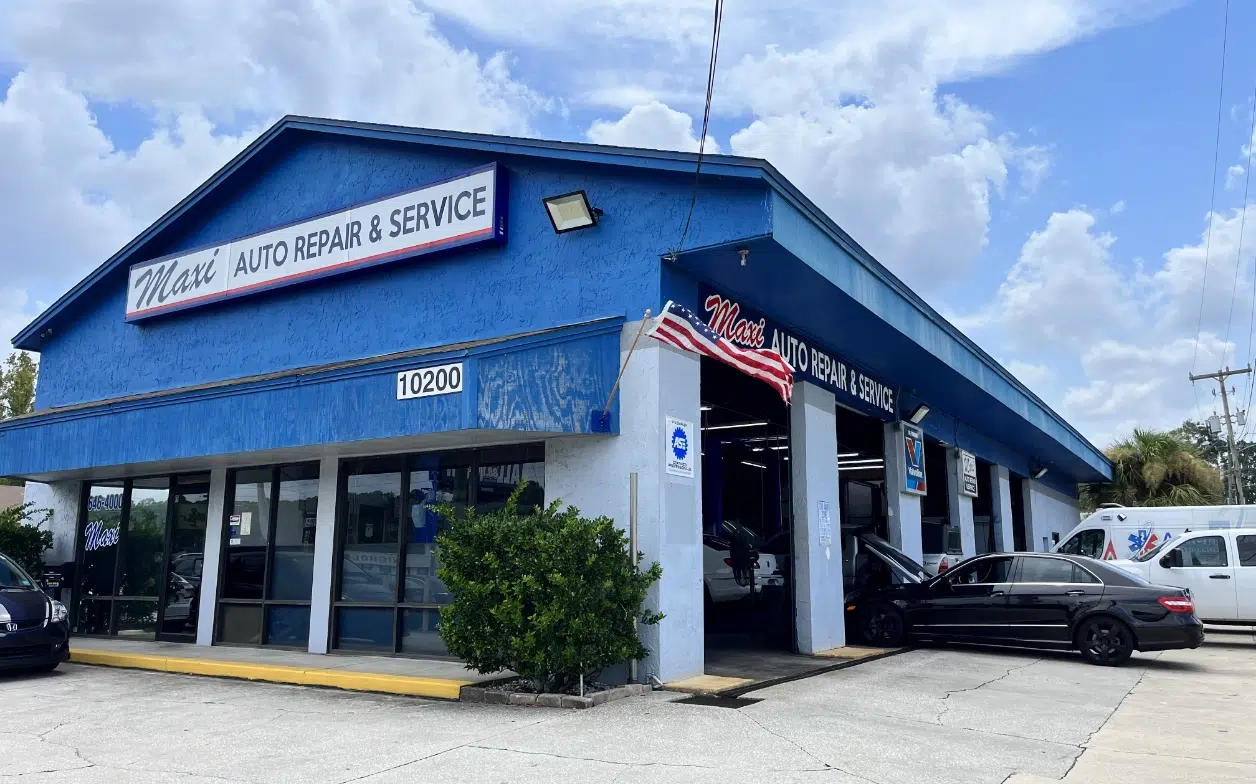
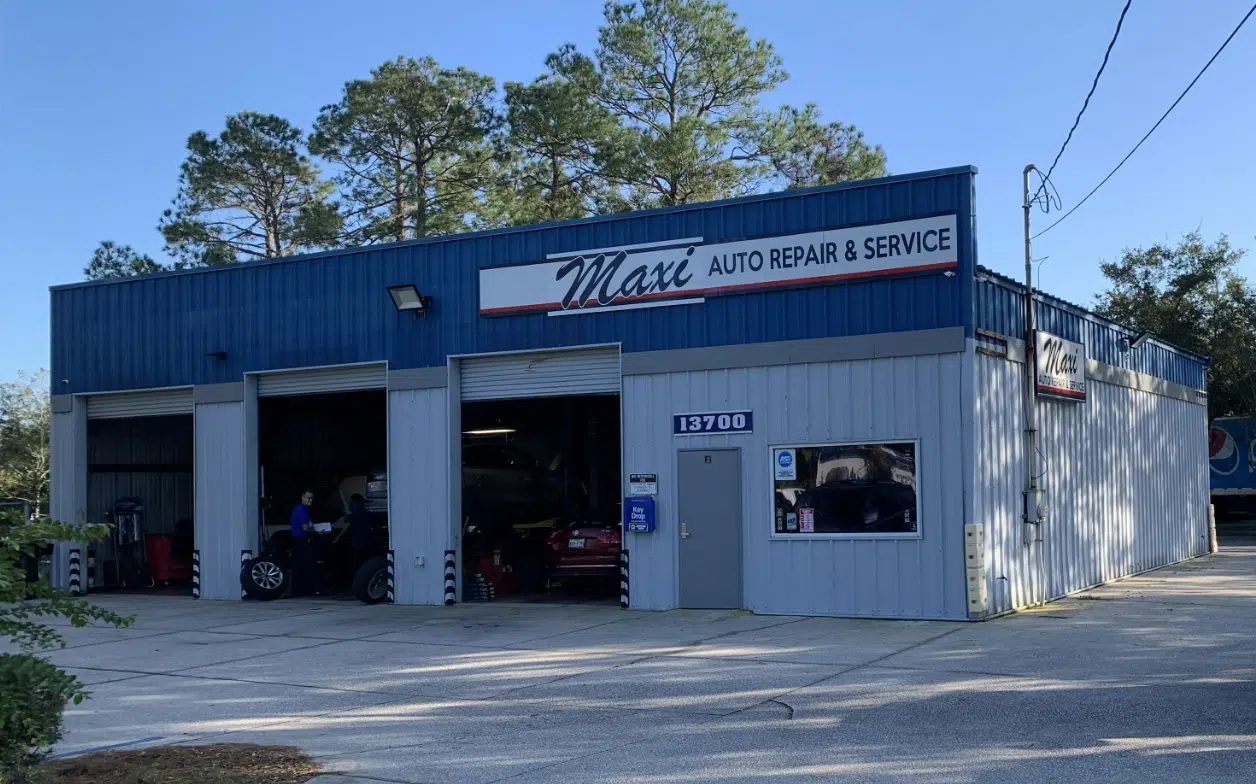
Jeep Repair at Maxi’s Mechanics Jacksonville
[HYPOTHETICAL — replace with your actual Jeep repair data before publishing] Jeeps are one of the most popular vehicles in Jacksonville — between the beach communities and the outdoor culture, we see Wranglers and Grand Cherokees daily. The death wobble on JK and JL Wranglers is something our techs have fixed dozens of times — it’s almost always a worn track bar or ball joints, and our approach starts with a thorough front-end inspection rather than just throwing parts at it. Grand Cherokee electrical gremlins are another frequent visitor, especially the WK2 generation with TIPM issues. Our diagnostic equipment reads all Chrysler/Jeep-specific modules, and we typically save Jeep owners 25–35% compared to dealership pricing on the same repairs.
Four locations, all with ASE-certified technicians experienced with Jeep models:
Beach Boulevard — (904) 646-4000 | Riverside — (904) 358-9800 | Hodges — (904) 992-6868 | San Marco — (904) 931-4388
Monday–Friday, 7:30 AM – 5:30 PM. All work backed by our 3-Year / 36,000-Mile Nationwide Warranty.
Frequently Asked Questions
What causes Jeep death wobble and how much does it cost to fix?
Death wobble is caused by worn steering and suspension components — most commonly the track bar, ball joints, tie rod ends, or steering stabilizer. Repair typically costs $300–$800 depending on which components are worn. A proper fix requires identifying the specific worn part(s) through inspection, not just adding a new steering stabilizer.
Can an independent mechanic work on my Jeep without voiding the warranty?
Yes. The Magnuson-Moss Warranty Act protects your right to have maintenance and non-warranty repairs performed at any qualified shop. You are not required to use a Jeep dealership for oil changes, brake service, or routine maintenance.
Are Jeeps expensive to maintain?
Jeeps have slightly higher average maintenance costs than some competitors, primarily due to suspension and electrical component replacement. However, using an independent shop instead of the dealership reduces costs by 20–40% on labor while maintaining the same repair quality.
References
[1] NHTSA. “Vehicle Safety Recalls and Complaints.” National Highway Traffic Safety Administration. nhtsa.gov
[2] Chrysler. “Jeep Technical Service Bulletins.” FCA/Stellantis. mopar.com