You should not drive at all with bad brakes — it’s illegal in Florida and creates life-threatening stopping conditions. While some drivers push worn brake pads through a few hundred miles before total failure, the real question isn’t “how long” but “how dangerous.” Even a single trip can end in a crash if brake components fail suddenly. Jacksonville drivers face unique risks with frequent stop-and-go traffic on I-95, beach commutes, and sudden afternoon thunderstorms that demand reliable stopping power.[1]
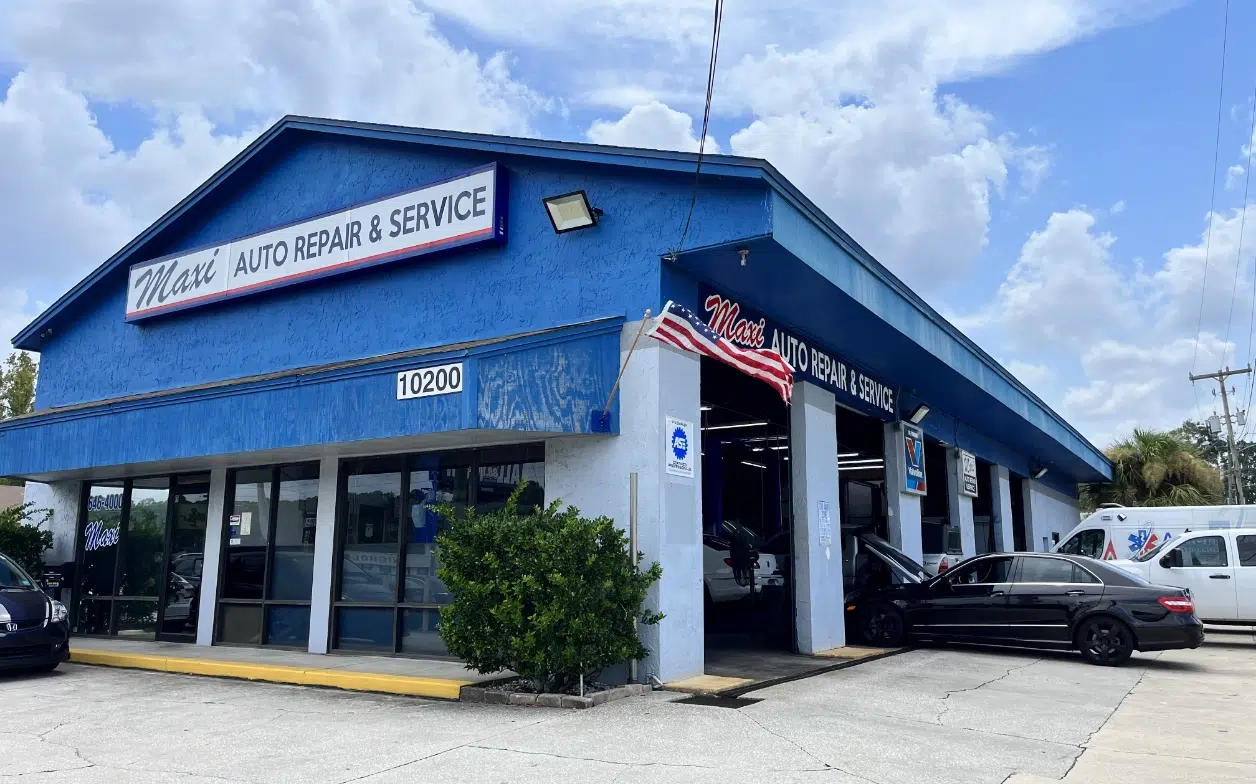
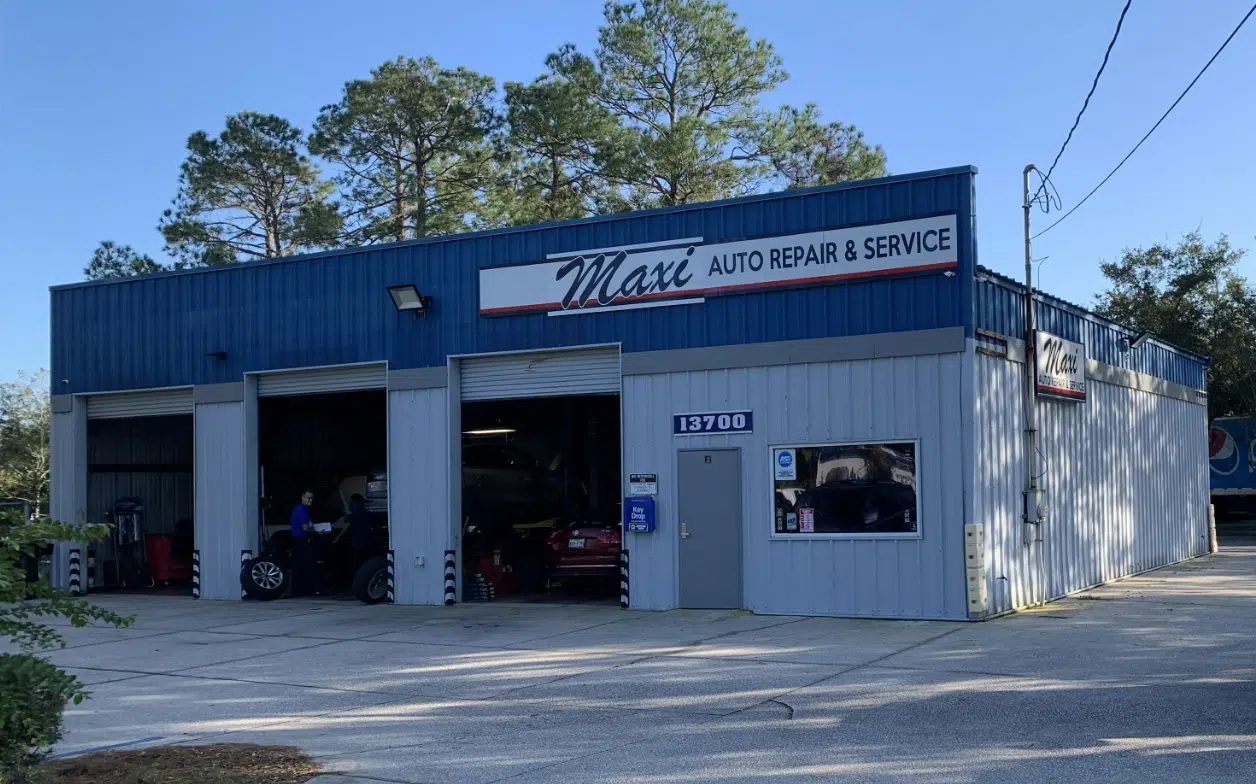
At Maxi’s Mechanics, our ASE-certified technicians see the aftermath of delayed brake repairs weekly across our four Jacksonville locations. We’ve inspected vehicles with brake pads worn to bare metal, rotors warped beyond specification, and brake fluid turned to sludge. This guide explains exactly what happens when you drive with failing brakes, how to recognize immediate danger signs, and why Jacksonville’s driving conditions make brake maintenance non-negotiable.
What Happens When You Drive With Worn Brake Pads?
Worn brake pads reduce friction material thickness, increasing stopping distances by 20-40% and exposing metal backing plates that grind into rotors. New brake pads typically measure 10-12mm thick. Most manufacturers recommend replacement at 3-4mm, but many Jacksonville drivers wait until the wear indicator tab creates that infamous metal-on-metal screech.[2]
Once pads wear below 2mm, stopping performance degrades exponentially. Your vehicle requires significantly more pedal pressure and distance to stop. The metal backing plate contacts the rotor directly, generating heat that can warp rotors, boil brake fluid, and cause brake fade. We’ve measured rotor damage requiring $400-600 in additional repairs that could have been avoided with timely pad replacement. Florida Statute 316.610 specifically prohibits operating vehicles with defective brakes, making continued driving a traffic violation.[3]
How Do You Know When Brakes Are Dangerously Bad?
Immediate warning signs include grinding noises, brake pedal pulsation, pulling to one side during braking, or a pedal that sinks to the floor. These symptoms indicate you’ve moved beyond routine maintenance into the danger zone where brake failure becomes likely.[4]
Our Jacksonville technicians use this escalation framework when evaluating brake systems:
| Warning Sign | What It Means | Safe Driving Window | Action Required |
|---|---|---|---|
| Squealing noise | Wear indicator tab touching rotor | 1-2 weeks maximum | Schedule inspection immediately |
| Grinding noise | Metal-on-metal contact, rotor damage occurring | Drive to shop only | Stop driving, arrange towing or careful transport |
| Pedal pulsation | Warped rotors or ABS activation | Few days with extreme caution | Urgent brake inspection needed |
| Soft/spongy pedal | Air in lines or fluid leak | Do not drive | Towing recommended, complete brake system failure imminent |
| Brake warning light | Low fluid, system fault, or worn pads (sensor-equipped vehicles) | Check fluid immediately | Inspection within 24 hours |
Can You Drive Short Distances With Grinding Brakes?
Driving even short distances with grinding brakes risks complete brake failure, rotor destruction, and potential wheel bearing damage from excessive heat. The grinding sound means metal backing plates are machining away your rotors at hundreds of degrees Fahrenheit. Each mile driven in this condition adds $50-100 to your repair bill as rotors exceed minimum thickness specifications and require replacement rather than resurfacing.
If you’re hearing grinding and need to reach our Jacksonville locations, drive below 35 mph, increase following distance to 6+ seconds, and avoid highway speeds. Plan your route to minimize stops. Many insurance policies cover towing for mechanical breakdowns — it’s safer and often cheaper than risking an accident.
What Brake Problems Require Immediate Parking?
Stop driving immediately if your brake pedal sinks to the floor, you smell burning odor from wheels, see smoke from brake components, or experience complete loss of braking power. These symptoms indicate catastrophic brake system failure requiring emergency service.[5]
Brake fluid leaks represent the most dangerous scenario. A pinhole leak in a brake line can drain your entire system in minutes, leaving you with zero hydraulic pressure and no ability to stop. Jacksonville’s humid climate accelerates brake line corrosion, particularly on vehicles that sit outdoors or drive near coastal areas. We recommend annual brake fluid flushes for vehicles in Jacksonville’s corrosive environment.
If you experience brake failure while driving, pump the pedal rapidly to build residual pressure, downshift to lower gears for engine braking, and gradually apply the parking brake while holding the release button to prevent locking rear wheels. Turn on hazard lights and safely exit traffic.
How Long Do Brake Pads Last in Jacksonville Driving Conditions?
Brake pads typically last 30,000-70,000 miles depending on driving habits, but Jacksonville’s stop-and-go traffic and summer heat often shorten lifespan to the lower end of that range. Beach Boulevard commuters, drivers navigating downtown congestion, and those towing boats to area ramps experience accelerated wear.[6]
Jacksonville-specific factors affecting brake life include constant I-295 traffic merging, frequent stops at the 1,700+ traffic signals across Duval County, and afternoon thunderstorms that temporarily reduce brake efficiency when wet. Aggressive driving — rapid acceleration followed by hard braking — can cut brake pad life in half. Our technicians at the Beach Boulevard location see significantly more brake work on vehicles that commute from St. Johns County versus local neighborhood drivers.
We recommend brake inspections every 12,000 miles or annually in Jacksonville. Visual inspection through wheel spokes can reveal pad thickness, but a proper assessment requires wheel removal to check rotors, calipers, brake fluid condition, and hardware integrity.
Need brake inspection or service? Call (844) 297-8529 or visit our contact page to schedule at one of our 4 Jacksonville locations. Backed by our 3-Year/36,000-Mile Nationwide Warranty.
What’s the Cost of Delaying Brake Repair?
Delaying brake pad replacement from $150-300 per axle typically escalates to $400-800 when rotors require replacement, plus potential caliper damage adding another $200-500 per corner. The financial penalty for procrastination often doubles or triples your repair bill within just a few hundred miles.[7]
Beyond repair costs, Florida drivers face liability exposure if bad brakes cause an accident. Insurance companies can deny claims if vehicle inspection reveals the driver knowingly operated an unsafe vehicle. Traffic citations under Florida Statute 316.610 carry fines up to $500 for defective brake equipment. More seriously, if your worn brakes fail to stop in time and you rear-end another vehicle at a Jacksonville intersection, you’re personally liable for damages, injuries, and potential criminal charges if negligence is proven.[3]
Our veteran-owned shop offers transparent pricing with written estimates before any work begins. We’ll show you the worn components, explain exactly what’s needed versus what can wait, and provide options at different price points. Many customers save hundreds by addressing brake issues during the routine maintenance window rather than waiting for emergency repairs.
Can Bad Brakes Pass Florida Vehicle Safety Inspection?
Florida does not require periodic safety inspections for passenger vehicles, but law enforcement can issue citations for visibly defective brake systems, and rental car companies conduct brake checks that will fail vehicles with obvious wear. While Florida eliminated mandatory inspections in 1981, officers conducting traffic stops can order vehicles off the road if brake defects are apparent.[8]
If you’re selling a vehicle in Jacksonville, buyers increasingly request pre-purchase inspections through shops like our diagnostics services. Failed brakes dramatically reduce resale value and can kill deals entirely. Commercial vehicles and vehicles registered from out of state may face different inspection requirements when transferring to Florida registration.
Even without mandated inspections, Jacksonville drivers should maintain brake systems to manufacturer specifications. Our ASE-certified technicians follow strict safety protocols and won’t release vehicles that pose immediate danger to occupants or other motorists.
Frequently Asked Questions
How long can you drive with the brake warning light on?
If the brake warning light illuminates, check brake fluid level immediately — if low, do not drive as you likely have a leak. If fluid is full, the light may indicate worn pads (on sensor-equipped vehicles) or an ABS fault, allowing careful driving to a repair shop within 24 hours. Never ignore the brake warning light, as it indicates potential system failure.
Will driving with bad brakes damage other parts of my car?
Yes, continuing to drive with worn brake pads damages rotors first (requiring replacement instead of resurfacing), then can damage calipers from excessive heat, and potentially harm wheel bearings, suspension components, and ABS sensors. What starts as a $200 brake pad replacement can escalate to $1,200+ in cascading damage across multiple systems.
Can I just replace brake pads without replacing rotors?
You can replace pads without rotors if rotors measure above minimum thickness specifications and show no warping, cracking, or excessive scoring. Our Jacksonville technicians measure rotors with micrometers during every brake job — if they’re within spec and surface condition is good, we’ll resurface them for optimal pad contact rather than automatically replacing them.
Do I need to replace brake fluid when replacing brake pads?
Brake fluid replacement isn’t required with every pad change, but Jacksonville’s heat and humidity cause brake fluid to absorb moisture over time, reducing boiling point and causing internal corrosion. We recommend flushing brake fluid every 3 years or 30,000 miles, whichever comes first, particularly for vehicles exposed to coastal salt air.
What’s the difference between brake noise from worn pads versus normal brake dust?
Worn pad indicators produce a consistent high-pitched squeal whenever brakes aren’t applied (the noise stops when you brake). Normal brake dust squeaking is intermittent, happens during light braking, and changes with temperature or humidity. Grinding noises always indicate metal-on-metal contact requiring immediate attention regardless of pattern.
Don’t gamble with brake safety on Jacksonville roads. Call (844) 297-8529 or visit our contact page to schedule service at our Beach Boulevard, Riverside, or Hodges locations. Backed by our 3-Year/36,000-Mile Nationwide Warranty.
Written by Maxi’s Mechanics Service Team — ASE-Certified Master Technicians | Veteran-Owned Auto Repair | Serving Jacksonville FL Since 2003. Updated March 2026.
References
- National Highway Traffic Safety Administration. Brake System Defects and Safety. https://www.nhtsa.gov/
- Brake Manufacturers Council. Brake Pad Wear Standards and Replacement Guidelines. https://www.brakecouncil.org/
- Florida Legislature. Florida Statute 316.610 – Brake Requirements. https://www.flsenate.gov/
- Society of Automotive Engineers. Brake System Warning Indicators and Driver Response. https://www.sae.org/
- Automotive Service Association. Emergency Brake Failure Procedures and Safety Protocols. https://www.asashop.org/
- Tire Industry Association. Brake Component Service Life in Varied Driving Conditions. https://www.tireindustry.org/
- Motor & Equipment Manufacturers Association. Average Brake Repair Costs and Maintenance Economics. https://www.mema.org/
- Florida Department of Highway Safety and Motor Vehicles. Vehicle Safety Inspection Requirements. https://www.flhsmv.gov/