Florida Summer Car Maintenance: What Your Vehicle Needs
Florida’s extreme summer heat, intense UV exposure, and high humidity place unique stress on vehicle cooling systems, batteries, tires, and fluids. Maxi’s Mechanics in Jacksonville provides a comprehensive summer maintenance checklist tailored to Florida’s climate, addressing the critical systems most vulnerable to temperatures exceeding 90°F and heat indexes above 105°F from June through September.
Florida summer car maintenance requires checking your cooling system, battery, tires, fluids, and air conditioning before temperatures spike. The combination of heat, humidity, and frequent afternoon thunderstorms creates conditions that accelerate battery failure, cause tire blowouts, and strain cooling systems beyond their capacity. Preparing your vehicle in late spring prevents breakdowns during the hottest months when roadside temperatures can reach 140°F on asphalt surfaces.[1]
At Maxi’s Mechanics in Jacksonville, our ASE-certified technicians perform seasonal inspections designed specifically for Florida’s subtropical climate. We’ve identified the maintenance tasks that prevent the most common summer breakdowns across our four Jacksonville locations since 2003.
Written by The Team at Maxi’s Mechanics — Maxi’s Mechanics is a veteran-owned, ASE-certified auto repair shop serving Jacksonville, FL since 2003, with four locations: Beach Blvd, Riverside, Hodges, and San Marco.
Why Does Florida Summer Weather Require Special Car Maintenance?
Florida’s summer climate combines extreme heat, high humidity, intense UV radiation, and severe weather patterns that accelerate wear on vehicle systems faster than moderate climates. Jacksonville experiences average high temperatures of 90-92°F from June through August, with heat indexes frequently exceeding 105°F due to 70-80% relative humidity.[2] This environment stresses cooling systems, degrades rubber components, accelerates battery chemistry reactions, and increases evaporation rates of essential fluids.
Pavement temperatures routinely reach 120-140°F during afternoon hours, transferring excessive heat into tires and undercarriage components. UV radiation intensity peaks during summer months, degrading hoses, belts, and seals at accelerated rates. Frequent afternoon thunderstorms create rapid temperature fluctuations that expand and contract metal components, stressing gaskets and connections. The combination creates a perfect storm for vehicle failures if maintenance is neglected.
How Should You Check Your Cooling System for Summer?
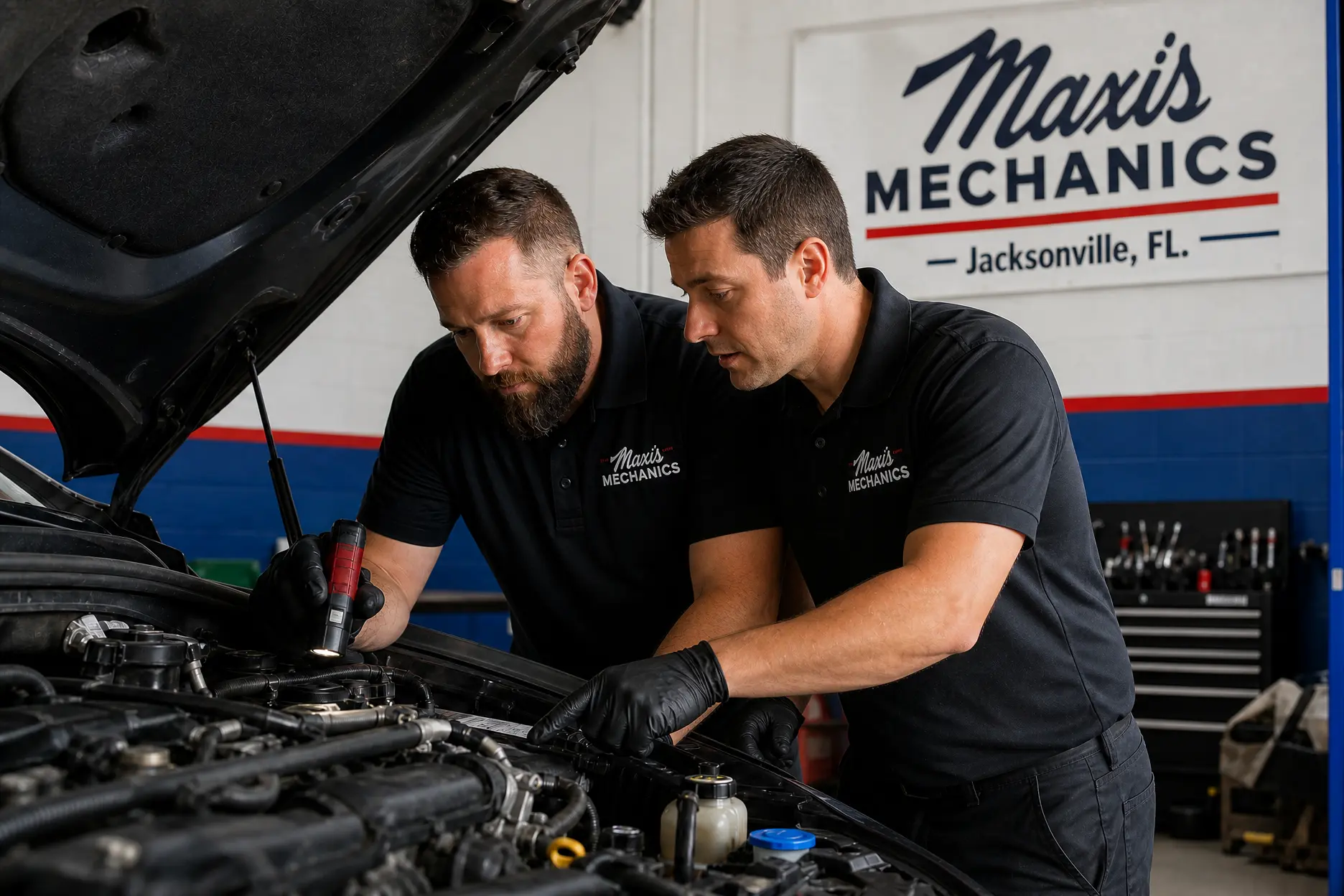
Inspect coolant level and condition, check hoses and clamps for cracks or leaks, test the radiator cap pressure rating, and verify the cooling fan operates at proper temperature thresholds. The cooling system is the most critical defense against Florida summer heat. Engine temperatures can spike from normal operating range (195-220°F) to dangerous levels (240°F+) within minutes if the cooling system fails.[3]
Coolant should be bright green, orange, or pink depending on type — never rusty or cloudy. Check the overflow reservoir when the engine is cold; the level should be between the minimum and maximum marks. Squeeze radiator hoses to detect soft spots, cracks, or brittleness. Examine clamps for rust or looseness. The radiator cap should hold pressure between 13-16 PSI for most vehicles. Run the engine to operating temperature and verify the cooling fan engages. If you notice steam, rapid coolant loss, or temperature gauge readings above halfway, address the issue immediately before summer heat arrives.
What Battery Maintenance Prevents Summer Failures?
Test battery charge and cranking amps, clean corrosion from terminals, check electrolyte levels in non-sealed batteries, and replace batteries over three years old before summer. High temperatures accelerate the chemical reactions inside batteries, causing water loss and internal degradation. For every 15°F increase above 77°F, battery life decreases by approximately 50%.[4] Florida’s summer heat makes batteries fail faster than cold weather, despite the common belief that winter is harder on batteries.
Have your battery tested at an auto parts store or repair shop — most provide free testing. A healthy battery should show 12.6 volts when off and 13.7-14.7 volts when running. Clean white or blue-green corrosion from terminals using a wire brush and baking soda solution. For batteries with removable caps, check that electrolyte covers the lead plates; add distilled water if low. Batteries over three years old in Florida should be replaced proactively, as the heat drastically shortens their reliable service life compared to the 5-6 years typical in cooler climates.
How Do You Prepare Tires for Hot Weather Driving?
Check tire pressure monthly when tires are cold, inspect tread depth using the penny test, examine sidewalls for cracks or bulges, and rotate tires every 5,000-7,000 miles. Underinflated tires generate excessive heat from increased flexing, raising the risk of blowouts on hot pavement. Overinflated tires have reduced contact patches and are more susceptible to damage from potholes and debris.[5]
| Tire Issue | Summer Risk | Check Frequency |
|---|---|---|
| Low pressure | Blowout from heat buildup | Monthly, before trips |
| Worn tread (<4/32″) | Hydroplaning in storms | Every oil change |
| Sidewall cracks | Sudden failure at highway speed | Monthly visual inspection |
| Uneven wear | Reduced stability, shorter life | Every rotation (5k-7k miles) |
Check tire pressure with a quality gauge when tires are cold — before driving or at least three hours after driving. Add or release air to match the vehicle manufacturer’s specification found on the driver’s door jamb sticker, not the maximum pressure stamped on the tire sidewall. Insert a penny into tread grooves with Lincoln’s head upside down; if you can see the top of his head, the tire has less than 2/32″ tread remaining and needs replacement. For Florida’s summer storms, 4/32″ is a safer minimum to prevent hydroplaning.
Which Fluids Need Checking Before Summer Heat?
Verify engine oil level and condition, top off brake fluid and power steering fluid, check transmission fluid color and level, and ensure windshield washer fluid is full. High temperatures increase fluid evaporation rates and accelerate oil breakdown. Engine oil loses viscosity faster in extreme heat, reducing its protective qualities. Brake fluid absorbs moisture over time, lowering its boiling point and creating vapor bubbles under hard braking in hot conditions.[6]
Check engine oil with the dipstick when the engine is cold and on level ground. Oil should be amber to light brown, never black or gritty. Low oil levels or dark, burnt-smelling oil indicate the need for an oil change. Brake fluid should be clear to light amber; dark fluid suggests moisture contamination. Power steering fluid varies by vehicle but should be clean and at the proper level. Transmission fluid should be bright red or amber, never brown or burnt-smelling. Summer’s frequent thunderstorms mean you’ll use windshield washer fluid heavily — keep the reservoir full.
Is Your Air Conditioning System Ready for Summer?
Test AC output temperature (should blow 35-45°F colder than ambient), listen for unusual noises, check for refrigerant leaks around hoses and fittings, and inspect the cabin air filter. A failing AC system in a Jacksonville summer isn’t just uncomfortable — it’s a safety issue. Interior temperatures can reach 130-170°F in parked vehicles, and inadequate cooling while driving creates dangerous conditions for children, elderly passengers, and pets.[7]
Run your AC on maximum cold with the fan on high. Place a thermometer in the center vent; the temperature should be 35-45°F below outside temperature (so if it’s 85°F outside, expect vent temps around 40-50°F). Weak airflow or warm air indicates low refrigerant, a failing compressor, or a clogged cabin air filter. Check under the vehicle for oil spots near the AC compressor, which signal refrigerant leaks. Replace the cabin air filter annually or every 12,000 miles — a clogged filter reduces airflow and AC efficiency significantly.
Schedule service at your nearest Maxi’s Mechanics location in Jacksonville — call (904) 646-4000 or book online at maxiautorepair.com.
Frequently Asked Questions
How often should I check my car during Florida summer?
Check tire pressure, fluid levels, and battery terminals monthly during summer months. Inspect coolant level weekly if your vehicle is older or has high mileage. Before any road trip longer than 100 miles, verify all fluid levels, tire pressure, and that your AC blows cold air.
What temperature is too hot for my car engine?
Most engines operate normally between 195-220°F. If your temperature gauge reaches the three-quarter mark or higher, or if you see steam from under the hood, pull over safely and shut off the engine immediately. Continuing to drive risks catastrophic engine damage from overheating.
Can I use Florida summer heat to check tire pressure?
No — always check tire pressure when tires are cold, before driving or at least three hours after driving. Tire pressure increases 1-2 PSI for every 10°F temperature rise during driving. Hot tire readings give false high values that lead to underinflation when tires cool.
How long does a car battery last in Florida heat?
Car batteries typically last 3-4 years in Florida’s climate, compared to 5-6 years in moderate climates. The extreme heat accelerates internal chemical reactions and evaporation, degrading battery capacity faster. Replace batteries proactively at three years to avoid summer breakdowns.[4]
Should I use different oil viscosity in Florida summer?
Follow your vehicle manufacturer’s oil viscosity recommendation found in the owner’s manual. Modern multi-grade oils (5W-30, 10W-30) are engineered to protect engines across temperature ranges. Changing viscosity without manufacturer guidance can reduce engine protection or fuel economy.
Preparing your vehicle for Florida’s summer heat protects your investment and prevents dangerous roadside breakdowns. The maintenance tasks outlined in this checklist address the systems most vulnerable to Jacksonville’s extreme temperatures, humidity, and weather patterns. Schedule your summer inspection early — waiting until temperatures peak puts you at higher risk.
Written by The Team at Maxi’s Mechanics — Maxi’s Mechanics is a veteran-owned, ASE-certified auto repair shop serving Jacksonville, FL since 2003, with four locations: Beach Blvd, Riverside, Hodges, and San Marco. Updated January 2026.
References
- National Weather Service. Heat Index Calculator and Safety Information. https://www.weather.gov/safety/heat-index
- National Oceanic and Atmospheric Administration. Climate Data for Jacksonville, Florida. https://www.ncdc.noaa.gov/
- Society of Automotive Engineers. Engine Cooling System Standards and Best Practices. https://www.sae.org/
- Battery Council International. Effects of Temperature on Battery Performance and Longevity. https://batterycouncil.org/
- National Highway Traffic Safety Administration. Tire Safety and Maintenance Guidelines. https://www.nhtsa.gov/equipment/tires
- American Petroleum Institute. Motor Oil Performance Standards. https://www.api.org/oil-and-natural-gas/consumer-information/motor-oil
- Centers for Disease Control and Prevention. Heat and Vehicles Safety. https://www.cdc.gov/disasters/extremeheat/index.html
- Tire Industry Association. Tire Maintenance and Safety Standards. https://www.tireindustry.org/