How Florida Heat Affects Car Air Conditioning Systems
Florida’s extreme heat causes AC refrigerant pressure to spike, accelerates compressor wear, and degrades rubber seals and hoses faster than in temperate climates. Jacksonville vehicles experience 40-60% higher AC system failure rates during summer months compared to the national average, with most failures stemming from refrigerant leaks and compressor seizure caused by prolonged high-temperature operation.
Florida heat destroys car AC systems through three primary mechanisms: excessive refrigerant pressure that strains components, accelerated compressor wear from continuous operation, and rapid deterioration of rubber seals and hoses. Jacksonville’s summer temperatures routinely exceed 95°F with humidity above 70%, creating the worst possible environment for automotive air conditioning longevity.[1] Most drivers don’t realize their AC is failing until it stops blowing cold air entirely, by which point repair costs have often doubled.
Written by The Team at Maxi’s Mechanics — Maxi’s Mechanics is a veteran-owned, ASE-certified auto repair shop serving Jacksonville, FL since 2003, with four locations: Beach Blvd, Riverside, Hodges, and San Marco.
Why Does Florida Heat Damage Car Air Conditioning More Than Other Climates?
Florida’s combination of extreme heat and high humidity forces AC systems to operate at maximum capacity for extended periods, creating wear rates two to three times higher than vehicles in moderate climates. When ambient temperatures exceed 90°F, the refrigerant inside your AC system can reach pressures of 250-300 PSI on the high side — well above the 150-200 PSI typical in cooler regions.[2] This constant high-pressure operation stresses every component from the compressor to the condenser.
Jacksonville’s coastal humidity compounds the problem by promoting corrosion on AC components and electrical connections. The combination of salt air, heat, and moisture accelerates the breakdown of aluminum condensers and evaporators, leading to pinhole leaks that slowly drain refrigerant. A vehicle that maintains proper AC function for 8-10 years in Colorado might need major AC repairs after just 4-5 years in Florida.[3]
What AC Components Fail First in Hot Florida Weather?
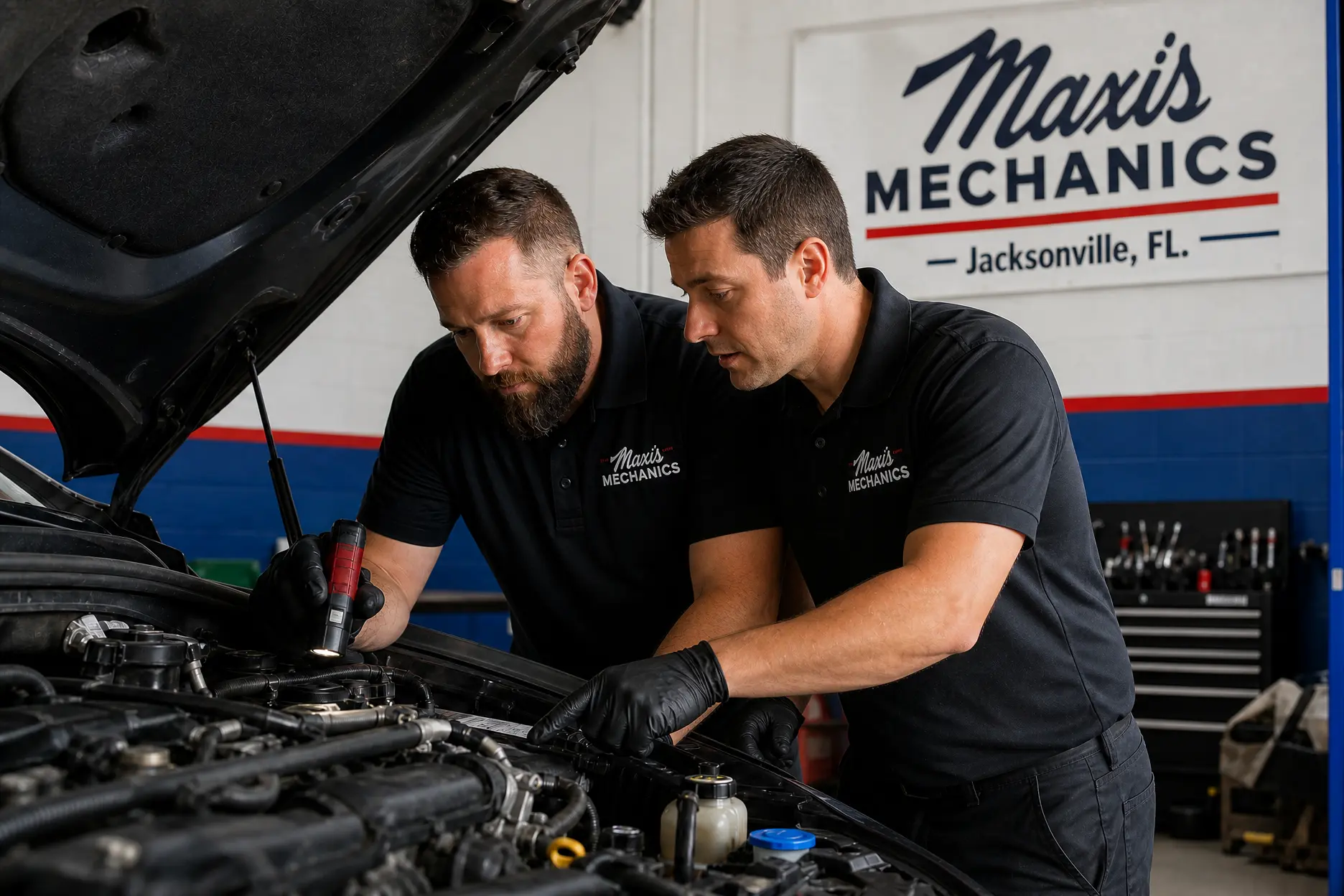
The compressor, rubber hoses, and O-ring seals fail most frequently in Florida heat, accounting for approximately 75% of AC repairs in Jacksonville. The compressor clutch bearing operates under constant load during summer driving, and the internal piston seals deteriorate faster when exposed to sustained high temperatures. A compressor that cycles on and off in moderate weather runs almost continuously when it’s 95°F outside, reducing its service life by half.[4]
Rubber AC hoses and O-rings become brittle and crack when exposed to engine bay temperatures that regularly exceed 200°F in Florida summers. These seals were designed to last 10-12 years in average conditions, but Jacksonville’s heat ages them in 5-7 years. Small refrigerant leaks from deteriorated seals often go unnoticed until the system loses enough charge to stop cooling effectively.
| Component | Normal Lifespan | Florida Lifespan | Primary Failure Mode |
|---|---|---|---|
| Compressor | 8-10 years | 4-6 years | Clutch bearing, internal seal wear |
| Rubber Hoses | 10-12 years | 5-7 years | Cracking, brittleness, permeation |
| O-Ring Seals | 10 years | 5-6 years | Hardening, shrinkage, leaks |
| Condenser | 12-15 years | 6-8 years | Corrosion, road debris damage |
| Evaporator | 15+ years | 8-10 years | Corrosion, mold, drain clogs |
How Does Refrigerant Pressure Change in Extreme Heat?
Refrigerant pressure increases approximately 10-15 PSI for every 10°F rise in ambient temperature, meaning Florida’s 95°F summer days create system pressures 50-75 PSI higher than the same vehicle would experience at 70°F. R-134a refrigerant, used in most vehicles from 1995-2017, operates at a pressure-temperature relationship where 95°F ambient results in high-side pressures around 275-300 PSI.[5] Newer R-1234yf systems run at even higher pressures in hot weather.
These elevated pressures force the compressor to work harder, generate more heat, and consume more engine power. The compressor’s internal temperature can reach 250-300°F during peak operation, breaking down the lubricating oil faster and accelerating wear on piston rings and reed valves. When pressure exceeds design limits repeatedly, microscopic cracks develop in aluminum components that eventually become refrigerant leak points.
What Maintenance Prevents AC Failure in Jacksonville Heat?
Annual AC performance testing, refrigerant level checks, and cabin air filter replacement prevent 60-70% of heat-related AC failures in Florida vehicles. ASE-certified technicians recommend having your AC system inspected every spring before temperatures climb, checking refrigerant charge levels, pressures, and compressor operation under load.[6] A system running just 10% low on refrigerant makes the compressor work significantly harder and run hotter, accelerating wear.
Should You Replace AC Components Preventively?
Replacing rubber hoses and O-ring seals at 6-7 years prevents catastrophic refrigerant loss and expensive compressor damage. When hoses start to show surface cracking or feel hard instead of slightly pliable, replacement costs $200-400 but prevents a $1,200-1,800 compressor failure. The condenser should be flushed annually to remove debris and checked for corrosion, especially on coastal Jacksonville vehicles exposed to salt air.
Schedule service at your nearest Maxi’s Mechanics location in Jacksonville — call (904) 646-4000 or book online at maxiautorepair.com.
Does Parking in Shade Actually Protect Your AC System?
Parking in shade reduces interior cabin temperatures by 20-30°F and lowers AC system workload by 30-40%, extending component life measurably. A vehicle parked in direct Jacksonville sun can reach interior temperatures of 140-160°F within 30 minutes, forcing the AC to run at maximum capacity for 10-15 minutes just to bring the cabin to a comfortable temperature.[7] This extreme cycling wears compressor clutches and stresses refrigerant seals far more than gradual cooling from a shaded start.
Using a windshield sun reflector reduces dashboard and steering wheel temperatures by 40-50°F, which indirectly reduces the heat load transferred to the AC evaporator. Cracking windows slightly when parked allows hot air to escape through convection, lowering the starting temperature by another 10-15°F. These simple habits reduce your AC system’s cumulative operating hours by hundreds each year.
When Should You Run Your AC to Maximize System Life in Florida?
Running your AC at least once weekly year-round keeps seals lubricated and prevents refrigerant oil from settling, reducing seal failure risk by 40-50% compared to seasonal use. Even during Florida’s mild winters, cycling the AC for 10-15 minutes monthly circulates refrigerant oil through the system and prevents compressor shaft seals from drying out and cracking.[8] Many Jacksonville drivers make the mistake of only using AC in summer, which allows seals to harden during the brief cool months.
Using the “recirculation” mode reduces AC workload by 30% because the system cools already-cooled cabin air instead of hot outside air. However, switch to fresh air mode periodically to prevent moisture buildup and mold growth in the evaporator. Setting the temperature to 72-74°F instead of maximum cold reduces compressor cycling and extends clutch life while still providing comfortable cooling.
Frequently Asked Questions
How often should I recharge my car’s AC in Florida?
A properly functioning AC system should never need refrigerant added — it’s a closed loop. If your system needs recharging more than once every 3-4 years, you have a leak that must be repaired. Jacksonville vehicles typically develop small leaks from seal deterioration every 5-7 years that require repair and recharge.
Why does my AC blow cold then warm in Jacksonville traffic?
This typically indicates a failing compressor clutch, low refrigerant charge, or condenser airflow blockage. When the vehicle is moving, airflow cools the condenser effectively, but in traffic, reduced airflow causes high-side pressure to spike and the system to shut down on thermal overload. Have pressures tested immediately to prevent compressor damage.
Can I use my car’s AC defrost mode to prevent system problems?
Yes — running defrost mode cycles the AC compressor and dehumidifies the cabin, keeping seals lubricated even in winter. Use defrost for 10-15 minutes monthly during cooler months to maintain AC system health.
What’s the musty smell from my AC vents in humid weather?
Mold and mildew grow on the evaporator core in Florida’s humid climate when condensation doesn’t drain properly. Replace the cabin air filter annually, use AC for a few minutes before shutting off the engine to dry the evaporator, and have the evaporator professionally cleaned if odor persists.
Should I replace my AC compressor before it fails in Florida heat?
Preventive compressor replacement isn’t cost-effective unless the unit shows clear warning signs like excessive noise, clutch slippage, or metal contamination in the refrigerant. Focus prevention efforts on maintaining proper refrigerant levels and replacing aging hoses and seals at 6-7 years, which protects the compressor from secondary damage.
Protecting your vehicle’s AC system from Florida heat requires consistent maintenance and attention to early warning signs. Don’t wait until you’re sitting in Jacksonville traffic with no cold air — schedule service at your nearest Maxi’s Mechanics location in Jacksonville by calling (904) 646-4000 or booking online at maxiautorepair.com.
Written by The Team at Maxi’s Mechanics — Maxi’s Mechanics is a veteran-owned, ASE-certified auto repair shop serving Jacksonville, FL since 2003, with four locations: Beach Blvd, Riverside, Hodges, and San Marco. Updated January 2026.
References
- National Weather Service. Climate of Jacksonville, Florida. https://www.weather.gov/jax/climate_Jacksonville
- SAE International. Automotive Air Conditioning System Performance Standards J2765. https://www.sae.org/standards/content/j2765/
- Mobile Air Climate Systems Association (MACS). Climate Impact on AC System Longevity. https://www.macsw.org/
- Automotive Service Association. AC Compressor Failure Analysis Technical Bulletin. https://www.asashop.org/
- EPA. Motor Vehicle Air Conditioning Refrigerant Pressure-Temperature Charts. https://www.epa.gov/mvac
- ASE (National Institute for Automotive Service Excellence). A7 Heating and Air Conditioning Certification Standards. https://www.ase.com/
- National Highway Traffic Safety Administration. Vehicle Heat Safety Research. https://www.nhtsa.gov/
- Society of Automotive Engineers. Recommended Practices for AC System Maintenance. https://www.sae.org/