What Causes a Coolant Leak and How Much Does It Cost to Fix?
A coolant leak typically results from worn hoses, a failing water pump, a damaged radiator, or a compromised head gasket, with repair costs ranging from $150 for hose replacement to over $1,500 for head gasket work. Maxi’s Mechanics in Jacksonville, FL provides ASE-certified diagnostics and coolant system repairs at four convenient locations across the area.
A coolant leak occurs when antifreeze escapes from your vehicle’s cooling system through cracks, worn seals, or component failures. You’ll typically notice bright green, orange, or pink fluid pooling under your car, a sweet smell near the engine bay, or your temperature gauge climbing higher than normal. Addressing a coolant leak promptly prevents engine overheating, which can cause catastrophic damage including warped cylinder heads and seized engines.[1]
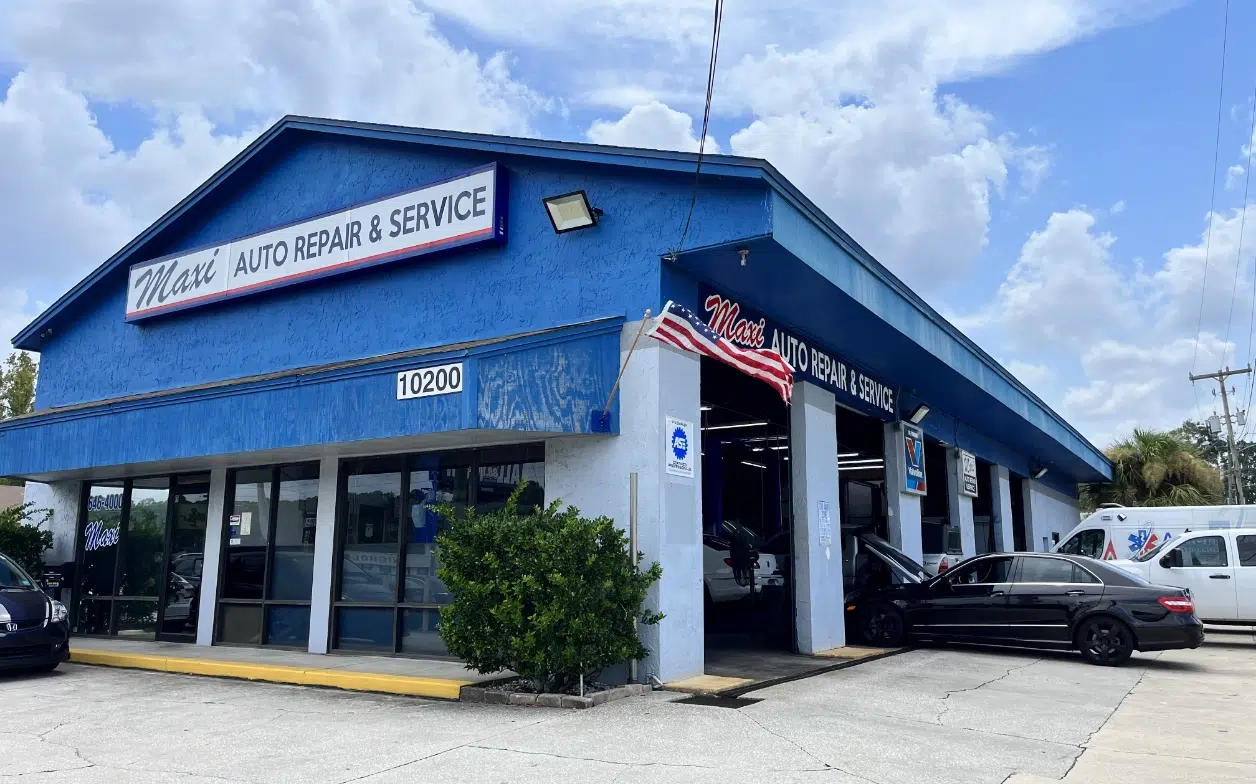
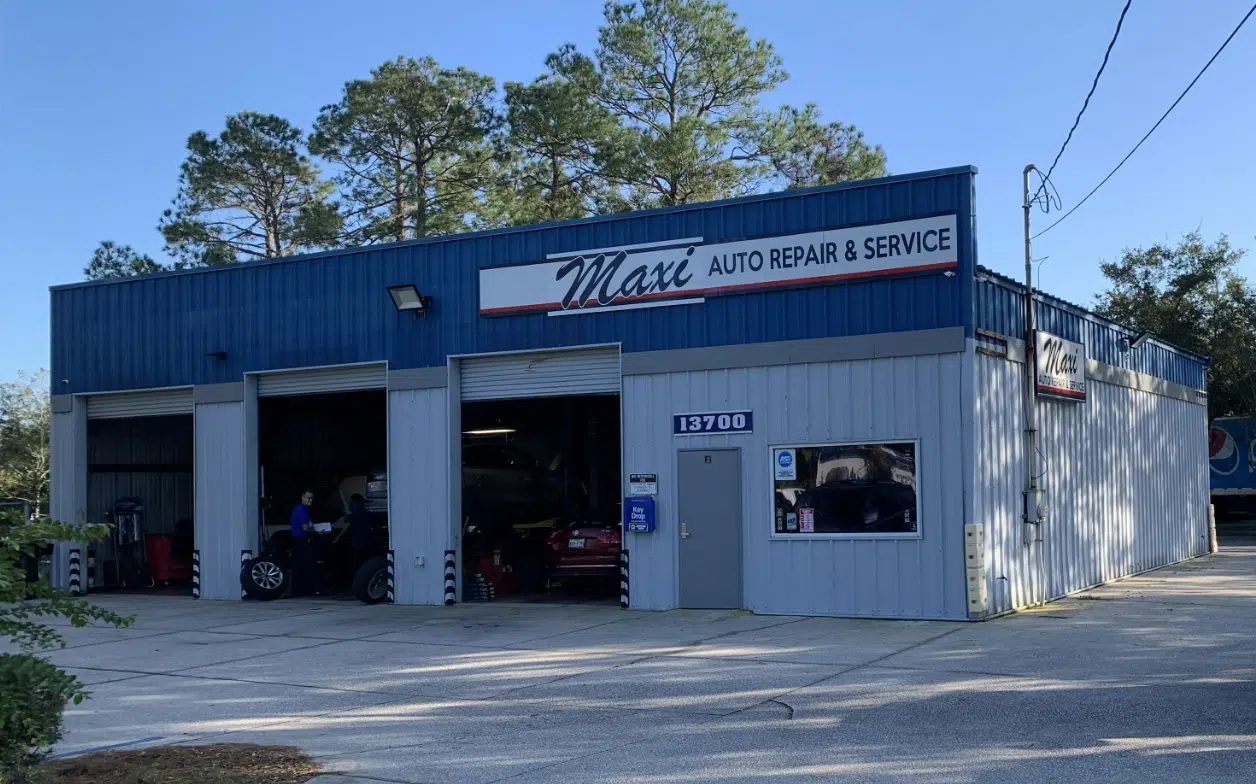
Written by The Team at Maxi’s Mechanics — Maxi’s Mechanics is a veteran-owned, ASE-certified auto repair shop serving Jacksonville, FL since 2003, with four locations: Beach Blvd, Riverside, Hodges, and San Marco.
What Are the Most Common Causes of a Coolant Leak?
The majority of coolant leaks originate from deteriorated rubber hoses, failing water pumps, corroded radiators, damaged heater cores, or blown head gaskets. Each component plays a critical role in circulating coolant through your engine to maintain safe operating temperatures between 195°F and 220°F.[2]
Rubber coolant hoses weaken over time due to constant heat cycling and pressure fluctuations, developing cracks or splits at connection points. Florida’s heat accelerates this deterioration — hoses exposed to Jacksonville’s summer temperatures degrade faster than those in cooler climates. Water pump seals wear out after 60,000 to 100,000 miles, causing coolant to weep from the pump housing.[3] The radiator itself can develop leaks from road debris impacts, internal corrosion, or stress cracks in plastic end tanks. Heater core failures often manifest as coolant odor inside the cabin or wet carpeting on the passenger side. Head gasket failures represent the most serious coolant leak scenario, allowing coolant to enter combustion chambers or mix with engine oil.
Environmental Factors in Jacksonville
Jacksonville’s subtropical climate contributes to accelerated cooling system wear. High ambient temperatures increase coolant operating pressures, stressing hoses and seals. Salt air near coastal areas promotes corrosion in aluminum radiators and metal fittings. Annual inspections of cooling system components help identify weaknesses before they become emergency repairs.
How Can I Tell If My Car Is Leaking Coolant?
Visible coolant puddles under your vehicle, rising engine temperature readings, low coolant reservoir levels, and a sweet antifreeze smell indicate an active coolant leak. Modern vehicles use colored coolant — typically green, orange, pink, or yellow — making leaks easier to identify than clear fluids like water or condensation.[4]
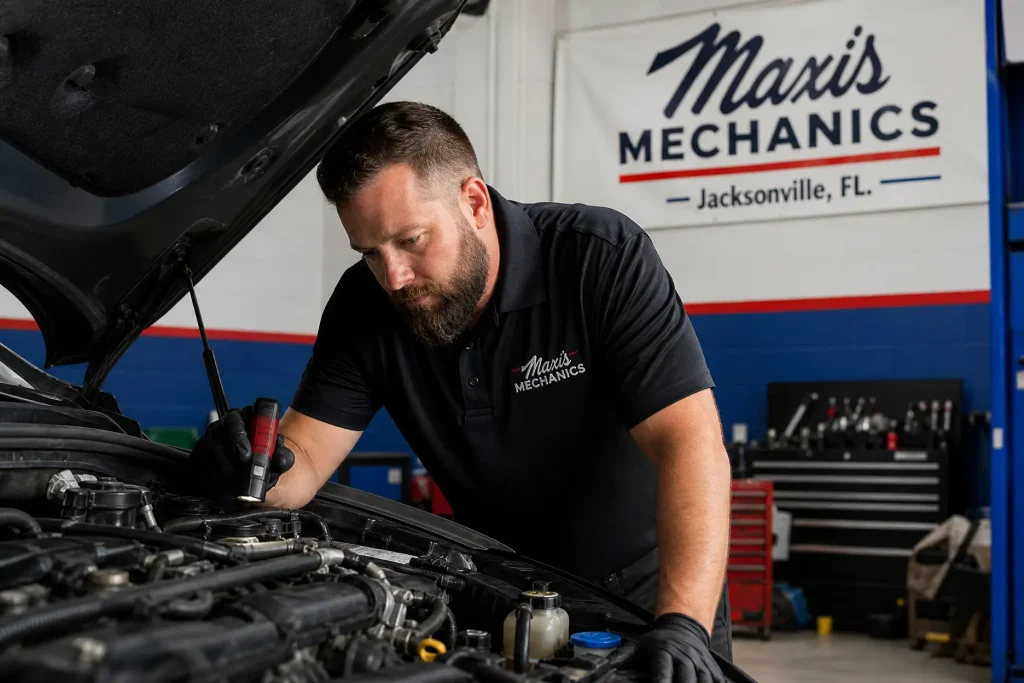
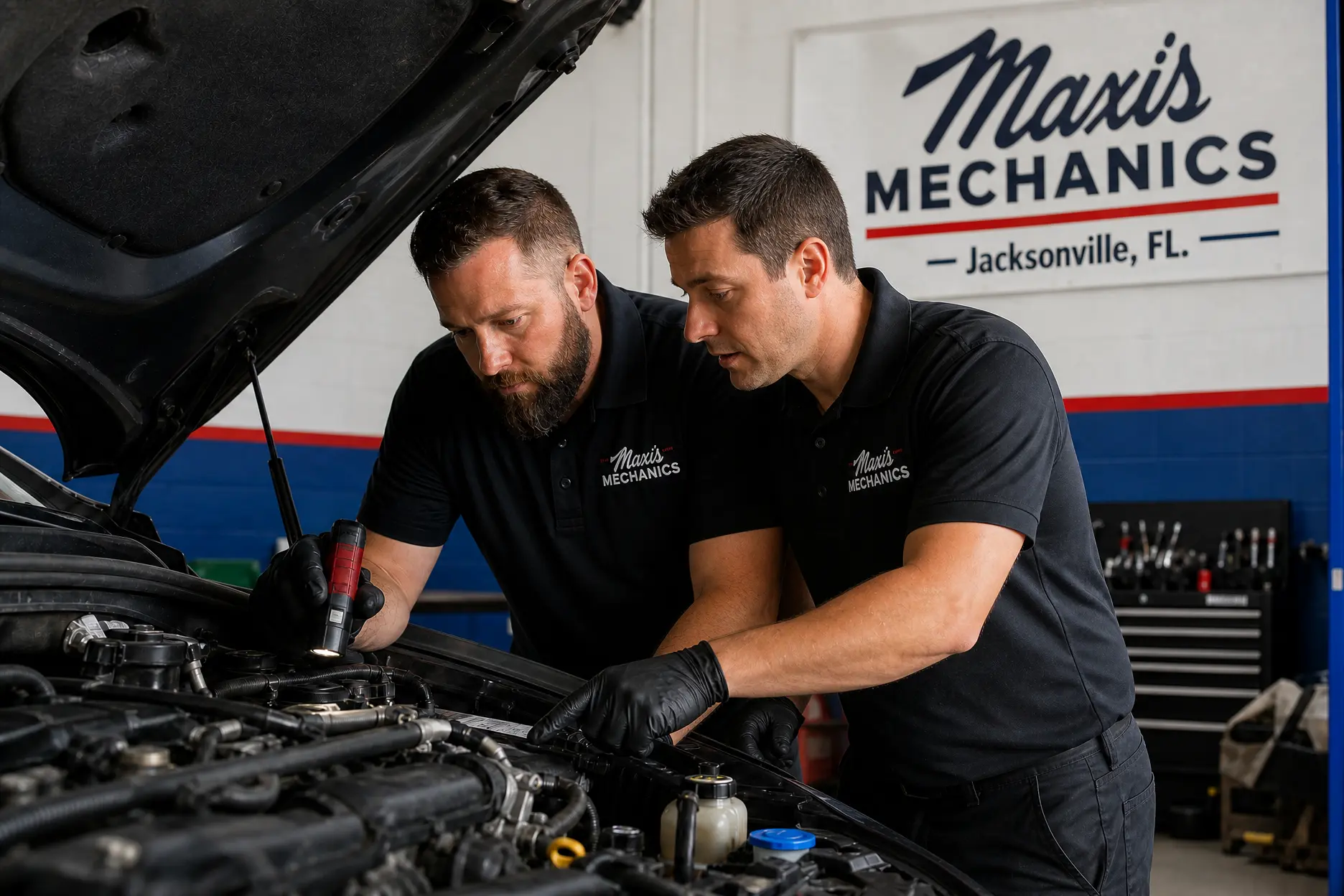
Check for coolant stains on engine components by looking for crusty white or colored residue near hoses, the water pump, or radiator connections. Steam or vapor rising from under the hood signals coolant hitting hot engine surfaces. Your dashboard warning light may illuminate if coolant levels drop significantly, though not all vehicles have dedicated coolant level sensors. A pressure test performed by a technician reveals leaks too small to see during visual inspection by pressurizing the cooling system to operating specifications and monitoring for pressure loss.
Interior signs include foggy windows, coolant smell inside the cabin, or wet floor mats — all pointing to heater core failure. White exhaust smoke or milky oil on the dipstick suggests head gasket failure allowing coolant into the combustion chamber or crankcase, requiring immediate professional attention to prevent engine damage.
What Should I Do If I Discover a Coolant Leak?
Stop driving immediately if the temperature gauge shows overheating, add coolant if levels are low and the engine is cool, and schedule professional diagnostics within 24 hours to identify the leak source. Continuing to operate a vehicle with low coolant risks warping cylinder heads or cracking the engine block from excessive heat.[5]
If you’re driving when you notice the temperature rising, pull over safely, turn off the engine, and wait at least 30 minutes before opening the hood — pressurized coolant can cause severe burns. Never remove the radiator cap when the engine is hot. Once cooled, check the coolant reservoir level. If it’s below the minimum line and you have premixed coolant or a 50/50 antifreeze-water mixture, add enough to reach the fill line. Plain water works as an emergency measure to reach a repair facility, though it lacks corrosion inhibitors and freeze protection.
Document the leak location by placing cardboard under the vehicle overnight to show exactly where fluid is dripping. Note the fluid color and whether the leak is active or only appears after driving. This information helps technicians diagnose the problem efficiently during your service appointment.
Schedule service at your nearest Maxi’s Mechanics location in Jacksonville — call (904) 646-4000 or book online at maxiautorepair.com.
How Much Does Coolant Leak Repair Cost?
Coolant leak repair costs range from $150 to $250 for simple hose replacements, $400 to $700 for water pump replacement, $300 to $900 for radiator repair or replacement, and $1,200 to $3,000 for head gasket replacement. Final costs depend on your vehicle’s make and model, the leak’s location, and labor accessibility.[6]
| Component | Typical Cost Range | Labor Time | Complexity |
|---|---|---|---|
| Coolant Hose | $150 – $250 | 0.5 – 1.5 hours | Low |
| Thermostat Housing | $200 – $400 | 1 – 2 hours | Low to Moderate |
| Water Pump | $400 – $700 | 2 – 4 hours | Moderate |
| Radiator | $300 – $900 | 2 – 3 hours | Moderate |
| Heater Core | $500 – $1,200 | 4 – 8 hours | High |
| Head Gasket | $1,200 – $3,000 | 8 – 12 hours | Very High |
European and luxury vehicles typically cost more to repair due to specialized parts and increased labor complexity. Timing belt-driven water pumps should be replaced simultaneously with the timing belt service around 90,000 to 100,000 miles, as the labor overlaps and prevents future coolant leaks. Jacksonville-area repair costs generally align with national averages, though dealership rates run 20% to 40% higher than independent ASE-certified shops.[7]
Can I Drive With a Small Coolant Leak?
Driving with even a small coolant leak is not recommended, as minor leaks can escalate rapidly and coolant levels can drop to dangerous levels within miles, causing engine overheating and permanent damage. What appears as a few drops can become a major failure without warning, especially if a weakened hose or seal completely fails under pressure.[1]
If you must drive a short distance to reach a repair facility, monitor the temperature gauge continuously and keep the heater on high to pull heat away from the engine. Stop immediately if the temperature approaches the red zone. Check coolant levels before starting the engine and carry extra coolant in your vehicle. Most cooling systems hold 1 to 2 gallons, but losing just 30% of capacity compromises the system’s ability to regulate engine temperature effectively.
Small leaks often worsen after heat cycling, as thermal expansion and contraction further stress already compromised components. A crack that drips slowly when cold may spray coolant once the system reaches full operating pressure of 15 to 18 PSI. The cost difference between repairing a small leak now versus replacing an overheated engine later makes immediate repair the economical choice.
How Do Mechanics Diagnose Coolant Leaks?
ASE-certified technicians diagnose coolant leaks using visual inspections, pressure testing, dye tracing, and computerized diagnostics to pinpoint the exact failure location. A systematic approach identifies both obvious external leaks and hidden internal leaks that may not leave visible puddles.[8]
The diagnostic process begins with a visual inspection of all cooling system components including hoses, clamps, the radiator, water pump, heater core connections, and reservoir. Technicians look for crusty deposits, wet spots, or corrosion indicating active or previous leaks. A cooling system pressure test uses a specialized pump to pressurize the system to operating specs while the engine is off, making leaks visible and measurable. Pressure loss over a 15-minute test period confirms a leak even if the exact location isn’t immediately visible.
UV dye testing involves adding fluorescent dye to the coolant, running the engine, then using a UV light to trace the dye path to the leak source — particularly effective for slow leaks in hard-to-see areas. A combustion gas test detects head gasket failures by checking for exhaust gases in the cooling system using a chemical detector that changes color when exposed to combustion byproducts. This test confirms internal leaks before committing to expensive head gasket replacement.
Frequently Asked Questions
Is coolant leak covered by warranty?
Coolant leaks are covered under most new vehicle powertrain warranties if they result from manufacturing defects, typically for 5 years or 60,000 miles. Leaks from normal wear, external damage, or lack of maintenance are not covered. Extended warranties vary widely, so review your specific coverage terms.
What color is coolant and why does it matter?
Coolant comes in green, orange, pink, red, yellow, or blue depending on the chemical formulation and manufacturer specifications. The color indicates the type of corrosion inhibitors used — mixing different types can reduce effectiveness and cause damage. Always use the coolant type specified in your owner’s manual.
How often should I check my coolant level?
Check coolant levels monthly when the engine is cold by inspecting the transparent overflow reservoir — the level should be between the minimum and maximum marks. If you’re adding coolant more than once between oil changes, you have a leak that requires professional diagnosis.
Can I use stop leak products for coolant leaks?
Stop leak products may temporarily seal very small leaks in hoses or gaskets but are not a permanent solution and can clog heater cores or radiator passages. They’re best used as an emergency measure to reach a repair facility, not as a long-term fix, and should be disclosed to your technician during repairs.
Will my car overheat immediately if coolant is leaking?
Overheating time depends on leak severity and coolant loss rate — a small leak may take days to cause problems while a burst hose can overheat an engine in minutes. Modern vehicles have larger coolant capacity providing some buffer, but any leak should be repaired before the engine temperature climbs above normal operating range.
Don’t let a coolant leak turn into an expensive engine replacement. Schedule service at your nearest Maxi’s Mechanics location in Jacksonville — call (904) 646-4000 or book online at maxiautorepair.com.
Written by The Team at Maxi’s Mechanics — Maxi’s Mechanics is a veteran-owned, ASE-certified auto repair shop serving Jacksonville, FL since 2003, with four locations: Beach Blvd, Riverside, Hodges, and San Marco. Updated January 2026.
References
- National Highway Traffic Safety Administration. Vehicle Cooling Systems and Maintenance. https://www.nhtsa.gov/
- Society of Automotive Engineers. Engine Cooling System Standards and Best Practices. https://www.sae.org/
- Automotive Service Association. Water Pump Service Life and Replacement Guidelines. https://www.asashop.org/
- Environmental Protection Agency. Antifreeze and Engine Coolant Identification. https://www.epa.gov/
- National Institute for Automotive Service Excellence. Cooling System Diagnosis and Repair Certification Standards. https://www.ase.com/
- Motor & Equipment Manufacturers Association. Average Repair Cost Data for Cooling System Components. https://www.mema.org/
- Bureau of Labor Statistics. Automotive Repair Labor Rates by Metropolitan Area. https://www.bls.gov/
- International Automotive Technicians Network. Cooling System Diagnostic Procedures. https://www.iatn.net/