If your check engine light just turned on and your car feels normal, you can generally drive safely to a repair shop — but you should schedule a diagnostic within the next few days. If the check engine light is flashing, that’s a different situation entirely: a flashing CEL signals an active engine misfire that can destroy your catalytic converter within minutes of continued driving [1]. Pull over safely and call for a tow.
At Maxi’s Mechanics, check engine light diagnostics are one of our most common services across all four Jacksonville locations. Most check engine lights are triggered by one of eight common issues — several of which are inexpensive to fix when caught early, but become costly if ignored.
Here’s what you need to know before you panic, and before you let someone sell you a repair you don’t need.
Steady vs. Flashing Check Engine Light: Why It Matters
The way your check engine light behaves tells you how urgently you need to respond:
Steady (solid) check engine light means your vehicle’s OBD-II computer has detected a fault and stored a diagnostic trouble code. The issue may be minor (loose gas cap) or significant (catalytic converter degradation), but it’s not causing immediate damage in most cases. You can drive to the shop, but don’t ignore it for weeks — the underlying problem often worsens over time.
Flashing check engine light means an engine misfire is happening right now. Unburned fuel is reaching the catalytic converter and overheating it, which can cause permanent damage or even a fire in extreme cases [1]. Reduce your speed immediately, avoid heavy acceleration, and get to a shop or pull over as soon as it’s safe. If the flashing is constant, have the vehicle towed.
Check engine light that comes on and goes off intermittently usually indicates a problem that occurs under specific conditions — certain speeds, temperatures, or loads. The code is still stored in the computer even when the light is off, so a diagnostic scan will reveal it.
The 8 Most Common Causes of a Check Engine Light
Based on industry data and what we see regularly at our Jacksonville shops, these are the issues behind most check engine lights:
1. Loose, Damaged, or Missing Gas Cap
The single most common trigger for a check engine light is the gas cap [2]. Your fuel system is sealed to prevent vapors from escaping, and a loose cap breaks that seal. If your CEL just turned on after a fuel stop, pull over, tighten the cap until it clicks, and drive for a day or two — the light may reset on its own.
2. Oxygen Sensor Failure
Oxygen sensors monitor how much unburned oxygen is in your exhaust. A failing O2 sensor causes poor fuel economy and can damage the catalytic converter over time. Most vehicles have 2–4 oxygen sensors, and replacement typically costs $150–$300 per sensor.
3. Catalytic Converter Degradation
The catalytic converter reduces harmful emissions. When it fails, you’ll notice reduced performance, worse fuel economy, and sometimes a sulfur or rotten-egg smell. Replacement is expensive ($800–$2,500+), which is why catching upstream problems early — like O2 sensors and misfires — matters so much. A failing converter is often the symptom, not the root cause.
4. Spark Plug or Ignition Coil Issues
Worn spark plugs or failing ignition coils cause misfires (P0300-series codes), rough idle, hesitation, and decreased fuel economy. Spark plugs are a maintenance item — most should be replaced every 60,000–100,000 miles depending on the type. This is one of the most affordable check engine light fixes.
5. Mass Airflow (MAF) Sensor Malfunction
The MAF sensor measures incoming air to calculate the correct fuel-to-air ratio. A dirty or failing MAF causes rough idle, stalling, and poor acceleration. In Jacksonville’s humid, pollen-heavy environment, MAF sensors get contaminated faster than in drier climates. Often, a professional cleaning solves the problem without a full replacement.
6. EVAP System Leak
The evaporative emission control system captures fuel vapors and recirculates them. Leaks in the hoses, purge valve, or vent valve trigger codes P0440, P0455, or P0456. Jacksonville’s temperature swings — 90°F days followed by 65°F nights in spring and fall — cause fuel vapors to expand and contract, which can expose marginal connections.
7. Thermostat or Coolant Temperature Issues
Code P0128 fires when the engine isn’t reaching operating temperature fast enough. This is common in Jacksonville during the brief winter months when overnight lows hit the 30s but afternoon highs reach the 70s — the engine warms up, cools down during a stop, and the cycle confuses the computer.
8. Vacuum Leak
Cracked or disconnected vacuum hoses cause the engine to run lean (too much air, not enough fuel). Symptoms include rough idle, high idle speed, and hissing sounds from the engine bay. Florida’s heat accelerates rubber deterioration, making vacuum leaks more common in older vehicles here than in cooler climates.
[HYPOTHETICAL — replace with your actual shop data before publishing] At our Jacksonville shops, we’d estimate the breakdown looks roughly like this: oxygen sensors and EVAP leaks each account for about 20–25% of the check engine lights we diagnose. Spark plug and ignition coil issues make up another 15–20%, followed by catalytic converter problems at around 10–15%. Gas cap triggers are common but most customers fix those themselves before they come in. MAF sensors, thermostat codes, and vacuum leaks round out the remaining cases. The mix shifts seasonally — we see more thermostat codes in January and February, and more EVAP codes in spring and fall when daily temperature swings are biggest.
How Long Can You Drive with Your Check Engine Light On?
The honest answer: it depends entirely on what triggered it.
Safe to drive short-term (days to a week): Gas cap issues, minor sensor faults, EVAP leaks, thermostat codes. The vehicle will continue to operate, but fuel economy may decrease and the problem may worsen.
Drive to the shop but don’t delay: Oxygen sensor failure, MAF malfunction, vacuum leaks, single-cylinder misfire. These affect performance and fuel economy and can cause secondary damage if left for weeks.
Stop driving immediately: Flashing check engine light (active misfire), catalytic converter overheating, loss of power accompanied by warning lights, any check engine light combined with temperature gauge readings in the red zone.
The most expensive check engine light repairs we see are problems that started small. A $200 oxygen sensor replacement that gets ignored becomes a $1,500 catalytic converter replacement three months later. A $150 ignition coil swap that gets postponed leads to $800+ in catalytic converter and spark plug damage from extended misfiring.
[HYPOTHETICAL — replace with a real customer story before publishing] A recent example from our Hodges location: a customer came in with a P0301 single-cylinder misfire code they’d been driving on for about six weeks. They said the car “ran a little rough but nothing serious.” By the time they brought it in, the extended misfiring had overheated and damaged the catalytic converter. What should have been a $180 ignition coil replacement turned into a $2,100 repair — the coil, the fouled spark plug, and a new catalytic converter. Six weeks of putting it off cost an extra $1,900.
What to Do Right Now if Your Check Engine Light Is On
Step 1: Check your gas cap. Tighten it until it clicks. If it’s cracked or the seal is damaged, replace it ($5–$15 at any auto parts store).
Step 2: Note how the light is behaving. Steady, flashing, or intermittent? This tells the technician a lot before they even plug in the scanner.
Step 3: Pay attention to symptoms. Is the car running rough? Is acceleration hesitant? Are there unusual noises or smells? Write it down — this helps the diagnostic process.
Step 4: Schedule a diagnostic. At Maxi’s Mechanics, a diagnostic starts at $85, and our ASE-certified technicians use Snap-On Zeus scanners to read manufacturer-specific codes, review freeze-frame data, and test components to find the actual cause — not just the code number.
Don’t go to an auto parts store for a free code read and then buy whatever part they suggest. Trouble codes identify the system with a problem, not the part that failed [3]. A code read without component testing leads to guesswork, and guesswork leads to unnecessary part replacements.
Check Engine Light Diagnostics at Maxi’s Mechanics
When you bring your vehicle in for a check engine light diagnostic, here’s our process:
Our service advisor records your symptoms and when they started. Our technician replicates the issue when possible (test drive, cold start observation), then connects our Snap-On Zeus scanner to pull all stored codes, pending codes, and freeze-frame data. From there, we test the specific components indicated by the codes to confirm the actual failure.
We document everything with our Digital Vehicle Inspection (DVI) system and send the findings directly to your phone — photos, videos, and technician notes — so you can see exactly what’s going on before you authorize any work.
Our philosophy: “We diagnose. You decide.” No pressure, no upselling, and no work without your explicit approval.
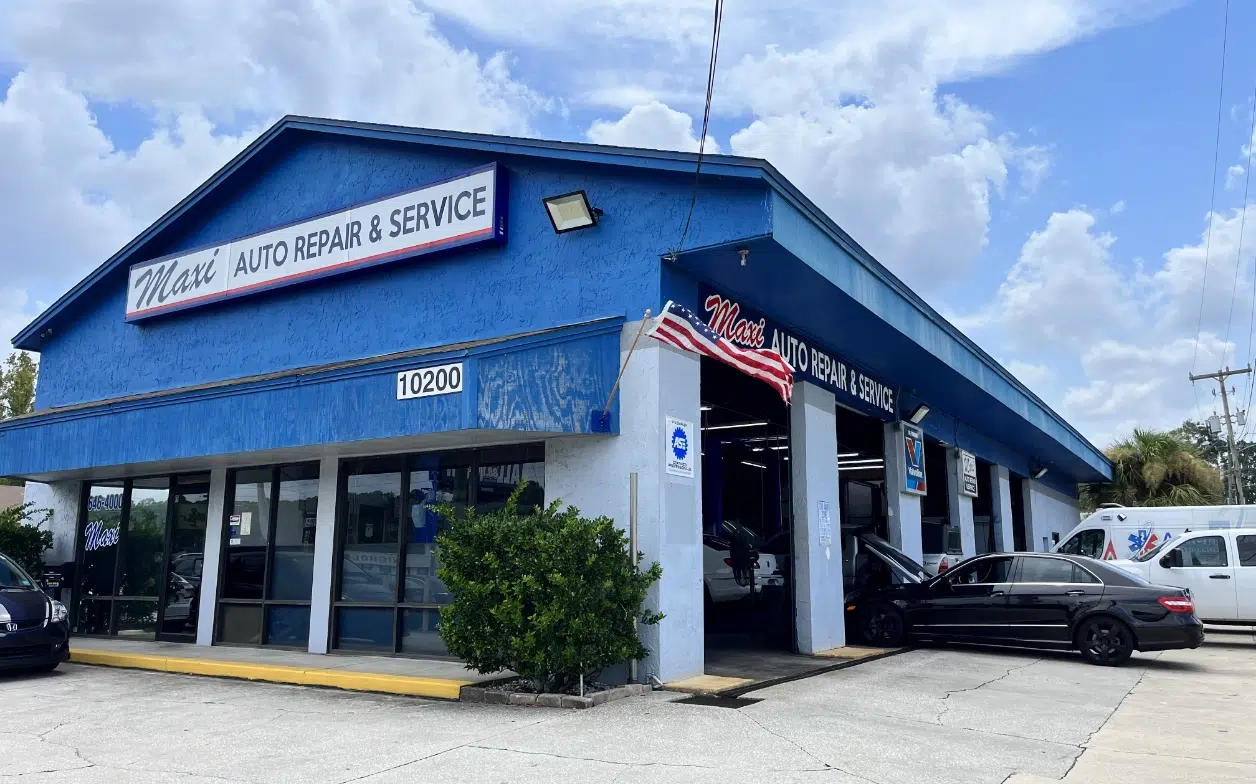
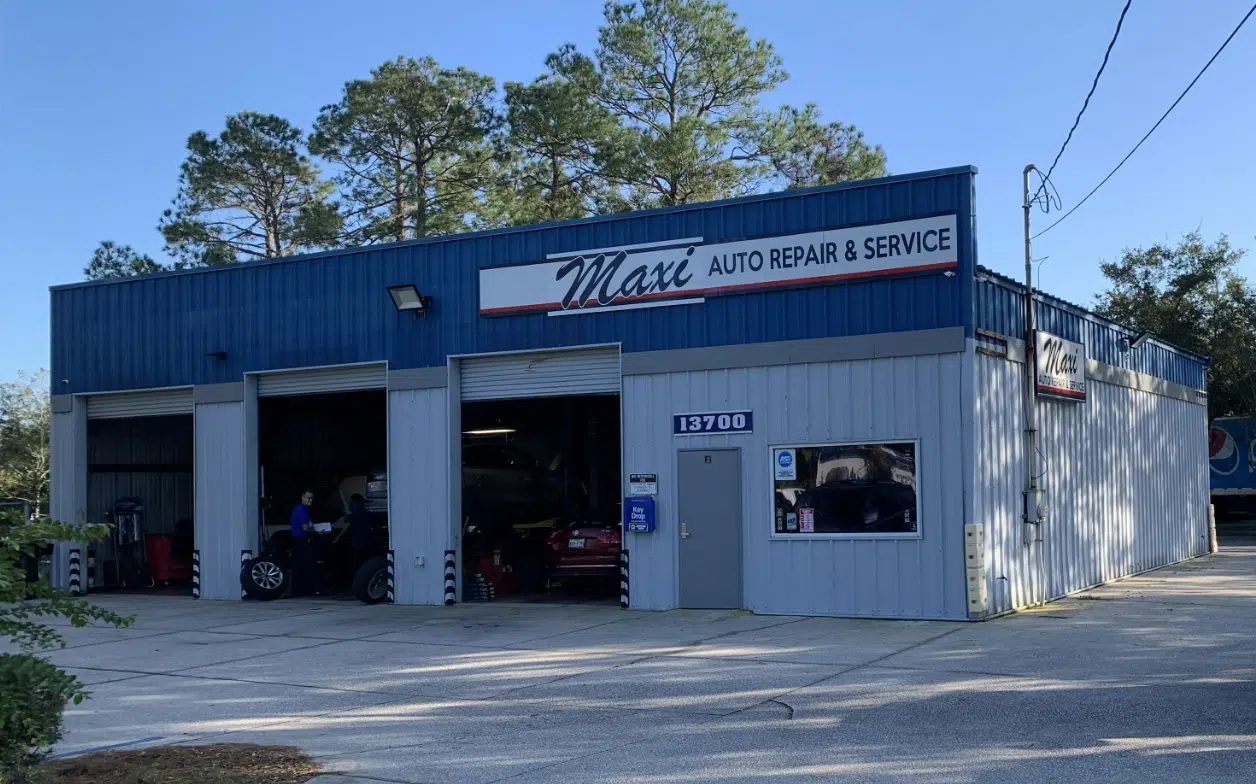
Four locations across Jacksonville: Beach Blvd (904-646-4000), Riverside (904-358-9800), Hodges (904-992-6868), and San Marco (904-931-4388). Monday–Friday, 7:30 AM – 5:30 PM.
All work backed by our 3-Year / 36,000-Mile Nationwide Warranty.
Frequently Asked Questions
Can I pass a Florida vehicle inspection with the check engine light on?
Florida does not currently require state vehicle inspections or emissions testing for private passenger vehicles, so a check engine light won’t prevent you from renewing your registration. However, the underlying issue still affects your vehicle’s performance, fuel economy, and resale value.
Will disconnecting the battery reset my check engine light?
Yes, disconnecting the battery for 15–30 minutes will clear stored codes and turn off the light. But the code will return if the underlying problem isn’t fixed — and you’ll lose your freeze-frame data, which makes diagnosis harder. This is also why you should be cautious buying used cars with no stored codes — the seller may have cleared them before the test drive.
How much does it cost to fix a check engine light?
Costs range from $0 (loose gas cap) to $2,500+ (catalytic converter replacement). The most common fixes fall in the $150–$500 range — sensor replacements, spark plugs, ignition coils, or EVAP system repairs. A proper diagnostic ($85–$170 at Maxi’s Mechanics) ensures you only pay for the repair you actually need.
References
[1] AAA. “The Check Engine Light: Common Causes and How to Fix It.” AAA Automotive. aaa.com
[2] AutoZone. “Why Is My Check Engine Light On?” AutoZone DIY. autozone.com
[3] RepairPal. “Check Engine Light Diagnosis & Testing Cost Estimate.” repairpal.com