Complete Car Maintenance Checklist for Jacksonville, FL Drivers
Jacksonville drivers face unique maintenance challenges due to coastal salt air, year-round heat exceeding 90°F from May through September, and high-humidity conditions that accelerate corrosion and fluid degradation.[1] A comprehensive car maintenance checklist tailored to Florida’s climate should address cabin air filtration, coolant system integrity, transmission fluid condition, tire rotation intervals, battery health monitoring, brake fluid moisture contamination, serpentine belt wear, wiper blade UV damage, spark plug fouling, and pre-purchase inspections for used vehicles.
Most Jacksonville drivers stay on top of oil changes, but overlook critical maintenance that directly impacts safety and longevity in Florida’s demanding climate. Salt spray from the Atlantic and Intracoastal, combined with I-95 and I-295 stop-and-go traffic, creates conditions that silently degrade components most service schedules ignore. This checklist identifies the ten services ASE-certified technicians see skipped most often — and the Jacksonville-specific reasons they matter.
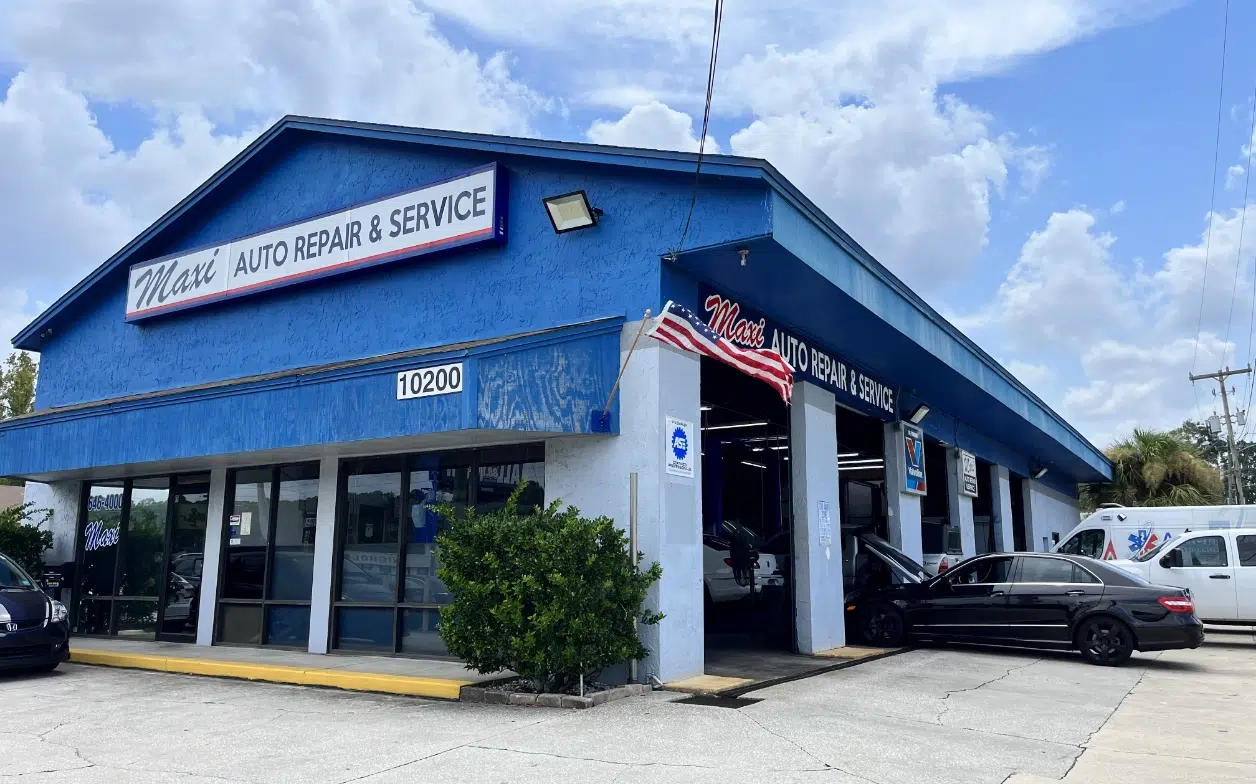
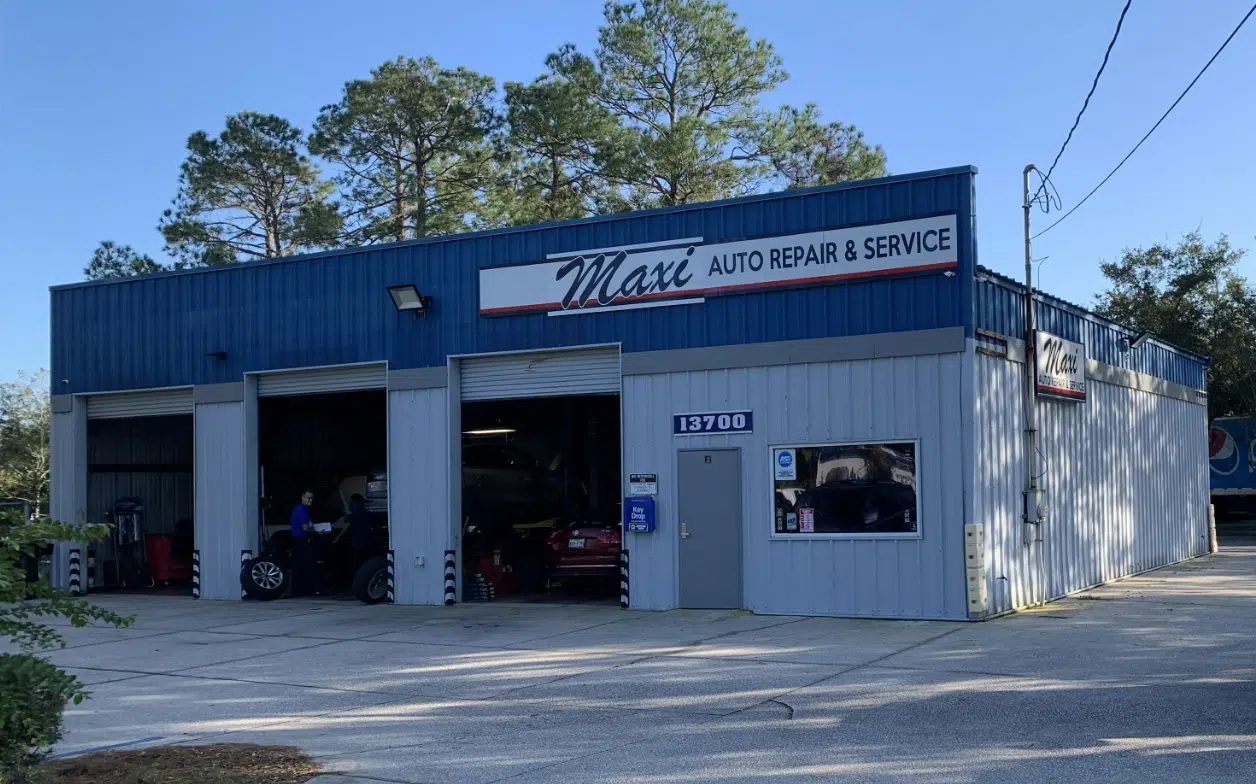
Written by Maxi’s Mechanics Service Team — AAA-Approved, ASE-Certified Master Technicians. Veteran-owned and operated, serving Jacksonville since 2003 with BG-Certified technicians across four locations, delivering factory-grade diagnostics and preventive care backed by a 3-Year/36,000-Mile Nationwide Warranty.
1. Why Do Jacksonville Drivers Forget Cabin Air Filter Replacements?
Cabin air filters in Jacksonville vehicles clog 40% faster than the national average due to pollen from live oaks, salt particulates, and high humidity that promotes mold growth inside the HVAC system.[2] Most manufacturers recommend replacement every 12,000–15,000 miles, but Jacksonville’s environment demands inspection every 6,000 miles. A clogged filter reduces airflow, forces the blower motor to work harder (shortening its lifespan), and circulates allergens and mildew spores into the cabin. During spring pollen season (February through May) and after tropical storms, cabin filters accumulate organic debris that retains moisture, creating ideal conditions for microbial contamination. Technicians at our Riverside location routinely find filters completely black with mold after just 8,000 miles in vehicles parked near the St. Johns River.
2. How Does Florida Heat Affect Coolant System Maintenance?
Coolant degrades 60% faster in Florida heat, losing corrosion inhibitors that protect aluminum engine components from electrolytic damage caused by dissimilar metals in modern cooling systems.[3] Most coolant formulations are designed for 100,000-mile intervals under moderate climates, but Jacksonville’s ambient temperatures exceeding 90°F for four consecutive months accelerate glycol breakdown and create acidic conditions. A proper coolant flush involves draining the old fluid, circulating a cleaning agent to remove scale and corrosion deposits, flushing with demineralized water, and refilling with the manufacturer-specified coolant type (many vehicles now require specific silicate-free or phosphate-free formulations). Skipping this service leads to radiator leaks, water pump seal failure, and heater core clogs. We recommend testing coolant pH and freeze point annually and performing a complete flush every 30,000 miles in Jacksonville conditions.
3. What Transmission Fluid Issues Are Unique to Stop-and-Go Traffic?
Stop-and-go traffic on I-95 and the Mathews Bridge generates 40% more transmission heat than highway cruising, causing fluid oxidation that turns protective additives into sludge and varnish deposits on valve bodies.[4] Automatic transmissions rely on hydraulic pressure to engage clutch packs, and degraded fluid loses viscosity at operating temperature (typically 175–200°F, but often exceeding 220°F in Jacksonville summer traffic). Modern “lifetime” fill claims assume ideal driving conditions that don’t exist in urban Florida environments. Transmission fluid should be inspected for color (dark brown or burnt smell indicates overheating), consistency (gritty texture means clutch material contamination), and level (even sealed units can develop leaks). A proper fluid exchange uses a machine to cycle new fluid through the torque converter and cooler lines, replacing 90–95% of the old fluid rather than just draining the pan. Jacksonville drivers should service transmissions every 40,000 miles for conventional automatics and 60,000 miles for CVTs, regardless of manufacturer recommendations.
4. Why Do Tire Rotation Intervals Matter More in Coastal Florida?
Uneven tire wear accelerates in coastal areas due to salt-induced corrosion of suspension components and alignment shift from road hazards like Duval County’s notorious potholes on Beach Boulevard and Atlantic Boulevard.[5] Front tires on front-wheel-drive vehicles wear 25–30% faster than rears due to steering load and drive torque, creating handling imbalances that compromise wet-weather traction during afternoon thunderstorms common from June through September. Regular rotation (every 5,000–7,000 miles) equalizes wear patterns and extends tire lifespan by 20–25%. During rotation, technicians should inspect for cupping (indicates worn shocks), feathering (alignment issue), and sidewall cracking from UV exposure. Jacksonville’s combination of heat, salt air, and ozone accelerates rubber degradation even on garaged vehicles, making visual inspection critical. A four-wheel alignment check should accompany every other rotation to catch suspension wear before it destroys a new set of tires.
5. How Does Humidity Affect Battery Performance and Testing?
Jacksonville’s 75% average relative humidity accelerates battery self-discharge rates and promotes terminal corrosion that creates resistance, reducing effective cranking amps by 30–40% even when the battery tests “good” on basic load testers.[6] Heat is the primary battery killer — for every 15°F above 77°F, battery life decreases by 50% — but humidity compounds the problem by enabling corrosion creep along cable connections and hold-down brackets. A proper battery service includes load testing under cranking simulation, testing the charging system output (should be 13.8–14.4 volts at idle with accessories off), inspecting cables for internal corrosion (green powder inside the insulation indicates copper sulfate buildup), cleaning terminals with a wire brush and applying dielectric grease, and checking electrolyte levels in non-sealed batteries. Jacksonville drivers should have batteries tested twice yearly (before summer and before winter travel season) and replaced proactively at four years regardless of test results, as heat-related internal plate damage often progresses faster than surface testing reveals.
6. When Should Jacksonville Drivers Service Brake Fluid?
Brake fluid is hygroscopic, absorbing moisture from humid air at a rate 3× faster in coastal Florida than arid climates, lowering the boiling point from 400°F+ to under 300°F and causing brake fade during emergency stops or mountain driving outside the state.[7] Most manufacturers specify brake fluid replacement every three years, but Jacksonville’s environment demands service every two years. Moisture contamination also causes internal corrosion of aluminum master cylinders, wheel cylinders, and ABS modulator valves — repairs that cost $800–$2,000 compared to a $120 fluid exchange. Modern vehicles use DOT 3, DOT 4, or DOT 5.1 glycol-based fluids (never mix with DOT 5 silicone fluid), and many European vehicles require low-viscosity DOT 4 LV formulations. A proper flush uses a pressure bleeder or vacuum system to exchange fluid at all four corners while monitoring for air bubbles, and should be performed by ASE-certified brake technicians who can identify caliper slide pin corrosion and rubber component swelling that indicate overdue service.
| Season | Primary Concerns | Recommended Services |
|---|---|---|
| Spring (Mar–May) |
Pollen accumulation, A/C prep | Cabin filter, A/C performance test, coolant pH check |
| Summer (Jun–Aug) |
Extreme heat, hurricane prep | Battery test, tire pressure/tread, wiper blade replacement |
| Fall (Sep–Nov) |
Post-storm inspection, cooling | Brake inspection, suspension check, fluid level verification |
| Winter (Dec–Feb) |
Visitor traffic, road trips | Full vehicle inspection, alignment, transmission service evaluation |
Need a comprehensive vehicle inspection before Florida’s demanding summer season? Call (844) 297-8529 or book online at maxiautorepair.com. Our four Jacksonville locations offer same-day service with our 3-Year/36,000-Mile Nationwide Warranty on all repairs.
7. What Serpentine Belt Failures Occur in High-Heat Environments?
Serpentine belts in Jacksonville degrade from the inside out due to heat cycling and ozone exposure, developing internal cracks invisible during visual inspection that lead to sudden failure and stranding.[8] The serpentine belt drives the alternator, water pump, power steering pump, and A/C compressor — its failure results in immediate loss of charging, cooling, steering assist, and climate control. Modern EPDM (ethylene propylene diene monomer) belts last longer than old neoprene designs but still require replacement every 60,000–80,000 miles in Florida heat. Inspection should include checking for rib separation (run your finger across the grooves to feel for missing chunks), glazing (shiny surface indicates slippage), and proper tension (too loose causes slippage and alternator whine; too tight overloads bearings in driven components). Tensioner and idler pulley bearings wear faster in Jacksonville’s heat and should be replaced with the belt, as bearing seizure is the leading cause of belt shredding. Our technicians use a decibel meter and infrared thermometer to detect failing pulleys before they destroy a new belt.
8. How Do UV Rays and Ozone Damage Wiper Blades?
Jacksonville’s UV index reaches 10+ (extreme exposure) from April through September, causing wiper blade rubber to harden and crack within six months rather than the typical 12-month lifespan, leaving streaks that reduce visibility during sudden afternoon thunderstorms.[1] Ozone from coastal air and vehicle exhaust further accelerates rubber degradation. Effective wipers are critical safety equipment during Florida’s daily summer storms that reduce visibility to under 100 feet in seconds. Premium beam-style blades with graphite-coated rubber outperform traditional frame-style wipers in Florida heat, maintaining flexibility and contact pressure longer. Blades should be replaced twice yearly (May and November) and the windshield treated with a hydrophobic coating that beads water and reduces wiper load. During replacement, inspect wiper arms for spring tension (weak springs cause chatter) and washer nozzles for clogs from pollen and salt spray. Keep washer fluid reservoirs filled with a solution containing detergent to cut through love bug residue common on I-95 during spring and fall migrations.
9. Why Do Spark Plugs Foul Faster in Humid Climates?
High humidity promotes carbon deposit formation on spark plug electrodes, and short-trip driving common in Jacksonville’s urban sprawl prevents combustion chambers from reaching temperatures needed to burn off deposits, causing misfires that trigger check engine lights and reduce fuel economy by 10–15%. Modern iridium and platinum plugs are designed for 100,000-mile intervals, but Jacksonville conditions often require inspection at 60,000 miles. Plug fouling manifests as rough idle, hesitation during acceleration, and increased emissions. Removal and inspection reveal carbon buildup (black sooty deposits indicate rich mixture), oil fouling (blue-gray deposits indicate worn valve seals or piston rings), or electrode erosion (indicates electrical system issues). When replacing plugs, technicians should verify proper gap specification (varies by engine and often requires 0.001-inch precision), apply anti-seize compound to threads in aluminum heads, and torque to manufacturer specifications (over-torquing cracks porcelain insulators; under-torquing causes heat transfer issues). Ignition coil resistance should be tested during plug replacement, as coil failure often damages new plugs within months.
10. What Should a Pre-Purchase Inspection Include in Florida?
Used vehicles in Jacksonville’s humid coastal environment hide flood damage, frame rust from salt exposure, and A/C system failures that surface only after purchase, making a 150-point pre-purchase inspection by ASE-certified technicians essential before buying any used car.[2] Florida’s salvage title laws allow rebuilt flood-damaged vehicles from hurricanes to be resold with clean titles in other states then imported back, and title-washing schemes make CarFax reports unreliable. A proper inspection includes checking for water intrusion evidence (rust on seat brackets under carpets, silt in door jambs, moisture in light assemblies), scanning for stored fault codes even when the check engine light is off, pressure-testing the cooling system and A/C for leaks, measuring brake pad/rotor thickness, evaluating tire age from DOT date codes, and test-driving on highway and surface streets to assess transmission shift quality and suspension noise. Technicians should inspect the undercarriage for accident damage, frame straightening evidence, and rust perforation on subframes and suspension mounting points. At our Jacksonville diagnostic facilities, pre-purchase inspections include computer scanning, compression testing, and fluid analysis that reveals imminent engine or transmission failure before you sign paperwork.
Frequently Asked Questions
How often should I follow a car maintenance schedule in Jacksonville versus manufacturer recommendations?
Follow the manufacturer’s “severe service” schedule if your owner’s manual includes one, which typically reduces intervals by 30–50%. Jacksonville driving qualifies as severe service due to high heat, humidity, salt air exposure, and frequent short trips under 10 miles where engines don’t reach full operating temperature. If no severe schedule exists, reduce fluid change intervals by 25% and inspect filters, belts, and hoses every 6,000 miles rather than at standard intervals.
What maintenance items prevent the most expensive repairs in Florida’s climate?
Coolant system service prevents $2,500–$4,000 engine overheating damage, transmission fluid exchanges prevent $3,500–$6,000 rebuilds, and brake fluid service prevents $800–$2,000 ABS module failures. Battery maintenance prevents alternator damage from voltage spikes during jump-starts. Regular inspections catch small problems like leaking hoses or worn belts before they cause catastrophic failures that strand you on I-295 in 95°F heat.
Can I perform any of these maintenance items myself, or do I need a professional shop?
Cabin air filter replacement, wiper blade installation, and basic fluid level checks are DIY-friendly for most vehicle owners with basic tools. However, coolant flushes, transmission services, brake fluid exchanges, and pre-purchase inspections require specialized equipment (pressure bleeders, fluid exchangers, diagnostic scanners) and technical knowledge to avoid introducing air into systems or missing hidden damage. ASE-certified technicians at facilities like Maxi’s Mechanics have the training and tools to perform these services correctly the first time.
How do I find auto maintenance near me that understands Jacksonville-specific vehicle challenges?
Look for shops with ASE-certified technicians, long-term Jacksonville presence (indicating familiarity with local climate challenges), and specific certifications like BG or AAA approval that require ongoing training. Ask whether they adjust service intervals for Florida climate and whether they inspect for salt corrosion and humidity-related issues during routine maintenance. Shops serving coastal communities should proactively address these concerns without requiring customers to request them.
What warning signs indicate I’ve skipped maintenance too long?
Immediate attention required if you experience: coolant temperature rising above normal, transmission slipping or delayed engagement, brake pedal feeling spongy or sinking slowly, engine misfires or check engine light, battery warning light, squealing belts, or reduced A/C performance. These symptoms indicate damage already occurring. Preventive maintenance costs 60–70% less than repairs after component failure, and scheduled service allows technicians to catch problems during early stages when simple adjustments or minor part replacements prevent major breakdowns.
Don’t let Jacksonville’s demanding climate destroy your vehicle through neglected maintenance. Call (844) 297-8529 or schedule online at maxiautorepair.com. Four convenient locations across Jacksonville. Every service backed by our 3-Year/36,000-Mile Nationwide Warranty.
Written by Maxi’s Mechanics Service Team — AAA-Approved, ASE-Certified Master Technicians. Updated January 2026.
References
- National Weather Service. Jacksonville Climate Data. https://www.weather.gov/jax/climate
- U.S. Environmental Protection Agency. Cabin Air Filters and Indoor Air Quality. https://www.epa.gov/indoor-air-quality-iaq
- Society of Automotive Engineers. Coolant System Maintenance Standards J1034. https://www.sae.org/standards/content/j1034/
- Automatic Transmission Rebuilders Association. Transmission Fluid Service Guidelines. https://www.atra.com
- Tire Industry Association. Tire Rotation and Maintenance Best Practices. https://www.tireindustry.org
- Battery Council International. Climate Effects on Battery Performance. https://batterycouncil.org
- National Highway Traffic Safety Administration. Brake Fluid Maintenance Requirements FMVSS 116. https://www.nhtsa.gov
- Motorist Assurance Program. Uniform Inspection Guidelines for Belts and Hoses. https://www.motorist.org