When Should You Get a Car Diagnostic Test in Jacksonville, FL?
Your vehicle needs a diagnostic test when dashboard warning lights illuminate, performance changes noticeably, fuel economy drops unexpectedly, starting becomes inconsistent, or unusual noises appear.[1] Maxi’s Mechanics provides comprehensive auto diagnostics in Jacksonville, FL, using OBD-II scanning and manufacturer-specific tools to identify issues before they become expensive failures — with testing starting at $85 across all four Jacksonville locations.
Modern vehicles contain 50-150 electronic control units monitoring everything from engine timing to brake pressure, and when something malfunctions, your car communicates through warning lights, performance changes, and sensor alerts that require professional interpretation.[2] Ignoring these signals in Jacksonville’s heat and humidity can transform a $150 sensor replacement into a $3,000 engine repair. Understanding when your car needs diagnostic testing protects both your safety and your wallet.
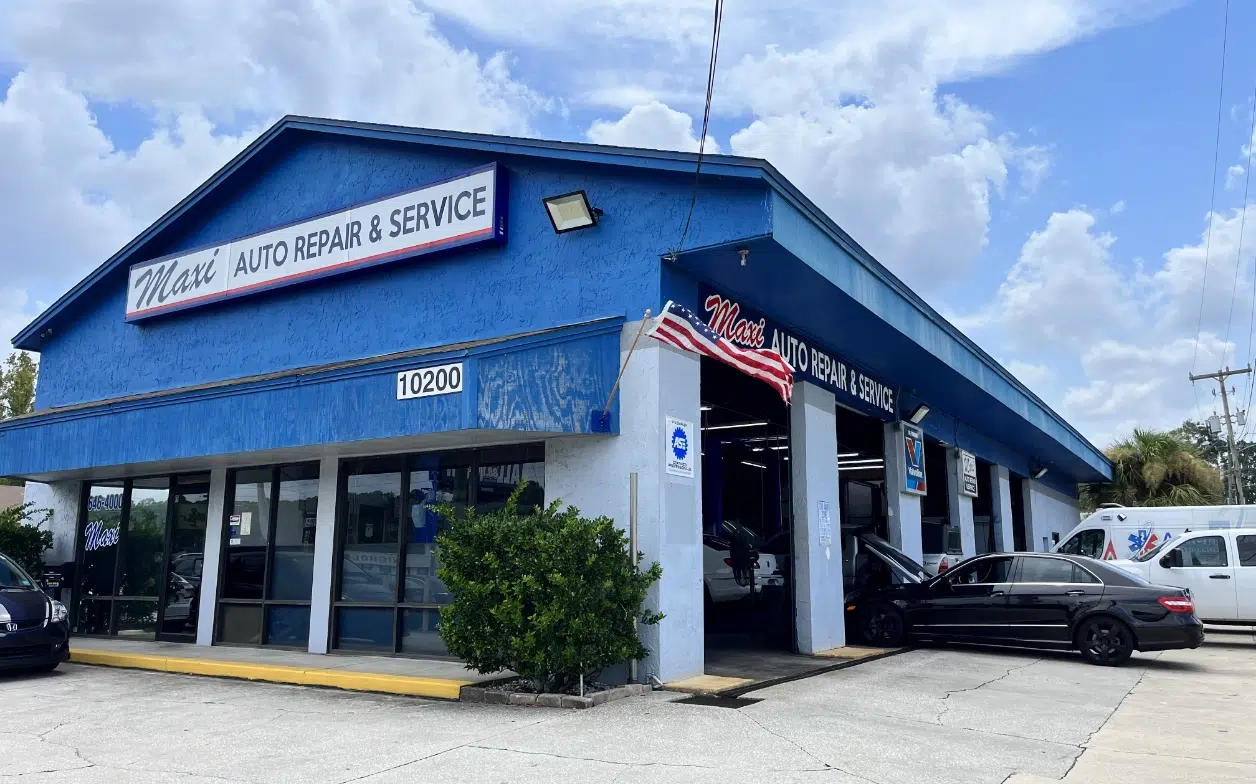
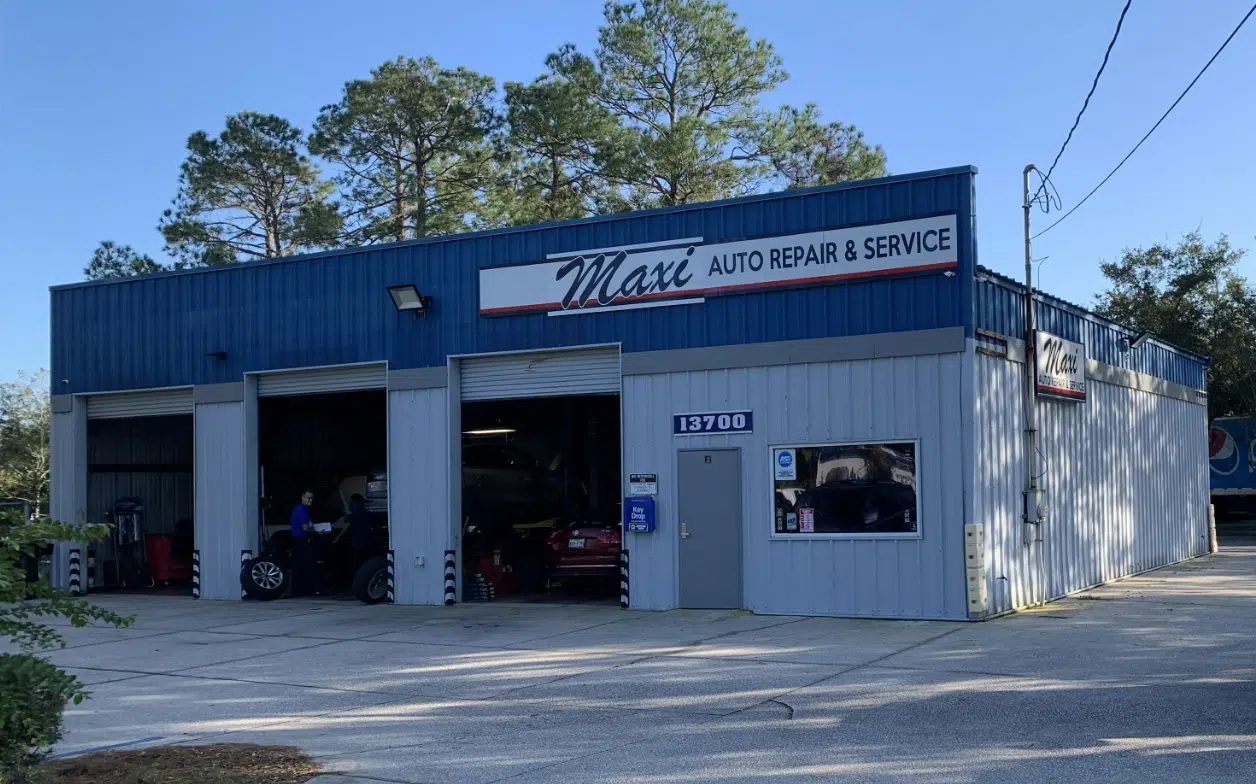
Written by Maxi’s Mechanics Service Team — AAA-Approved, ASE-Certified Master Technicians. Veteran-owned and operated since 2003, Maxi’s Mechanics serves Jacksonville from 4 convenient locations with BG-Certified services backed by our 3-Year/36,000-Mile Nationwide Warranty.
1. What Does a Check Engine Light Mean and When Should You Respond?
A check engine light indicates your vehicle’s onboard computer has detected a malfunction in the emissions, engine, or transmission system requiring diagnostic scanning to identify the specific fault code.[3] The light can signal anything from a loose gas cap ($0 fix) to a failing catalytic converter ($1,200-$2,500 repair), making professional diagnostic testing essential for accurate identification.
At Maxi’s Jacksonville locations, we see three check engine light scenarios: steady illumination (schedule service within a week), flashing light (stop driving immediately — indicates active misfires that damage the catalytic converter), and light accompanied by performance issues (same-day service recommended).[4] Our diagnostic process retrieves fault codes, inspects related components, and verifies the root cause rather than simply clearing codes. Jacksonville drivers often delay check engine light diagnostics for months, but Florida’s biennial emissions testing requires the light to be off, and unresolved issues frequently worsen in our climate.
2. How Do Performance Changes Signal the Need for Diagnostics?
Sudden changes in acceleration response, hesitation during gear shifts, reduced power when merging, or rough idling indicate sensor malfunctions or mechanical failures that diagnostic testing can pinpoint before complete breakdown occurs.[1] Your powertrain control module continuously adjusts fuel delivery, ignition timing, and transmission shift points based on sensor input — when sensors fail, performance suffers.
We diagnose performance issues by monitoring live data streams from oxygen sensors, mass airflow sensors, throttle position sensors, and transmission solenoids while test-driving the vehicle.[5] Common Jacksonville-specific issues include mass airflow sensor contamination from pollen and humidity (causing rough acceleration), failing ignition coils degraded by engine bay heat (misfires under load), and transmission solenoid problems from stop-and-go traffic patterns on I-95 and J. Turner Butler Boulevard. Diagnostic testing identifies which components operate outside manufacturer specifications, eliminating guesswork and preventing unnecessary part replacement.
3. Why Are Fuel Economy Drops More Serious Than Most Drivers Realize?
A sudden 15-20% decrease in fuel economy without driving habit changes indicates your engine is running too rich or too lean due to sensor failures, vacuum leaks, or fuel system problems that diagnostic testing reveals through air-fuel ratio analysis.[6] This is the warning sign most Jacksonville drivers ignore — yet it’s often the earliest indicator of expensive failures developing.
Here’s what surprises people: fuel economy drops usually mean your engine control unit has entered “limp mode” or is using default values because a critical sensor failed.[2] You’re not just wasting gas — you’re running incorrect air-fuel mixtures that damage catalytic converters (replacement cost: $1,200-$2,500), foul spark plugs, and contaminate engine oil. At Maxi’s four Jacksonville locations, we’ve diagnosed fuel economy complaints that revealed failing oxygen sensors ($180-$350 repair) that would have destroyed $2,000 catalytic converters within 6-12 months if ignored. Diagnostic testing measures short-term and long-term fuel trim values, identifying exactly which sensor or system causes the inefficiency. Jacksonville’s summer heat accelerates sensor degradation, making fuel economy monitoring especially important for local drivers.
| Warning Sign | Diagnostic Focus | Average Repair Range | Consequence if Ignored |
|---|---|---|---|
| Check Engine Light (Steady) | OBD-II code retrieval + component testing | $85-$850 | Failed emissions test, worsening damage |
| Performance Loss | Live data monitoring + sensor verification | $120-$1,200 | Stranded vehicle, transmission damage |
| Fuel Economy Drop (15%+) | Fuel trim analysis + oxygen sensor testing | $180-$550 | Catalytic converter failure ($1,200-$2,500) |
| Starting Issues | Cranking system + fuel pressure diagnostics | $95-$750 | Complete no-start condition |
| Unusual Noises | Component inspection + computer monitoring | $150-$2,000+ | Catastrophic engine/transmission failure |
4. What Do Starting Problems Tell Your Mechanic During Diagnostics?
Inconsistent starting — long cranking times, intermittent no-starts, or needing multiple attempts — indicates failing fuel pumps, weak batteries, faulty starter motors, or sensor issues that diagnostic testing identifies through voltage monitoring and fuel pressure measurement.[7] Many Jacksonville drivers assume starting problems mean “dead battery,” but diagnostic testing often reveals more complex electrical or fuel system faults.
Our diagnostic approach tests battery voltage under load (should maintain 9.6+ volts during cranking), starter current draw (typically 80-150 amps for four-cylinder engines), fuel pressure at key-on and during cranking (varies by manufacturer, usually 40-60 psi), and crankshaft position sensor signal quality.[4] Jacksonville’s humidity causes corrosion at battery terminals and ground connections that mimics more serious failures — comprehensive diagnostics distinguish between $30 terminal cleaning and $450 starter replacement. Starting issues that occur only when hot often indicate failing crankshaft or camshaft position sensors, which diagnostic testing confirms through resistance measurements and signal pattern analysis.
5. How Can Diagnostic Testing Identify Problems From Unusual Noises?
Knocking sounds during acceleration, whining during turns, clicking when braking, or grinding when shifting all correlate with specific fault codes and sensor readings that diagnostic computers reveal, allowing technicians to isolate failing components without disassembly.[8] Modern vehicles monitor knock sensors, wheel speed sensors, and powertrain vibration — unusual noises often trigger stored fault codes even before warning lights illuminate.
When Jacksonville drivers bring noise complaints to Maxi’s locations, we combine traditional mechanical inspection with computer diagnostics: knock sensor data reveals engine detonation from carbon buildup or low-octane fuel, wheel speed sensor discrepancies identify failing wheel bearings before they seize, and transmission pressure sensor readings diagnose internal clutch wear causing grinding shifts.[5] The diagnostic computer time-stamps when noises occurred, helping technicians recreate conditions during test drives. This data-driven approach prevents the “replace parts until the noise stops” method that wastes money and time.
What’s Included in a Professional Car Diagnostic Test?
A comprehensive diagnostic test retrieves fault codes from all vehicle modules, analyzes live sensor data during operation, inspects related components physically, verifies manufacturer specifications, and provides a written report with recommended repairs prioritized by urgency.[3] At Maxi’s Mechanics, our $85-$170 diagnostic service (pricing varies by vehicle complexity) includes OBD-II scanning, manufacturer-specific diagnostics for European and Asian vehicles, and live data monitoring during test drives.
We scan engine control modules, transmission control modules, ABS systems, airbag systems, and climate control computers — not just the engine codes many quick-lube shops retrieve.[6] Our ASE-certified technicians interpret codes in context: a P0420 catalyst efficiency code might indicate a failing catalytic converter, or it might mean upstream oxygen sensors need replacement. The diagnostic process includes visual inspection of wiring, vacuum lines, and fluid leaks that scanners can’t detect. You receive a detailed explanation of findings, repair options with cost estimates, and our recommendation on whether repairs are urgent, should be scheduled soon, or can wait. This transparency is why Jacksonville drivers trust our veteran-owned team for honest diagnostics without upselling.
If you’re experiencing any of these warning signs, don’t wait for a breakdown on the Buckman Bridge or Beach Boulevard. Call (844) 297-8529 or book online at maxiautorepair.com. 4 Jacksonville locations. Backed by our 3-Year/36,000-Mile Nationwide Warranty.
Frequently Asked Questions
How much does a car diagnostic test cost in Jacksonville?
Diagnostic testing at Maxi’s Mechanics ranges from $85 for basic OBD-II scanning to $170 for comprehensive multi-module diagnostics on complex vehicles, with the fee typically applied toward repair costs if you proceed with service at our shop.Can I drive with the check engine light on?
You can drive with a steady check engine light for short distances to reach a repair shop, but you should not drive if the light is flashing, which indicates active misfires that can damage the catalytic converter and require immediate attention.[4]Will AutoZone’s free code reading replace professional diagnostics?
AutoZone’s free scanning retrieves fault codes but doesn’t analyze live data, test components, or interpret codes in context — a P0171 “system too lean” code could indicate 12 different failures that only comprehensive diagnostics can distinguish.[3]How long does a diagnostic test take?
Basic diagnostic scanning takes 30-45 minutes, while comprehensive diagnostics including test drives and component testing typically require 60-90 minutes, depending on the complexity of symptoms and number of fault codes retrieved.[1]Do all dashboard warning lights require immediate diagnostics?
Red warning lights (brake system, oil pressure, temperature) require immediate?? and diagnostics, while yellow/amber lights (check engine, maintenance reminders) should be diagnosed within a week unless accompanied by performance changes or flashing patterns.[7]Don’t let warning signs turn into roadside emergencies. Whether you’re in San Marco, Riverside, or anywhere in Jacksonville, Maxi’s four locations are ready with honest diagnostics and expert repairs. Call (844) 297-8529 or visit maxiautorepair.com to schedule your diagnostic test today.
Written by Maxi’s Mechanics Service Team — AAA-Approved, ASE-Certified Master Technicians. Updated January 2026.
References
- National Institute for Automotive Service Excellence. Understanding Vehicle Diagnostics. https://www.ase.com/
- Society of Automotive Engineers. OBD-II Standards and Electronic Control Systems. https://www.sae.org/
- U.S. Environmental Protection Agency. On-Board Diagnostics (OBD) Overview. https://www.epa.gov/state-and-local-transportation/onboard-diagnostics-obd
- AAA Automotive Engineering. Warning Light Guide and Diagnostic Protocols. https://www.aaa.com/
- Automotive Maintenance and Repair Association. Diagnostic Testing Best Practices. https://www.amra.org/
- U.S. Department of Energy. Fuel Economy Factors and Maintenance. https://www.fueleconomy.gov/
- Car Care Council. Vehicle Warning Systems and Diagnostics. https://www.carcare.org/
- National Highway Traffic Safety Administration. Vehicle Safety and Diagnostic Systems. https://www.nhtsa.gov/