What Jacksonville Drivers Need to Know About Car AC Repair
Car AC repair in Jacksonville, FL addresses refrigerant leaks, compressor failures, and component wear accelerated by Florida’s extreme heat. Most AC problems stem from small leaks rather than compressor failure, and proper diagnosis before repair prevents costly wrong-part replacements. Jacksonville’s climate requires AC service every 2 years versus the 3-4 year intervals recommended in cooler regions.[1]
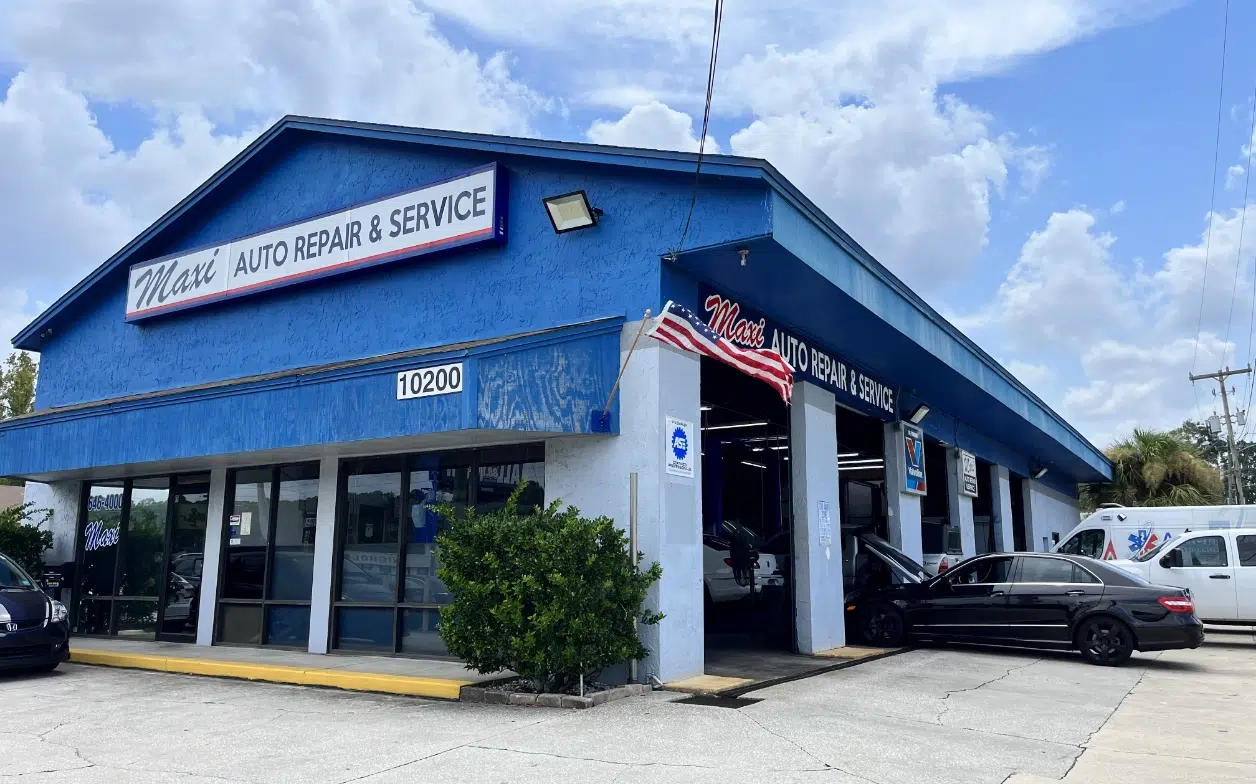
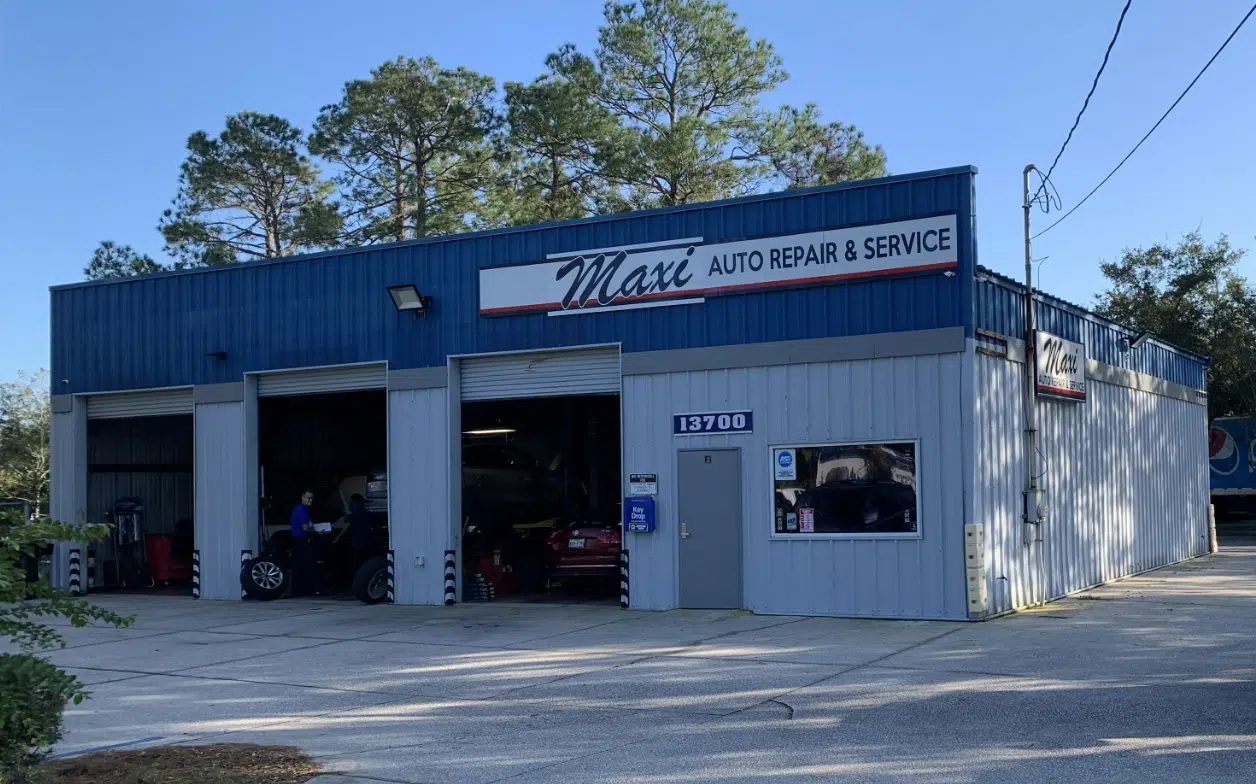
After two decades fixing car air conditioning systems in Jacksonville’s brutal summers, we’ve seen the same misconceptions cost drivers hundreds — sometimes thousands — in unnecessary repairs. Maxi’s Mechanics provides expert car AC repair for Jacksonville drivers across four locations, backed by ASE-Certified Master Technicians who’ve diagnosed everything from slow refrigerant leaks to catastrophic compressor failures in Florida’s unforgiving heat.
Written by Maxi’s Mechanics Service Team — AAA-Approved, ASE-Certified Master Technicians. Veteran-owned and operated, serving Jacksonville since 2003 with four locations and backed by BG Certification for climate control system service.
Here are five insider truths Jacksonville mechanics want every driver to understand before their next AC service appointment.
1. Why Isn’t My Car AC Working? (It’s Probably Not Your Compressor)
Most car AC failures in Jacksonville trace to refrigerant leaks, not compressor damage — yet many drivers assume the compressor failed first. The AC compressor gets blamed because it’s the most expensive component, but in our shop, approximately 70% of AC repairs involve leak detection and seal replacement rather than compressor work.[2] Small leaks develop at O-ring seals, hose connections, and condenser seams — spots where Florida’s constant thermal cycling (scorching days, air-conditioned nights) causes rubber and metal to expand and contract repeatedly.
When refrigerant levels drop below the threshold needed for proper system pressure, the compressor clutch won’t engage — making it look like compressor failure when the real culprit is a $75 O-ring repair. Road debris kicked up on I-95 and Beach Boulevard frequently punctures condensers mounted behind front grilles, creating leaks that empty your system in days. A proper leak detection process using UV dye or electronic sniffers identifies the true failure point before any parts get replaced.[3]
2. What Does an AC Recharge Actually Fix in Jacksonville?
An AC recharge only refills refrigerant — it doesn’t repair leaks, so if your system leaked once, it will leak again. Many quick-service shops advertise $49 AC recharges, and that price sounds attractive when you’re sweating through your shirt in a Riverside parking lot. But here’s what those ads don’t tell you: if your AC needed refrigerant added, your system has a leak somewhere. AC systems are sealed units designed to retain refrigerant indefinitely — they don’t “use up” refrigerant through normal operation.[4]
A recharge without leak repair is a temporary bandaid that might last two weeks or six months depending on leak severity. We’ve seen drivers spend $200 across four recharges in one summer when a $180 evaporator O-ring replacement would have solved the problem permanently. Federal regulations require technicians to identify and repair leaks before adding refrigerant to any system losing more than a specific threshold annually, but enforcement is inconsistent.[5] At Maxi’s four Jacksonville locations, we won’t recharge a leaking system without at minimum documenting the leak location and discussing repair options — it’s both an environmental requirement and honest service.
3. How Often Should I Service My Car AC in Florida?
Jacksonville’s extreme heat accelerates AC system wear, requiring service every 2 years compared to the 3-4 year intervals recommended in moderate climates. Your vehicle’s owner manual likely recommends AC inspection every 30,000-40,000 miles or 3 years, but those guidelines assume temperate conditions where AC runs seasonally. In Jacksonville, your AC works nearly year-round — even our “winter” sees 75°F afternoons where you’re running the compressor.[1]
Continuous operation means continuous wear on compressor bearings, clutch assemblies, and refrigerant seals. Humidity accelerates corrosion on aluminum condensers and evaporators, particularly in coastal areas like Hodges and San Marco where salt air compounds the problem. We recommend biennial AC performance checks that measure vent temperatures, system pressures, and compressor clutch gap — catching small issues before they cascade into $800 compressor replacements. A $120 preventive inspection every 24 months typically prevents one major failure over a vehicle’s lifetime, saving Jacksonville drivers an average of $600 based on our service records since 2003.
4. Why Do Mechanics Insist on AC Diagnostics Before Repairs?
Proper AC diagnosis prevents wrong-part replacements that waste $400-900 — yet rushed repairs without testing remain common across Jacksonville shops. AC systems have six major components (compressor, condenser, evaporator, expansion valve, accumulator/drier, hoses) plus sensors and control modules. When warm air blows from your vents, the failure could originate in any of these areas or their interconnections. We’ve diagnosed vehicles where other shops replaced compressors for $1,100 when the real problem was a $40 pressure switch or a $15 blown fuse.[6]
Diagnostic testing measures high-side and low-side pressures, checks electrical signals to the compressor clutch, tests blend door operation, and traces refrigerant flow through the system. These tests take 45-60 minutes and cost $89-129 at most Jacksonville shops, but they pinpoint the actual failed component. The most expensive misdiagnosis we’ve seen involved three separate shops replacing a condenser, then an evaporator, then finally the compressor on the same vehicle — a $2,400 total spend when thorough initial diagnosis would have identified a restriction in the expansion valve costing $180 to replace. ASE-certified technicians follow systematic diagnostic flowcharts rather than guessing based on symptoms.[2]
| AC Repair Type | Typical Cost Range | Common Cause | Repair Time |
|---|---|---|---|
| Refrigerant Recharge (with leak repair) | $150 – $280 | O-ring seal failure, small hose leak | 1-2 hours |
| Condenser Replacement | $400 – $750 | Road debris impact, corrosion | 3-5 hours |
| Evaporator Replacement | $650 – $1,100 | Internal corrosion, seal failure | 6-8 hours |
| Compressor Replacement | $700 – $1,200 | Bearing failure, clutch damage | 4-6 hours |
| Expansion Valve/Orifice Tube | $180 – $340 | Debris restriction, wear | 2-3 hours |
5. What Should Car AC Repair Actually Cost in Jacksonville?
Legitimate car AC repair in Jacksonville ranges from $150 for simple recharge-and-seal work to $1,200 for compressor replacement — prices below $100 or above $1,500 warrant scrutiny. The wide cost range reflects the difference between minor seal repairs and major component replacement, plus labor variations based on vehicle access difficulty. A leak repair on a 2015 Honda Civic with an easily accessible condenser might cost $220 total, while the same repair on a 2020 Audi Q5 requiring front bumper removal runs $480 due to 3 additional labor hours.[7]
Refrigerant costs have increased since the EPA phaseout of R-134a in favor of R-1234yf in vehicles 2017 and newer — the newer refrigerant runs $80-120 per pound versus $40-60 for R-134a.[8] Parts quality dramatically affects longevity in Jacksonville’s harsh environment: aftermarket condensers might cost $180 versus $340 for OEM, but we’ve seen aftermarket units corrode through in 18 months where OEM parts last 6-8 years near the coast. At Maxi’s, we discuss parts options transparently — sometimes aftermarket makes sense for older vehicles, but for cars you plan to keep, OEM parts backed by our 3-Year/36,000-Mile Nationwide Warranty typically deliver better value over time.
Beware of shops advertising complete AC repair under $200 — those prices usually cover only recharge without addressing underlying leaks. Conversely, quotes exceeding $1,500 for anything short of full system replacement on luxury vehicles may include unnecessary component swaps. Get itemized estimates showing parts, labor hours, refrigerant quantity, and disposal fees before authorizing work.
Need honest AC diagnosis from technicians who’ve seen every failure mode Jacksonville heat can create? Call (844) 297-8529 or book online at maxiautorepair.com. Four Jacksonville locations ready to keep you cool. Backed by our 3-Year/36,000-Mile Nationwide Warranty.
Frequently Asked Questions
How do I know if my car AC needs repair?
Warm air from vents, weak airflow, unusual noises when AC runs, or musty odors indicate AC system problems requiring professional diagnosis. Intermittent cooling or visible refrigerant oil around AC components also signal leaks or component failure.How long does car AC repair take in Jacksonville?
Simple recharge and seal repairs take 1-2 hours, while condenser replacement requires 3-5 hours and evaporator jobs need 6-8 hours due to dashboard removal. Diagnostic testing adds 45-60 minutes before repair work begins.Can I drive my car if the AC isn’t working?
Yes, AC failure doesn’t affect vehicle drivability, but Jacksonville heat creates safety risks including driver fatigue and dehydration. Prolonged AC compressor operation while low on refrigerant can cause internal damage requiring more expensive repairs.Why does my car AC smell bad when I turn it on?
Musty odors indicate mold and bacteria growth on the evaporator core caused by moisture accumulation in Florida’s humid climate. Professional evaporator cleaning or replacement eliminates odors and prevents respiratory irritation for passengers.Does car AC recharge include leak repair?
Not automatically — basic recharge services only add refrigerant without fixing leaks. Responsible shops perform leak detection before recharging and recommend repairs, while quick-service locations may recharge leaking systems without disclosure.Don’t let AC problems turn your daily commute into a sweat-soaked ordeal. Jacksonville’s heat demands working climate control — and our veteran-owned team delivers honest diagnostics and lasting repairs across all four Maxi’s locations. Call (844) 297-8529 or visit maxiautorepair.com to schedule your AC inspection today.
Written by Maxi’s Mechanics Service Team — AAA-Approved, ASE-Certified Master Technicians. Updated January 2026.
References
- U.S. Department of Energy. Vehicle Air Conditioning Systems. https://www.energy.gov/energysaver/heat-and-cool/air-conditioning
- National Institute for Automotive Service Excellence (ASE). Climate Control System Certification Guide. https://www.ase.com/Tests/ASE-Certification-Tests/A7-Heating-Air-Conditioning.aspx
- Society of Automotive Engineers (SAE). J2791 – Refrigerant Leak Detection Standard. https://www.sae.org/standards/content/j2791/
- U.S. Environmental Protection Agency. Mobile Air Conditioning Systems. https://www.epa.gov/mvac
- U.S. EPA. Section 609 Motor Vehicle Air Conditioning Regulations. https://www.epa.gov/mvac/section-609-technician-certification
- Automotive Service Association. Diagnostic Standards and Best Practices. https://www.asashop.org/
- AAA Automotive. Annual Car Repair Cost Analysis. https://www.aaa.com/autorepair/
- U.S. EPA. Transition to Low-GWP Alternatives in Motor Vehicle Air Conditioning. https://www.epa.gov/mvac/refrigerant-transition-environmental-impacts