Can You Safely Drive With a Bad Serpentine Belt?
You should not drive with a bad serpentine belt beyond getting to a safe location. A failing serpentine belt can snap without warning, causing immediate loss of power steering, battery charging, and cooling system function, leaving you stranded and risking severe engine damage. Maxi’s Mechanics in Jacksonville, FL provides same-day serpentine belt replacement across all four locations to prevent these failures.
No, you cannot safely drive with a bad serpentine belt. While your engine may still run for a short distance after the belt begins failing, continuing to drive risks catastrophic mechanical failure. The serpentine belt powers your alternator, power steering pump, water pump, and air conditioning compressor — when it fails, these systems stop working simultaneously.[1]
Written by The Team at Maxi’s Mechanics — Maxi’s Mechanics is a veteran-owned, ASE-certified auto repair shop serving Jacksonville, FL since 2003, with four locations: Beach Blvd, Riverside, Hodges, and San Marco.
What Is a Serpentine Belt and What Does It Do?
The serpentine belt is a single continuous ribbed belt that drives multiple engine accessories from the crankshaft pulley. This belt transfers rotational power from your running engine to components including the alternator (which charges your battery and powers electrical systems), power steering pump (which enables easy steering), water pump (which circulates coolant to prevent overheating), and air conditioning compressor.[2]
Modern vehicles rely on a single serpentine belt design rather than multiple V-belts, which means one belt failure disables several critical systems at once. The belt routes through a series of pulleys in a specific serpentine pattern — hence the name — with a spring-loaded tensioner maintaining proper tightness. In Jacksonville’s heat and humidity, serpentine belts face accelerated wear from temperature extremes and moisture exposure.[3]
What Are the Signs of a Bad Serpentine Belt?
A bad serpentine belt produces audible squealing noises, visible cracks or fraying, and causes system malfunctions like battery warning lights or power steering loss. Catching these symptoms early prevents roadside breakdowns and expensive secondary damage to engine components.
Audible Warning Signs
High-pitched squealing or chirping sounds during startup or acceleration indicate belt slippage from wear or improper tension. These noises become more pronounced in humid conditions or when accessories engage, such as turning on the air conditioning. A continuous squealing noise suggests the belt is glazed and no longer gripping pulleys effectively.[1]
Visual Deterioration
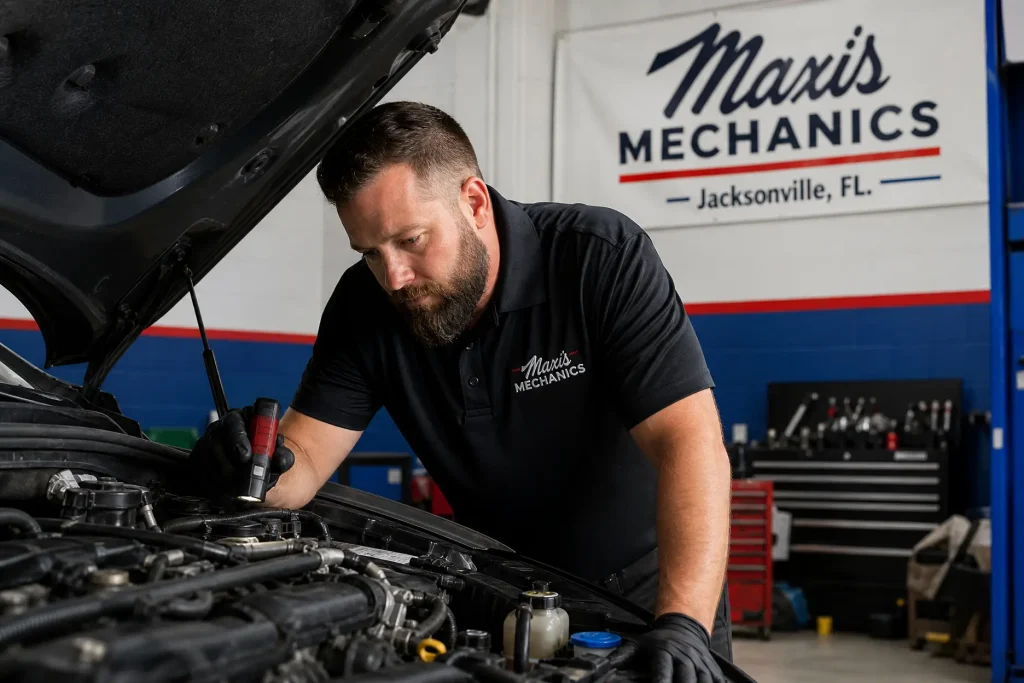
Inspect your serpentine belt for surface cracks running perpendicular to the ribs, glossy or glazed appearance, frayed edges, or missing rib sections. Any visible damage indicates the belt has exceeded its service life and requires immediate replacement. The rubber compound hardens over time, losing flexibility and grip — cracks visible on the belt surface indicate the material is breaking down internally.[4]
System Performance Issues
A failing serpentine belt causes the battery warning light to illuminate as the alternator stops charging, steering becomes noticeably heavier as power steering assistance fails, engine temperature rises from inadequate coolant circulation, and air conditioning stops blowing cold air. These symptoms may appear individually or simultaneously depending on which accessories the belt can no longer drive effectively.[2]
How Long Can You Drive With a Bad Serpentine Belt?
You should drive no more than a few miles with a bad serpentine belt — only far enough to reach a safe location or repair facility. The moment you notice symptoms, plan for immediate service. Once a serpentine belt begins failing, complete failure typically occurs within hours or days, not weeks.
The actual distance you can travel depends on the severity of the damage and which systems fail first. If the belt is cracked but still intact, you might drive 5-10 miles before overheating or electrical failure strands you. However, if the belt is severely worn or begins shredding, it can snap within minutes of operation. In Jacksonville’s summer heat, engine overheating from water pump failure accelerates dramatically — you may have less than 5 minutes before critical engine damage occurs once the cooling system stops functioning.[5]
Do not attempt to “make it home” or delay service. The secondary damage from overheating (warped cylinder heads, blown head gaskets) or electrical system failure (dead battery, damaged alternator) costs exponentially more than a belt replacement. Schedule service at your nearest Maxi’s Mechanics location in Jacksonville — call (904) 646-4000 or book online at maxiautorepair.com.
What Happens When You Drive With a Bad Serpentine Belt?
Driving with a bad serpentine belt causes progressive system failures: first battery drain and power steering loss, followed by engine overheating, and ultimately complete belt failure that strands you with potential engine damage. Understanding this failure cascade explains why immediate replacement is critical.
| System Affected | Immediate Effect | Consequences if Continued |
|---|---|---|
| Alternator | Battery warning light; electrical drain | Dead battery; loss of all electrical systems |
| Power Steering | Heavy, difficult steering | Loss of steering control; accident risk |
| Water Pump | Rising temperature gauge | Engine overheating; warped heads; blown gasket |
| A/C Compressor | Warm air from vents | No cooling (comfort issue, not safety) |
| Complete Belt Failure | All systems fail simultaneously | Immediate shutdown; potential valve damage |
When the serpentine belt fails completely, the sudden stop can cause the tensioner or idler pulleys to break, sending metal fragments into the engine bay. The belt itself may wrap around the crankshaft pulley and damage sensors or wiring harnesses. In interference engines (common in many Honda, Toyota, and Volkswagen models), the sudden loss of timing synchronization can cause pistons to strike valves, resulting in thousands of dollars in repair costs.[6]
How Much Does Serpentine Belt Replacement Cost?
Serpentine belt replacement typically costs between $100 and $250 including parts and labor at most repair facilities in Jacksonville. This preventive service is among the most cost-effective maintenance procedures, especially compared to the damage costs from belt failure.
The belt itself costs $25-$75 depending on your vehicle make and model, while labor runs $75-$175 for the replacement service. Many shops include belt tension inspection and pulley alignment check as part of the service. If pulleys or the tensioner show wear, replacing these components adds $150-$400 to the total, but prevents premature failure of the new belt. At Maxi’s Mechanics, our ASE-certified technicians inspect the entire belt drive system during replacement to identify worn components before they cause problems.[7]
Compare this modest cost to the expenses from driving with a bad belt: alternator replacement ($400-$800), power steering pump ($300-$600), water pump ($400-$900), or engine overheating damage ($1,500-$4,000+). The financial logic is clear — replace the belt at the first sign of wear.
How Often Should You Replace Your Serpentine Belt?
Most manufacturers recommend serpentine belt replacement every 60,000 to 100,000 miles, though inspection should occur annually or whenever symptoms appear. Jacksonville’s climate accelerates belt degradation, making inspection intervals more critical than in moderate climates.
Heat causes rubber to harden and crack, while humidity promotes material breakdown and pulley corrosion that accelerates belt wear. Florida’s combination of both factors means serpentine belts often require replacement toward the earlier end of the manufacturer’s interval. Our technicians recommend inspection at every oil change and proactive replacement at 70,000 miles for vehicles primarily operated in Jacksonville and surrounding areas.[8]
Never wait for visible symptoms before replacement. By the time you hear squealing or see cracks, the belt is already in the failure zone. Schedule service at your nearest Maxi’s Mechanics location in Jacksonville — call (904) 646-4000 or book online at maxiautorepair.com.
Frequently Asked Questions
Can a serpentine belt break while driving?
Yes, a serpentine belt can break suddenly while driving, especially if already showing wear symptoms. When this happens, you’ll immediately lose power steering, battery charging, and cooling, and should pull over safely as soon as possible to prevent engine damage.What does a bad serpentine belt sound like?
A bad serpentine belt produces high-pitched squealing, chirping, or screeching noises, particularly during cold starts or when turning the steering wheel. The sound occurs because worn belt ribs slip across pulleys instead of gripping properly.Will my car start with a broken serpentine belt?
Yes, your car will start with a broken serpentine belt because the starter motor operates independently. However, the engine will quickly overheat, the battery will drain, and you’ll have no power steering, making the vehicle unsafe to drive.How do I know if my serpentine belt needs replacing?
Check for visible cracks across the belt surface, fraying along the edges, a glossy or glazed appearance, squealing noises, or system warning lights on your dashboard. Any of these signs indicate immediate replacement is needed.Can I replace a serpentine belt myself?
While mechanically inclined individuals can replace a serpentine belt with proper tools and the belt routing diagram, professional installation ensures correct tension, pulley alignment, and identification of related worn components. Improper installation leads to premature failure or accessory damage.Don’t risk a breakdown on Jacksonville’s roads with a failing serpentine belt. At Maxi’s Mechanics, our ASE-certified technicians provide same-day belt replacement at all four Jacksonville locations. We inspect your entire belt drive system, replace worn components, and ensure your vehicle runs reliably. Schedule service at your nearest Maxi’s Mechanics location in Jacksonville — call (904) 646-4000 or book online at maxiautorepair.com.
Written by The Team at Maxi’s Mechanics — Maxi’s Mechanics is a veteran-owned, ASE-certified auto repair shop serving Jacksonville, FL since 2003, with four locations: Beach Blvd, Riverside, Hodges, and San Marco. Updated January 2026.
References
- National Highway Traffic Safety Administration. Maintenance and Light Repair. https://www.nhtsa.gov/
- ASE (Automotive Service Excellence). Engine Repair Certification Study Guide. https://www.ase.com/
- Gates Corporation. Serpentine Belt Drive Systems Technical Manual. https://www.gates.com/
- Rubber Manufacturers Association. Automotive Belt Service Life Guidelines. https://www.rma.org/
- Society of Automotive Engineers. Serpentine Belt Failure Analysis Standards. https://www.sae.org/
- Car Care Council. Serpentine Belt Inspection and Replacement Guide. https://www.carcare.org/
- AAA Automotive. Average Repair Costs Database. https://www.aaa.com/
- Motorist Assurance Program. Recommended Maintenance Schedules. https://www.motorist.org/