Can You Drive With a Bad Alternator?
You can drive with a bad alternator for a limited time — typically 30 minutes to 2 hours — but your vehicle runs solely on battery power once the alternator fails, risking a complete breakdown. Maxi’s Mechanics in Jacksonville, FL diagnoses and repairs failing alternators before they leave drivers stranded, using ASE-certified technicians and electrical diagnostic equipment across four metro locations.
You can drive with a bad alternator for a short distance, but your vehicle is running on borrowed time. Once the alternator stops charging the battery, you’re operating entirely on stored battery power, which typically lasts 30 minutes to 2 hours depending on electrical load and battery condition.[1] Continuing to drive risks a complete electrical shutdown, leaving you stranded without power steering, headlights, or engine operation.
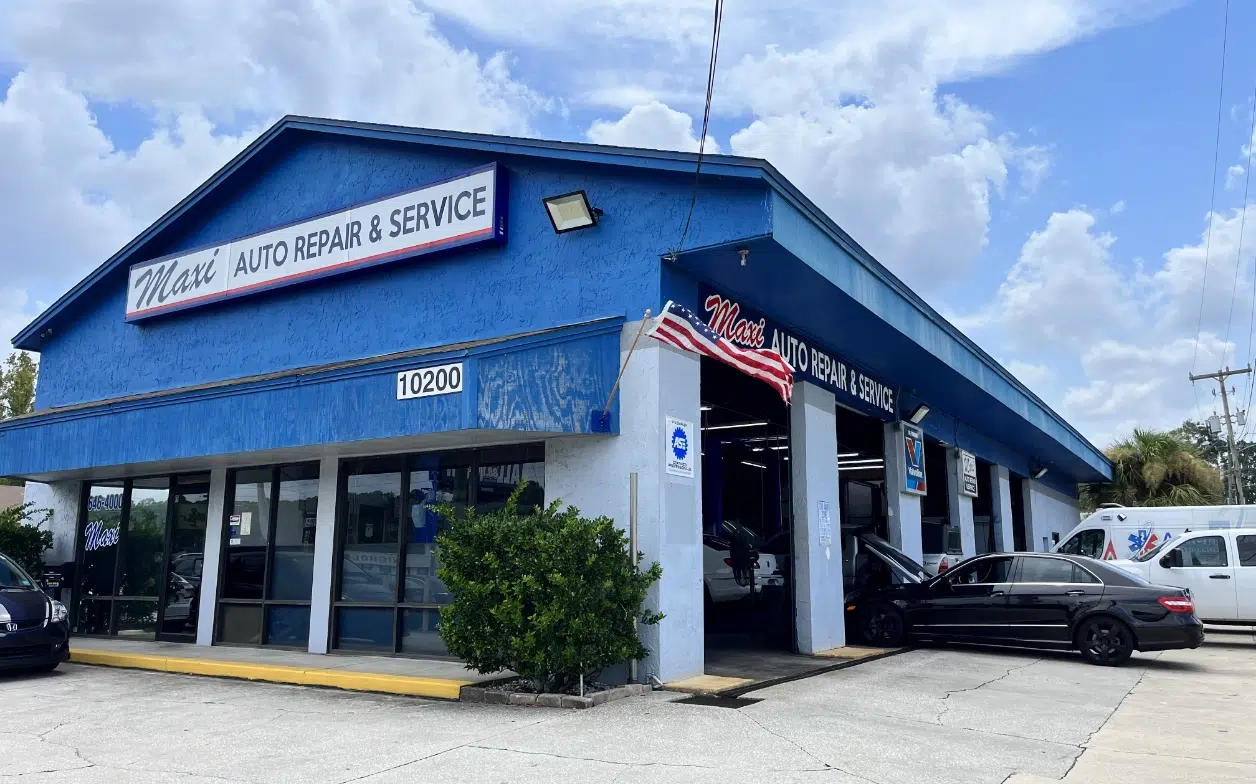
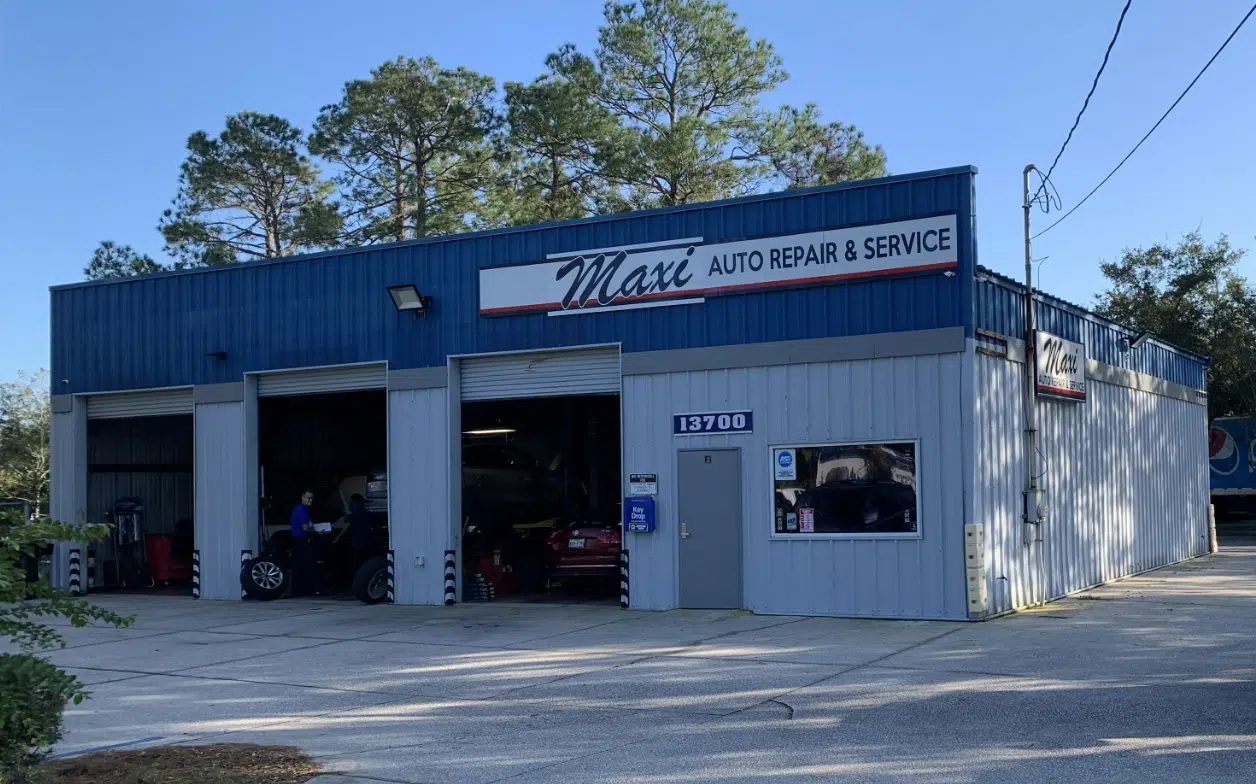
Written by The Team at Maxi’s Mechanics — Maxi’s Mechanics is a veteran-owned, ASE-certified auto repair shop serving Jacksonville, FL since 2003, with four locations: Beach Blvd, Riverside, Hodges, and San Marco.
How Does an Alternator Work?
The alternator converts mechanical energy from the engine into electrical energy to charge the battery and power all vehicle electronics while the engine runs. A belt-driven pulley spins the alternator rotor inside a stator, creating alternating current that’s converted to direct current by a rectifier assembly.[2] This system continuously replenishes the battery after starting and supplies power to headlights, fuel pumps, ignition systems, climate controls, and electronic modules.
Modern vehicles demand 80 to 150 amps from alternators, significantly more than older models due to computer systems, heated seats, infotainment screens, and safety features.[3] When the alternator fails, the battery alone must shoulder this load without recharging, rapidly depleting its capacity. In Jacksonville’s humid climate, corrosion on alternator connections accelerates wear, making regular electrical system inspections essential for Florida drivers.

What Are the Warning Signs of a Failing Alternator?
The battery warning light illuminating on your dashboard is the most common early indicator that your alternator isn’t charging properly. This red or amber icon resembles a battery and activates when system voltage drops below approximately 13.5 volts, signaling insufficient charging.[4] Dimming headlights, especially when idling or using accessories, indicate the electrical system is drawing power from the battery instead of the alternator.
Additional symptoms include flickering interior lights, slow power window operation, a dead battery after the vehicle has been driven recently, and unusual noises like grinding or whining from the alternator area caused by failing bearings.[1] You may notice difficulty starting the engine, electrical accessories cutting out intermittently, or a burning rubber smell from a slipping alternator belt. Modern vehicles may display specific alternator fault codes readable through diagnostic scanners at any Maxi’s Mechanics location in Jacksonville.
How to Test for Alternator Problems
A multimeter test provides definitive diagnosis: with the engine running, battery voltage should read 13.7 to 14.7 volts if the alternator is functioning correctly.[2] Readings below 13 volts indicate charging failure, while readings above 15 volts suggest a faulty voltage regulator that can damage electrical components and boil battery electrolyte.
How Long Can You Drive With a Bad Alternator?
Most vehicles can drive 30 minutes to 2 hours on battery power alone after alternator failure, with driving time determined by battery condition, electrical load, and whether you drive during day or night. A fully charged, healthy battery contains enough energy to power essential systems temporarily, but this reserve depletes quickly as the engine control unit, fuel pump, ignition system, and other critical components draw continuous amperage.[5]
Daytime driving with minimal accessory use extends your range because headlights, which draw 10-15 amps, aren’t required. Night driving, air conditioning, heated seats, or stereo systems accelerate battery drain significantly. Cold weather reduces battery capacity by up to 50%, cutting drive time substantially in winter months, though Jacksonville’s mild climate offers some advantage.[3] Older batteries with reduced capacity may only provide 15-30 minutes of operation, while a new battery in good condition might last closer to two hours under optimal conditions.
| Driving Conditions | Battery State | Estimated Drive Time | Risk Level |
|---|---|---|---|
| Daytime, minimal accessories | New/good battery | 1.5-2 hours | Moderate |
| Daytime, AC running | Average battery | 45-90 minutes | High |
| Night driving, headlights on | Average battery | 30-60 minutes | Very high |
| Night, full accessories | Weak/old battery | 15-30 minutes | Critical |
| Stop-and-go traffic | Any condition | Reduced 20-40% | Critical |
What Happens When You Keep Driving With a Failed Alternator?
Continuing to drive with a failed alternator will eventually cause complete electrical system shutdown, stalling your engine and disabling power steering, power brakes, headlights, and all safety systems. As battery voltage drops below 10 volts, the engine control module can no longer maintain proper fuel injection and ignition timing, causing rough running, misfires, and ultimately engine stall.[4] Once stopped, the vehicle won’t restart without a jump or battery replacement, and you’ll need a tow.
Driving on severely low voltage damages sensitive electronic modules, potentially causing failures in the powertrain control module, anti-lock brake system, airbag controller, and infotainment systems that cost hundreds to thousands of dollars to replace.[6] Low voltage can corrupt module programming, requiring dealer-level reprogramming. You lose critical safety features like headlights and brake lights, creating hazards for yourself and other drivers, particularly on busy Jacksonville roads like I-95 or Beach Boulevard during evening commutes.
Schedule service at your nearest Maxi’s Mechanics location in Jacksonville — call (904) 646-4000 or book online at maxiautorepair.com.
Can a Bad Alternator Damage the Battery or Other Components?
A failing alternator can permanently damage your battery through chronic undercharging or overcharging, shortening battery lifespan from 4-5 years to less than one year. Undercharging causes sulfation, where lead sulfate crystals form on battery plates and reduce capacity permanently.[7] Overcharging from a faulty voltage regulator boils electrolyte, warps plates, and can cause battery case swelling or rupture, releasing corrosive acid.
Voltage irregularities damage electronic control modules designed to operate within narrow voltage ranges of 12-14.5 volts. Voltage spikes when a failing alternator cycles on and off can fry diodes in modules, burn out bulbs prematurely, and damage alternating current-sensitive components like motors and solenoids.[6] Repairing a failed alternator promptly prevents these cascade failures that transform a $400 alternator replacement into a $1,500+ repair bill including modules, batteries, and associated wiring.
What Should You Do If Your Alternator Fails While Driving?
If the battery warning light illuminates while driving, immediately reduce electrical load by turning off air conditioning, radio, heated seats, and all non-essential accessories to extend battery life and reach a safe location. Keep headlights on if driving at night for safety, but minimize other electrical draws. Avoid stop-and-go traffic when possible, as idling and frequent restarts drain the battery faster than steady highway driving.[5]
Navigate to the nearest safe parking area or repair facility while you still have power — don’t wait for complete failure on the highway. If the engine stalls, move to the shoulder safely, turn on hazard lights, and call for roadside assistance or a tow truck. Do not attempt to jump-start and continue driving, as this only delays the inevitable breakdown and risks being stranded in a less safe location. For Jacksonville drivers, Maxi’s Mechanics offers four convenient locations across Beach Blvd, Riverside, Hodges, and San Marco to minimize tow distances and get you back on the road quickly with professional alternator diagnostics and replacement.
Frequently Asked Questions
Can a bad alternator cause the car to die while driving?
Yes, a completely failed alternator will cause your car to die while driving once the battery depletes. The engine requires continuous electrical power for fuel injection, ignition, and control systems, and when battery voltage drops too low, the engine shuts down.
How much does it cost to replace an alternator?
Alternator replacement typically costs $400 to $900 including parts and labor, depending on vehicle make and difficulty of access. Higher-output alternators for trucks or luxury vehicles may cost more, while accessible four-cylinder engines are typically less expensive.
Will a new battery help if the alternator is bad?
A new battery will not solve alternator problems — it will simply provide a fresh charge that depletes quickly without alternator recharging. Installing a new battery without fixing the alternator wastes money and leaves you with two failed components instead of one.
How long does an alternator typically last?
Most alternators last 80,000 to 150,000 miles or 7 to 10 years under normal conditions.[8] Jacksonville’s heat and humidity can accelerate wear on bearings and electrical connections, potentially shortening alternator life, making regular electrical system inspections important for Florida vehicles.
Can you jump-start a car with a bad alternator?
You can jump-start a car with a bad alternator, and it will run temporarily on the boosting vehicle’s charging system or the jumped battery’s stored power. However, once disconnected from the jump source, the vehicle will only run until the battery depletes again, typically 30 minutes to 2 hours.
Don’t risk being stranded with a failing alternator. Our ASE-certified technicians diagnose charging system problems quickly using professional-grade electrical testing equipment and provide transparent repair estimates before any work begins. Schedule service at your nearest Maxi’s Mechanics location in Jacksonville — call (904) 646-4000 or book online at maxiautorepair.com.
Written by The Team at Maxi’s Mechanics — Maxi’s Mechanics is a veteran-owned, ASE-certified auto repair shop serving Jacksonville, FL since 2003, with four locations: Beach Blvd, Riverside, Hodges, and San Marco. Updated January 2026.
References
- National Institute for Automotive Service Excellence (ASE). Electrical/Electronic Systems Specialist Certification Study Guide. https://www.ase.com/
- U.S. Department of Energy, Office of Energy Efficiency & Renewable Energy. How the Charging System Works. https://www.energy.gov/
- SAE International. Automotive Electrical Systems Standard J1673. https://www.sae.org/
- Motorist Assurance Program (MAP). Uniform Inspection and Communication Standards — Electrical Systems. https://www.motorist.org/
- AAA Foundation for Traffic Safety. Vehicle Electrical System Failure and Roadside Assistance Data. https://aaafoundation.org/
- Automotive Maintenance and Repair Association (AMRA). Electronic Module Damage from Voltage Irregularities. https://www.amra.org/
- Battery Council International. Battery Failure Modes and Charging System Effects. https://batterycouncil.org/
- Car Care Council. Alternator Lifespan and Maintenance Guidelines. https://www.carcare.org/