There’s nothing more unsettling than noticing a puddle beneath your parked car. Is it just water from the air conditioning? Or is it a sign of something serious that could leave you stranded or facing expensive repairs?
Fluid leaks are one of the most common indicators that a vehicle needs attention — and one of the easiest clues to start diagnosing the issue is color. Different fluids in your car have distinct colors, textures, and even smells that can help you determine the source of the problem. In this guide, we’ll walk through what common leak colors mean, what fluids they correspond to, and when you should seek professional help.
Why Color Matters in Identifying Leaks
Every essential system in your vehicle — from engine lubrication to cooling, steering, and braking — relies on specific fluids to function properly. When one of these systems leaks, the escaping fluid sheds visual clues. A puddle on the driveway or garage floor becomes more than a nuisance; it becomes a diagnostic hint.
Understanding fluid colors helps you:
- Quickly assess potential severity
- Decide whether a leak requires immediate attention
- Communicate more effectively with your mechanic or service technician
Let’s explore what the most common colors mean.
Yellow or Green: Coolant / Antifreeze
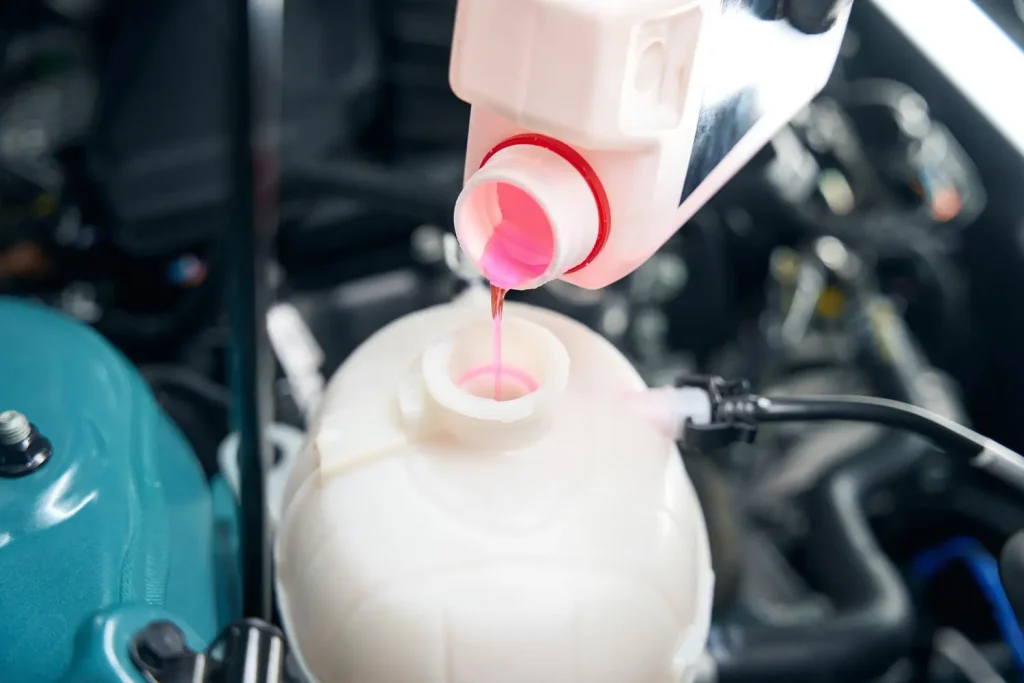
If you find a yellow, bright green, or even orange or pink fluid underneath your vehicle — especially near the front center — it’s likely coolant (also called antifreeze). Coolant regulates engine temperature, preventing overheating in warm conditions and freezing in cold weather.
What to know about coolant leaks:
- Coolant often feels slimy and may have a sweet smell.
- A low level in the coolant reservoir is a common indicator of a leak.
- Ignoring a coolant leak can lead to overheating and serious engine damage.
Recommended action: Have your cooling system inspected as soon as possible.
Red: Transmission or Power Steering Fluid
A red fluid leak usually points to either transmission fluid or power steering fluid.
- Transmission fluid lubricates gears and ensures smooth shifting.
- Power steering fluid allows for easier, more controlled steering.
As these fluids age, they often darken to a brownish-red and feel slick with a petroleum-like smell.
Helpful clues:
- Leaks near the front of the vehicle often indicate power steering fluid.
- Leaks closer to the center or rear are more commonly transmission fluid.
Recommended action: Both systems are essential for safe operation. Any red fluid leak should be inspected promptly.
Clear: Air Conditioning Condensation or Other Fluids
Clear fluid underneath your car is often harmless condensation from the air conditioning system. This is especially common after driving in warm or humid conditions.
However, if the clear liquid appears when the A/C has not been used or has an unusual odor, it may indicate another issue.
Recommended action: If it’s odorless water after A/C use, there’s typically no concern. Otherwise, have it evaluated.
Blue: Windshield Washer Fluid
Blue fluid almost always indicates windshield washer fluid. This leak is usually thin, mildly scented, and not critical to vehicle operation.
Common causes include:
- Cracked washer fluid reservoir
- Loose or damaged hoses
- Overfilled reservoir
Recommended action: Repair to maintain visibility and safety, though it is usually not urgent.
Orange: Aged Transmission Fluid or Rust-Contaminated Coolant
An orange fluid leak may indicate:
- Transmission fluid that has oxidized and changed color over time, or
- Coolant that has mixed with rust due to internal corrosion
Either scenario suggests wear or degradation within the system.
Recommended action: Have both systems inspected to identify the source and prevent further damage.
Brown or Black: Engine Oil
Brown or black fluid is most commonly engine oil. Fresh oil is amber in color and darkens as it circulates through the engine.
Oil is critical for lubricating engine components and controlling heat. A thick, dark puddle with a petroleum smell often signals an oil leak.
Common causes include:
- Worn gaskets or seals
- Loose oil filter or drain plug
- Oil pan damage
Recommended action: Address promptly. Low oil levels can lead to severe engine damage.
Beyond Color: Additional Clues to Watch For
Color is only one part of the diagnosis. You can narrow down the issue further by observing:
- Location: Front, middle, or rear of the vehicle
- Consistency: Thick and oily versus thin and watery
- Smell: Sweet, burnt, or chemical odors
- Rate of leakage: Slow seep versus active dripping
Together, these clues help determine urgency and next steps.
When to Seek Professional Help
Some leaks — such as air conditioning condensation or washer fluid — are minor. Others, including coolant, transmission, power steering, or engine oil leaks, can compromise vehicle safety and performance.
If you’re unsure what fluid is leaking or how serious it might be, a professional inspection is the safest course of action. Trained technicians can identify the source, assess the severity, and recommend the appropriate repair.
Final Thoughts
A puddle under your car doesn’t always mean disaster — but it should never be ignored. Understanding fluid colors gives you a practical, immediate way to assess potential issues and respond appropriately.
By paying attention to color, location, and behavior of a leak, you can catch small problems before they become costly repairs. Regular inspections and timely service help protect your vehicle, your budget, and your peace of mind.